
Lightweight Natural Looking Lash Extensions Guide
Table of Contents
- What Are Lightweight Natural Looking Lash Extensions?
- Classic vs Volume Lash Extensions for Natural Look
- How Long Do Natural Lash Extensions Last?
- Lash Health Assessment and Allergy Testing Before Application
- Eyelash Extension Aftercare Tips That Protect Your Investment
- Cost of Professional Lash Extensions: What to Expect
- How to Choose the Right Natural Lash Extensions for Your Eye Shape
- Conclusion
Last Updated: August 16, 2026
What Are Lightweight Natural Looking Lash Extensions?
Lightweight natural looking lash extensions are individual synthetic, silk, or faux mink fibers bonded one-by-one to your own lashes using medical-grade adhesive, creating definition without the stiff, overdone appearance that gives extensions a bad reputation. Each extension is isolated and applied to a single natural lash, never to the skin or clusters, this isolation separates a genuinely natural result from the heavy, clumped look many people fear.
At Lashes by Shigeru, the focus is on extensions that enhance what you already have rather than replace it. The goal is a lash line that reads as effortlessly beautiful in person.
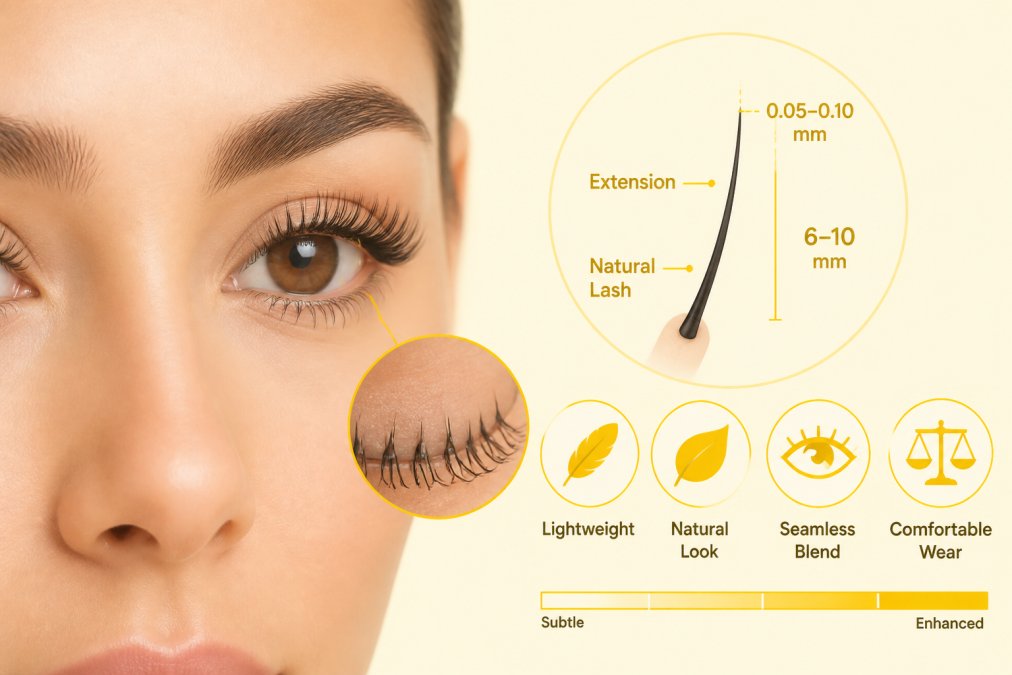
The "lightweight" quality comes from lash diameter and curl selection. Thinner diameters, typically 0.05 mm to 0.07 mm, place almost no measurable load on a natural lash. A well-trained technician will map your eye shape, assess your natural lash density, and select a curl type and diameter that work with your biology. According to the American Academy of Ophthalmology’s guidance on cosmetic eye procedures, any product applied near the eye should be selected with sensitivity and safety as the primary criteria.
How Lash Diameter and Curl Type Affect the Final Look
Lash diameter is the single biggest factor in how natural or dramatic your result looks. A 0.05 mm extension is genuinely weightless; a 0.15 mm extension is roughly three times heavier and creates a noticeably bolder finish. For soft, natural definition, most experienced technicians work between 0.05 mm and 0.10 mm.
Curl types run from J (the most natural, barely lifted) through B, C, D, and L curls, each adding progressively more lift and drama. For clients who want their extensions to read as enhanced natural lashes, a B or C curl on a medium-length extension usually delivers the most seamless result.
Lash mapping ties these variables together. A technician performing proper lash mapping will assess your eye shape, the direction your natural lashes grow, and the density across your lash line before selecting extensions. This step separates a flattering, custom result from a generic set.
The AirLash® Difference: Japanese Technique Explained
The proprietary Japanese AirLash® technique used at Lashes by Shigeru was developed by master lash stylist Shigeru Hanai through years of practice in Tokyo and New York City. The technique prioritizes virtually weightless application: extensions are selected for ultra-fine diameter, applied with precision lash isolation, and bonded using in-house manufactured adhesives formulated specifically for sensitive eyes.
What makes it different from standard application is the combination of hand-crafted precision and hypoallergenic adhesive chemistry. The AirLash® process uses a proprietary formula refined with input from Beverly Hills salon clients that significantly reduces the risk of sensitivity reactions. The result is strikingly defined natural lashes that last up to five weeks without the discomfort many first-time clients associate with extensions.
Classic vs Volume Lash Extensions for Natural Look
Choosing between classic, hybrid, and volume sets is the most important decision you’ll make before your appointment. Each technique produces a fundamentally different result, and the right choice depends on your natural lash density, lifestyle, and how much definition you want.
Classic Sets: One Extension Per Natural Lash
A classic set applies one extension to one isolated natural lash across every lash on both eyes. The result is a clean, defined lash line that looks like your own lashes on a very good day: longer, slightly fuller, with a consistent curl.
Classic sets work best for clients who already have reasonable natural lash density and want a polished but understated result. They’re also the most lash-health-friendly option because weight is distributed across individual lashes rather than stacked. For clients asking about natural lash extensions for the first time, a classic set is almost always the right starting point.
Hybrid and Volume Fans: Soft, Fluffy Definition
Hybrid sets combine classic individual extensions with hand-made fans (two to five ultra-fine extensions fanned and bonded together) placed strategically across the lash line. The result is textured, slightly wispy, and noticeably fuller than a classic set without crossing into mega-volume territory that looks overtly artificial.
Volume fans use an even lighter diameter, typically 0.05 mm, which means even a fan of five extensions weighs less than a single classic extension at 0.15 mm. Done correctly, volume lash extensions are actually gentler on your natural lashes than an improperly weighted classic set.
| Style | Extensions Per Lash | Best For | Natural Look Rating |
|---|---|---|---|
| Classic | 1:1 | Good natural density, subtle definition | ⭐⭐⭐⭐⭐ |
| Hybrid | Mix of 1:1 and fans | Moderate density, soft texture | ⭐⭐⭐⭐ |
| Volume | Multi-fiber fans | Sparse lashes, fuller look | ⭐⭐⭐ |
| Mega Volume | Dense fans | Dramatic, glamorous finish | ⭐⭐ |
How Long Do Natural Lash Extensions Last?
Natural lash extensions last between three and five weeks before a fill-in appointment is needed, depending on your natural lash cycle, aftercare habits, and adhesive quality. The five-week retention achieved with the AirLash® technique is at the longer end of what professional extensions can realistically deliver. Most clients notice visible gaps at the three-to-four-week mark as natural lashes shed, signaling that a fill-in is due.
Lash Cycle, Shedding, and Fill-In Appointment Timing
Your natural lashes follow a growth cycle with three phases: anagen (active growth), catagen (transition), and telogen (resting/shedding). The full cycle runs approximately six to eight weeks. Because your lashes are always at different stages simultaneously, you’ll shed a few every day regardless of extensions.
Extensions appear to "fall out" when the natural lash sheds, the extension goes with it. It’s not the extension failing; it’s your lash cycle working as it should. Most clients schedule fill-in appointments every two to three weeks to maintain a full, seamless look. According to the American Academy of Dermatology’s overview of hair growth cycles, individual hair follicles cycle independently, which is why gradual shedding rather than sudden loss is the norm.
Track your fill-in timing by photographing your lashes at days 14, 21, and 28 after your initial appointment. You’ll quickly learn your personal retention pattern and schedule smarter.
Lash Health Assessment and Allergy Testing Before Application
A thorough lash health check before any extensions are applied is what separates a professional service from a rushed one. A proper assessment evaluates natural lash length, diameter, density, and follicle condition. Technicians should also assess whether previous extensions were removed correctly, since residual adhesive or mechanical stress can affect how well new extensions bond.
Patch Testing and Ingredient Transparency
Patch testing is non-negotiable for anyone with sensitive skin, eye allergies, or prior reactions to lash adhesives. A small amount of adhesive is applied to the inner arm or behind the ear 24 to 48 hours before full application. Any redness, itching, or swelling signals the need to reformulate or choose a different adhesive.
The ingredient to watch for in conventional adhesives is cyanoacrylate, the primary bonding agent in most professional lash glues. Clients with known sensitivities should ask their technician directly about the adhesive’s ingredient list. Asking for the adhesive’s safety data sheet is a reasonable and professional request.
Working With Thin or Sparse Natural Lashes
Thin or sparse natural lashes are not a barrier to extensions. They require a different approach. For clients with fine or short natural lashes, the priority is lash health over density. Ultra-fine extensions (0.05 mm) placed in a volume fan configuration add fullness without overloading each follicle. A skilled technician will avoid placing extensions on lashes too short or weak to support them, leaving those lashes unextended to grow undisturbed.
Improper application, over-heavy extensions, or mechanical removal can cause traction alopecia in severe cases. Correct application, appropriate weight selection, and professional removal essentially eliminate this risk.
Eyelash Extension Aftercare Tips That Protect Your Investment
Good aftercare is the difference between three-week retention and five-week retention. Most premature shedding comes down to preventable aftercare failures.
Here are the core aftercare rules every client should follow:
- Keep lashes dry for the first 24-48 hours after application. The adhesive continues curing during this window, and moisture disrupts the bond.
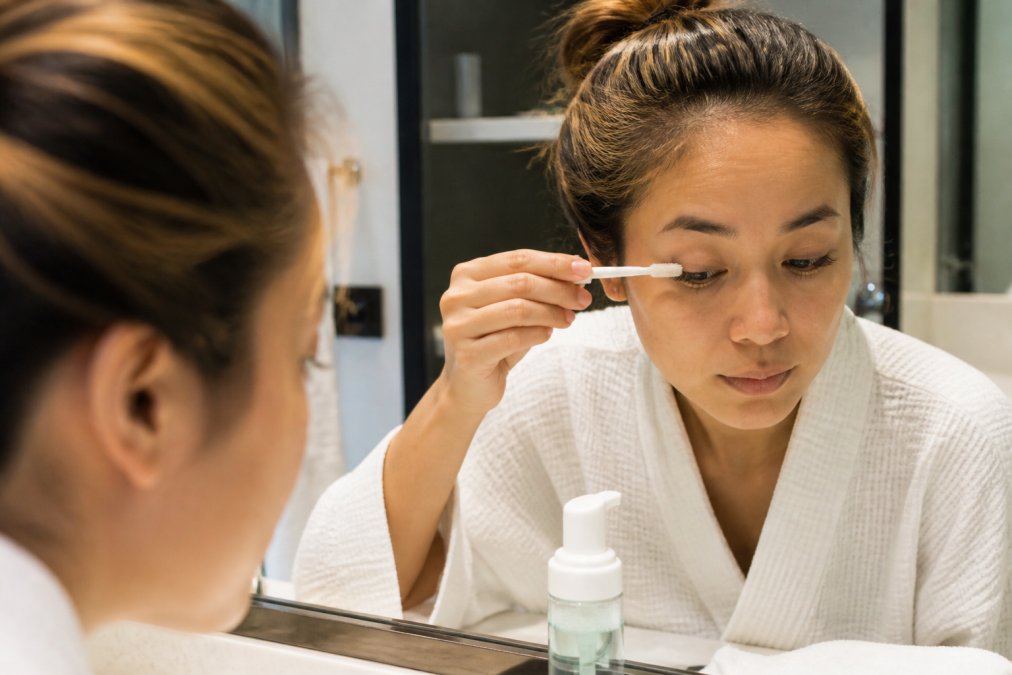
- Use an oil-free cleanser daily. Oil breaks down lash adhesive faster than any other factor.
- Brush lashes daily with a clean spoolie brush, working from mid-length to tip. This prevents tangling and keeps fan shapes intact.
- Sleep on your back or use a silk pillowcase. Side sleeping crushes extensions and accelerates shedding.
- Avoid rubbing your eyes. Mechanical friction is the fastest way to lose extensions prematurely.
Post-Application Lifestyle Adjustments
The lifestyle impact of extensions is minimal once you’ve adjusted your routine, though the first two weeks have a learning curve. Steam rooms, saunas, and heavy perspiration during workouts can weaken adhesive bonds, particularly in the first 72 hours. After the initial curing period, brief exposure to steam or sweat is manageable.
Eye makeup is still possible with extensions. Mascara is generally unnecessary on a well-applied set, but any mascara used should be water-based and applied only to the tips. Waterproof mascara requires an oil-based remover that directly attacks the adhesive bond.
Never use oil-based makeup removers, micellar waters containing oil, or coconut oil-based skincare anywhere near your lash line. A single application can loosen multiple extensions overnight.
Cost of Professional Lash Extensions: What to Expect
Professional lash extension pricing reflects the time, skill, and materials involved. A full classic set typically takes 90 to 120 minutes of precise, isolated application. Volume and hybrid sets take longer due to hand-crafting each fan. Fill-in appointments are shorter but still require significant technical attention.
Pricing varies widely based on the technician’s training, material quality, and service location.
For current pricing at Lashes by Shigeru, visit the website directly or book a consultation. What the cost of professional lash extensions covers:
| Cost Factor | What It Reflects |
|---|---|
| Technician training | Certification, continuing education, years of practice |
| Adhesive quality | Hypoallergenic formula, in-house vs. generic manufacturing |
| Extension material | Diameter, curl precision, fiber quality |
| Application time | 90-120 min full set vs. rushed 45-min alternatives |
| Fill-in frequency | 2-3 week schedule vs. lower-quality 1-week turnover |
The cheapest set is rarely the most economical choice. Poor retention means more frequent fill-ins, which quickly exceeds the cost of a higher-quality initial service.
How to Choose the Right Natural Lash Extensions for Your Eye Shape
Eye shape analysis is the foundation of a flattering lash map. The goal is to use extension length and curl placement to enhance your eye’s natural geometry.
Almond eyes are the most versatile shape. A classic set with a C curl and graduated lengths (shorter at inner and outer corners, longer in the center) enhances natural symmetry.
Round eyes benefit from extensions that elongate rather than open further. Longer extensions at the outer corners with a J or B curl create a subtle cat-eye effect that balances roundness.
Monolid eyes respond well to a strong C or D curl, which creates lift and visible lash definition. Length should be moderate; too long and extensions curl back toward the lid.
Hooded eyes need careful curl selection. A D curl lifts the lash line above the hood, making extensions visible when the eye is open.
Deep-set eyes already have natural shadow that creates definition. A lighter, more natural classic set tends to be most flattering.
The most important step in choosing natural lash extensions is an honest consultation with your technician before the appointment. A skilled lash artist will assess your eye shape, natural lash condition, and lifestyle before recommending a style. If a technician skips this conversation, find someone who won’t.
A professional certification in lash application, such as those recognized by the National-Interstate Council of State Boards of Cosmetology, signals that your technician has met a baseline standard of training. Look for evidence of continuing education, a clear patch testing protocol, and transparency about the products being used on your eyes.
Clients who’ve experienced the Lashes by Shigeru difference describe it simply: "I’ve been going to Shigeru for my eyelash extensions for the past 2 years. Honestly, he and his well trained team has done the best and most comfortable lash…" That combination of comfort and quality is what every lash appointment should deliver.
Getting the right set of natural lash extensions comes down to three things: a technician who understands lash health, materials that prioritize your safety, and a technique precise enough to make the result look effortless. Lashes by Shigeru brings all three together through the proprietary Japanese AirLash® technique, in-house manufactured hypoallergenic adhesives, and over a decade of master-level expertise. Book an appointment and experience what genuinely weightless, natural-looking extensions feel like.
Frequently Asked Questions
What is the lightest weight eyelash extension available?
The lightest options use ultra-fine synthetic mink or silk fibers with a lash diameter of 0.03 mm to 0.07 mm. Classic single extensions at the lower end of that range are nearly undetectable on the lid. Proprietary systems like the Japanese AirLash® technique take this further by engineering the extension weight and adhesive volume together, so the finished set feels virtually weightless even after a full classic or hybrid application.
What is the most natural looking eyelash extension style?
A classic set applied with precise lash isolation, one individual extension per natural lash, consistently produces the most natural result. Lash mapping tailored to your eye shape and curl type keeps the look soft rather than theatrical. For clients with sparse lashes who want more density without drama, a light hybrid set using hand-made fans at a low lash density can add natural definition while still looking like your own lashes on a good day.
How long do natural lash extensions last, and how often do I need a fill?
Natural lash extensions typically last four to six weeks before a full set replacement is needed, because extensions shed alongside your natural lash cycle. Most clients schedule a fill-in appointment every two to three weeks to replace lashes lost during the shedding phase and keep the set looking full. Retention depends heavily on your aftercare routine, adhesive quality, and how oily your skin is around the eye area.
My eyes are sensitive, can I still get lash extensions safely?
Sensitive eyes do not automatically disqualify you from lash extensions. The key steps are a patch test at least 24 to 48 hours before your full appointment and choosing a hypoallergenic, formaldehyde-free adhesive. Ingredient transparency matters: ask your lash artist exactly what is in the adhesive and any primer used. Salons that manufacture their own products in-house can provide clearer answers than those using generic wholesale supplies.
Are lash extensions out of style in 2026?
No. The style trend has shifted away from heavy, dramatic sets toward soft, natural definition, which is exactly where lightweight individual extensions excel. Demand for seamless, barely-there lash enhancement has grown as clients prioritize lash health alongside aesthetics. Classic sets and low-density hybrid volume remain the most-requested styles, and the focus on professional certification and adhesive safety has made the service more mainstream, not less.
This article was written using GrandRanker