

How Long Do High Quality Lashes Last? A 2026 Guide
Table of Contents
- The Short Answer: How Long Do High Quality Lashes Last?
- The Natural Lash Cycle: Why Shedding Is Normal
- High Quality vs. Average Sets: What Actually Changes Retention
- Why Do Lash Extensions Fall Out Before Their Time?
- Eyelash Extension Fill Frequency: Timing Your Appointments
- Professional Application vs. DIY Kits: A Retention Comparison
- Lash Extension Aftercare Tips for Maximum Wear
- Signs Your Lashes Need a Professional Removal
- Frequently Asked Questions
Last Updated: September 6, 2026
The Short Answer: How Long Do High Quality Lashes Last?
A premium set of high quality lashes typically lasts between four and five weeks when applied professionally and cared for properly. That lifespan depends on your natural lash cycle, since extensions bond to natural lashes that shed on their own schedule. The difference between a set that lasts a month and one that thins after two weeks comes down to application skill, adhesive quality, and aftercare.
At Lashes by Shigeru, we engineer our own adhesives and train every technician in the Japanese AirLash® method. Most lash artists working with premium materials in the greater Los Angeles area see the same results when clients commit to proper maintenance.
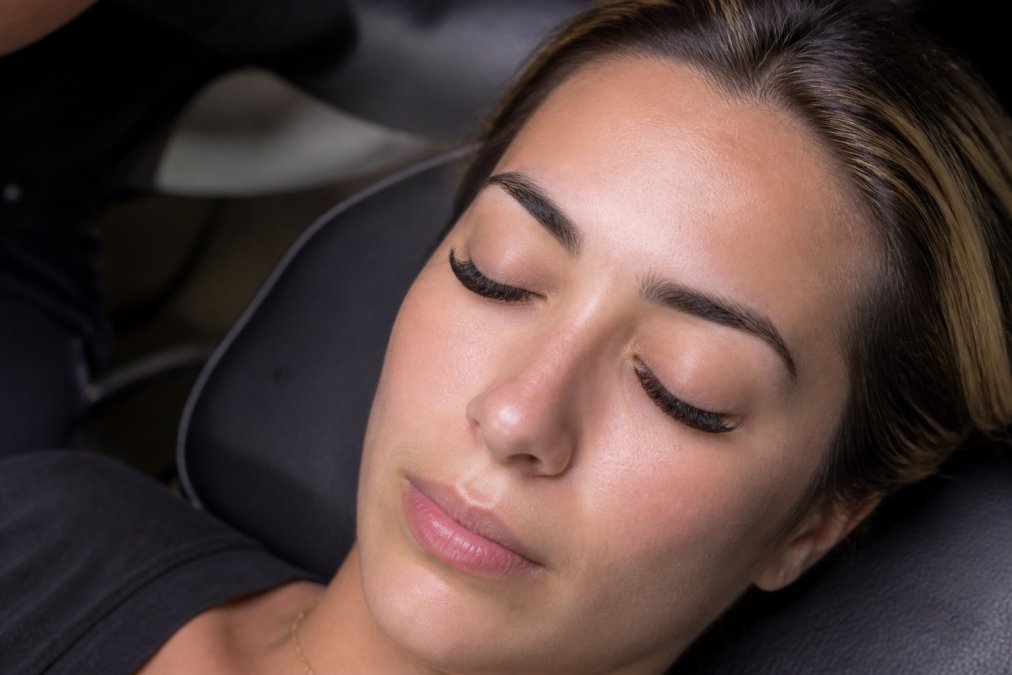
The longevity of your set follows a predictable biological timeline. Once you understand it, you can stop blaming the salon and start managing the factors you control.
The Natural Lash Cycle: Why Shedding Is Normal
Shedding is not a sign of poor application. It is the visible result of the natural lash cycle every eyelash follows from growth to fallout.
Your lashes are staggered across three distinct phases, which is why you lose a few every day without going bald. When an extension is attached to a lash at the end of its life, the whole unit falls out together, biology, not technical failure.
Anagen, Catagen, and Telogen Phases Explained
The anagen phase is the active growth period, lasting roughly 30 to 45 days, when the lash is strongest for holding an extension. The catagen phase is a two-to-three-week transition where growth stops. The telogen phase is the resting and shedding stage, lasting around 100 days before a new lash grows.
A well-trained technician maps your natural cycle before applying a full set, avoiding lashes about to shed.
The Hidden Variable: Lash Health Recovery After Shedding
Most guides miss what happens after lashes fall out, and that recovery timeline determines when you can safely return for a new set.
When a natural lash sheds with an extension attached, the follicle enters a resting period before the next anagen phase. The visible gap is a follicle that will not produce a new hair for several weeks. Repeated premature shedding, from heavy extensions or aggressive removal, can push follicles into prolonged telogen, creating thinning that is not immediately reversible.
A full recovery cycle takes six to eight weeks from the last removal. If you apply a new set before that cycle completes, you are bonding to lashes still in early growth and structurally weaker, setting up shorter retention.
How Extension Weight Disrupts the Cycle
Beyond adhesive chemistry, every extension adds weight to the natural lash. A lash in anagen can support a certain load before the follicle signals early shedding, called premature telogen induction, the primary mechanism behind lash loss mistaken for poor retention.
A classic set using 0.15 mm lashes applies roughly 30 to 40 percent more weight per lash than a premium set using 0.05 or 0.07 mm diameters. Over 80 to 120 lashes, that cumulative load is significant.
A high quality set with finer diameters extends the usable life of each natural lash by reducing mechanical stress.
What Damaged Lashes Look Like and How to Recover
Signs of damage from low-quality extensions or improper removal include lashes shorter than their neighbors, gaps that do not fill in, and rough texture at the base, indicating follicle or hair shaft damage.
Recovery requires removing all extensions and leaving lashes bare for at least one full cycle. A prescription serum containing prostaglandin analogs, like Latisse, can accelerate anagen and improve density but may cause eye irritation and iris color changes. Over-the-counter peptide-based serums are gentler. injectable results longevity.
Nutrition also plays a role. Biotin supplementation at 2,500 to 5,000 mcg daily is a common recommendation among dermatologists. What is not debatable is that mechanical trauma, rubbing, pulling, or sleeping face-down on extensions, causes more damage than any nutritional deficiency. American Academy of Dermatology guidance on eyelash health notes that mechanical trauma from rubbing or sleeping positions is a common cause of lash damage.
If you notice lashes that are not regrowing after eight weeks, or if you experience patchy loss with redness or scaling, that is not normal shedding. Consult a dermatologist or ophthalmologist before considering another set of extensions.
High Quality vs. Average Sets: What Actually Changes Retention
The gap between a standard set and high quality lashes is about material science, adhesive chemistry, and application precision, not aesthetics alone.
Premium extensions use finer diameters and lighter weights, putting less stress on the natural lash. Cheaper, heavier synthetics pull on the follicle and trigger premature shedding. Professional-grade adhesives use cyanoacrylate, but concentration and curing time vary by brand. A high-quality adhesive cures to a flexible bond that moves with the lash, while inferior formulas dry brittle and snap.
| Factor | Average Set | High Quality Set |
|---|---|---|
| Lash diameter | 0.15-0.25 mm, heavier feel | 0.03-0.07 mm, virtually weightless |
| Adhesive bond | Rigid, prone to cracking | Flexible, moves with natural lash |
| Typical wear | 2-3 weeks | 4-5 weeks |
| Natural lash impact | Higher stress, more shedding | Minimal stress, healthier lashes |
The difference shows up in the fourth week: an average set looks sparse by day 21, while a premium set still holds its mapping and volume.
Why Do Lash Extensions Fall Out Before Their Time?
When extensions fall out early, the cause is almost never the lash itself, it is an interaction between the adhesive bond and your environment or routine.
Chemical Interactions and Adhesive Breakdown
Cyanoacrylate adhesives are sensitive to specific chemicals. Oil is the primary enemy, breaking down the polymer bond at a molecular level. Many cleansers, moisturizers, and makeup removers contain oils that gradually dissolve the adhesive. Even oil-free products can weaken the bond if they contain glycols or certain surfactants.
Sleep Position and Physical Stress
How you sleep determines how long your lashes last. Side and stomach sleepers press their lashes into a pillow for seven to eight hours a night, creating friction that slowly abrades the adhesive. Over a month, that constant pressure causes micro-fractures in the bond. Silk pillowcases reduce friction significantly compared to cotton, and training yourself to sleep on your back extends the life of every set. American Academy of Dermatology guidance on eyelash health notes that mechanical trauma from rubbing or sleeping positions is a common cause of lash damage.
Eyelash Extension Fill Frequency: Timing Your Appointments
The standard fill happens every two to three weeks, but the optimal frequency depends on how many natural lashes you have shed in that window.
You will lose roughly 15 to 20 percent of your extensions every two weeks as underlying lashes reach telogen. A fill replaces those and keeps the set full. Waiting longer than three weeks shifts what you need from a fill to a full new set, costing more time and money.
Clients with high quality lashes often stretch fills to the three-week mark. The finer the diameter, the less noticeable individual gaps become, a practical advantage of premium materials.
Professional Application vs. DIY Kits: A Retention Comparison
DIY lash kits have exploded in popularity, but professional application consistently delivers superior wear compared to at-home alternatives.
A professional isolates each natural lash before bonding, ensuring the extension attaches to a single lash. DIY kits cannot achieve this isolation because you cannot see your own lashes from the required angle. When extensions bond to multiple lashes that shed at different times, the extension pulls loose prematurely.
Professional application also controls the placement distance from the eyelid. Extensions applied too close to the skin can cause irritation. Applied too far, they lose support and droop. FDA guidance on eyelash extension safety emphasizes that improper application can lead to corneal damage and lash loss, underscoring why trained technicians are the safer choice.
| Option | Retention | Risk Level | Best For |
|---|---|---|---|
| Professional extensions | 4-5 weeks | Low with trained artist | Long-term wear, events |
| DIY lash kits | 1-2 weeks | High if misapplied | Temporary experimentation |
| Strip lashes | Hours per wear | Low | Occasional glam |
| Magnetic lashes | Hours per wear | Moderate | Sensitive eyes |
For a special event, professional application is the only option that guarantees lashes still look full when the date arrives.
Lash Extension Aftercare Tips for Maximum Wear
Aftercare is where most clients lose their fourth and fifth weeks of wear. The routine takes two minutes a day, but skipping it cuts the lifespan of your set by nearly half.
Use an oil-free cleanser formulated for lash extensions daily. Brush through lashes with a spoolie each morning to prevent tangling. Avoid steam rooms and saunas for the first 48 hours, as the adhesive needs time to cure.
What to Avoid: Oil, Waterproof Mascara, and Rubbing
Oil-based products are the fastest way to destroy a set. Check every cleanser, moisturizer, and serum for oil before it touches your face. Waterproof mascara is equally damaging because it requires oil-based removers. Rubbing your eyes, even gently, weakens the adhesive bond and bends extensions out of shape.
Most clients who complain about poor retention unknowingly violate one of these three rules daily.
Signs Your Lashes Need a Professional Removal
Sometimes the healthiest choice is to remove extensions entirely rather than fill over a compromised set. Twisted, misdirected, or uncomfortable extensions signal that the natural lashes underneath need a break.
Attempting removal yourself with oil or pulling damages the follicle and can permanently reduce future growth. Professional removal uses a specially formulated remover that dissolves the cyanoacrylate bond without touching the natural lash, preserving health and ensuring a strong base for the next set.
If you notice redness, swelling, or persistent irritation around the lash line, that is a signal to stop wearing extensions and consult a professional. National Institutes of Health research on eyelash extension complications documents that allergic reactions and mechanical damage are the most common complications, both of which are preventable with proper application and removal.
Lash health recovery takes roughly one full natural lash cycle, about six to eight weeks. Patience protects your ability to wear extensions long term.
Getting the full lifespan out of your extensions requires the right technique, materials, and aftercare commitment. At Lashes by Shigeru, our Japanese AirLash® method and in-house manufactured hypoallergenic adhesives keep your set comfortable and beautiful for up to five weeks, even for sensitive eyes. Master stylist Shigeru Hanai brings over a decade of experience from Tokyo and New York to every appointment. Book an appointment and see what properly applied high quality lashes feel like.
Frequently Asked Questions
How long do high quality lashes last compared to standard extensions?
High quality lashes, applied by an experienced technician using premium adhesive, typically last up to five weeks. You will see noticeable shedding starting at the 2-week mark as your natural lashes enter the telogen phase. A fill appointment every 2 to 3 weeks keeps the set looking full.
Why do lash extensions fall out after only one week?
Premature shedding within a week usually points to application error or aftercare mistakes, not the quality of the lash itself. Common culprits include adhesive that did not cure properly, extensions attached to lashes still in the telogen phase, or exposure to oil-based cleansers and steam within the first 24 hours. Sleeping on your face can also crush the bond. A professionally applied set should not shed significantly before the 2-week mark.
What is the recommended eyelash extension fill frequency for high quality lashes?
For high quality lashes, plan a fill appointment every 2 to 3 weeks. This timing aligns with your natural lash cycle: about 20 to 30 percent of your lashes are in the shedding phase at any given time. Waiting longer than 3 weeks means more empty gaps and a shorter fill time, as the technician must spend time removing grown-out extensions. Consistent scheduling keeps the set looking full and reduces stress on your natural lashes.
Do high quality lash extensions damage your natural lashes?
No, high quality lash extensions should not damage your natural lashes when applied correctly. Damage occurs when extensions are too heavy for the natural lash, when multiple natural lashes are glued together, or when the client picks at the extensions. A skilled technician selects the correct lash diameter and length for your natural lash health. Proper aftercare, including gentle cleansing and no pulling, keeps your natural lashes healthy through multiple cycles.
Can I extend the life of high quality lashes with aftercare?
Yes, aftercare directly impacts how long high quality lashes last. Use an oil-free cleanser daily to remove makeup and debris that weaken the adhesive bond. Brush your lashes with a clean spoolie brush each morning. Avoid waterproof mascara, steam rooms, and sleeping on your face. Touching or rubbing your eyes loosens the bond. With disciplined aftercare, a high quality set can maintain its appearance between fills.
How does humidity and climate affect lash extension retention?
Humidity and climate play a significant role in lash retention. Humidity and climate can affect lash retention. After application, exposure to steam from hot showers or saunas can soften the adhesive bond, so keep your face away from direct steam.