

How to Strengthen Natural Lashes After Extensions
Table of Contents
- Signs of Damaged Eyelashes You Shouldn’t Ignore
- Understanding the Lash Growth Cycle and Why Extensions Interrupt It
- How Long for Lashes to Grow Back: Realistic Recovery Timelines
- Your Step-by-Step Lash Repair Routine
- Eyelash Growth Serum Benefits for Post-Extension Recovery
- Ingredient Safety: What to Look For and What to Avoid in Lash Serums
- Nutrition, Patience, and the Mental Side of Lash Recovery
- Post-Recovery Maintenance: Keeping Natural Lashes Strong Long-Term
- Frequently Asked Questions
Last Updated: September 10, 2026
Signs of Damaged Eyelashes You Shouldn’t Ignore
If you’re wondering how to strengthen natural lashes after extensions, the first step is recognizing the damage before it worsens. Damaged eyelashes rarely recover on their own without intervention, and ignoring the warning signs can turn a temporary setback into a long-term problem.
Common signs of damaged eyelashes include:
- Premature shedding far more than the normal two to five lashes per day
- Brittle lashes that snap or bend sharply instead of flexing
- Visible gaps along the lash line where growth has stalled
- Thinning density across the entire eyelid rather than isolated spots
- Redness or irritation at the follicle base
What most guides miss is that breakage and shedding are not the same thing. Breakage happens along the shaft from mechanical stress. Shedding starts at the follicle, which points to a deeper problem with the lash growth cycle itself.
If you notice persistent redness, swelling, or itching at the lash line, stop using all lash products and see a dermatologist. These symptoms can indicate an allergic reaction or infection that no at-home recovery routine will fix.
Understanding the Lash Growth Cycle and Why Extensions Interrupt It
Your natural lashes follow a predictable growth cycle, and extensions can disrupt it when applied incorrectly or worn without breaks. Understanding this cycle explains why recovery takes time and why patience matters more than any single product.
Anagen, Catagen, and Telogen: The Three Phases That Control Regrowth
The anagen phase is the active growth stage, lasting roughly 30 to 45 days for eyelashes (PubMed). During this phase, the follicle produces new keratin and the lash lengthens.
The catagen phase follows as a short transition period of about two to three weeks, when growth stops and the follicle begins to shrink.
The telogen phase is the resting stage (peer-reviewed research). The old lash sits in the follicle for roughly 100 days before shedding naturally, and a new lash begins forming underneath.
Why You Always Have Lashes in Every Phase at Once
This is the part most guides skip, and it explains everything about post-extension recovery. Your roughly 90 to 150 upper lashes per eye are not synchronized. At any given moment, a large share are in anagen, a smaller share are in catagen, and a meaningful share are in telogen.
That means when a lash technician bonds an extension to a telogen-phase lash, that lash is already scheduled to shed within days or weeks. The extension rides out with it. This is normal and not damage. The problem is what happens next: if the client returns for a fill and the technician re-lashes the same follicle before the new anagen lash has emerged, the follicle gets loaded again and again without a rest window.
How Extensions Actually Damage the Follicle
Two mechanisms do the real harm:
- Traction (mechanical) stress. Extensions add weight and leverage to a lash that was never designed to carry it. When the bond is too strong, too heavy, or applied to multiple lashes at once (a ‘cluster’ or ‘volume fan’ that is too wide), the constant pull can inflame the follicle. Over time this is the same process dermatologists call traction alopecia when it happens on the scalp (the American Academy of Dermatology).
- Adhesive and removal trauma. Cyanoacrylate-based lash adhesives cure hard. If a lash is pulled off before the bond is fully dissolved, the follicle’s anchoring structures can be stretched or torn. Repeated pulling is what turns a temporary shed into a long-term thinning pattern.
What This Means for Your Recovery
Because the cycle is staggered, you will not see all your lashes return at once. New growth emerges in waves. A common pattern is that the first short ‘baby’ lashes appear along the lash line within two to three weeks, but full density takes multiple cycles to rebuild. That is why the recovery timeline below spans weeks, not days.
A healthy lash line is never 100% full-length lashes. Expecting uniform length across every lash is the fastest way to feel like your recovery has stalled when it is actually on track.
How Long for Lashes to Grow Back: Realistic Recovery Timelines
Full lash recovery typically takes four to eight weeks, though this varies based on how much damage occurred and how consistently you follow a repair routine. Many people expect visible improvement within two weeks and feel discouraged when it doesn’t happen.
Here’s what a realistic timeline looks like:
| Timeframe | What You’ll Notice |
|---|---|
| Weeks 1-2 | Shedding slows; gaps remain visible |
| Weeks 3-4 | New growth appears as short, fine lashes |
| Weeks 5-6 | Density begins to fill in along the lash line |
| Weeks 7-8+ | Lashes reach closer to their natural length |
The how long for lashes to grow back question has no single answer because follicle health, age, and nutrition all play a role. What matters is consistency. Skipping your routine for a week can set you back.
Your Step-by-Step Lash Repair Routine
A structured repair routine gives your follicles the best conditions for regrowth. The process takes about five minutes per day, but the sequence matters.
Step 1: Remove Extensions Professionally and Assess the Damage
Never remove extensions at home. Picking or pulling at adhesive causes mechanical stress that damages the follicle and can lead to premature shedding. A professional removal uses a dissolving agent that releases the bond without tugging.
Once extensions are off, assess the lash line in natural light. Note the gaps, the density, and whether any lashes look brittle or discolored.
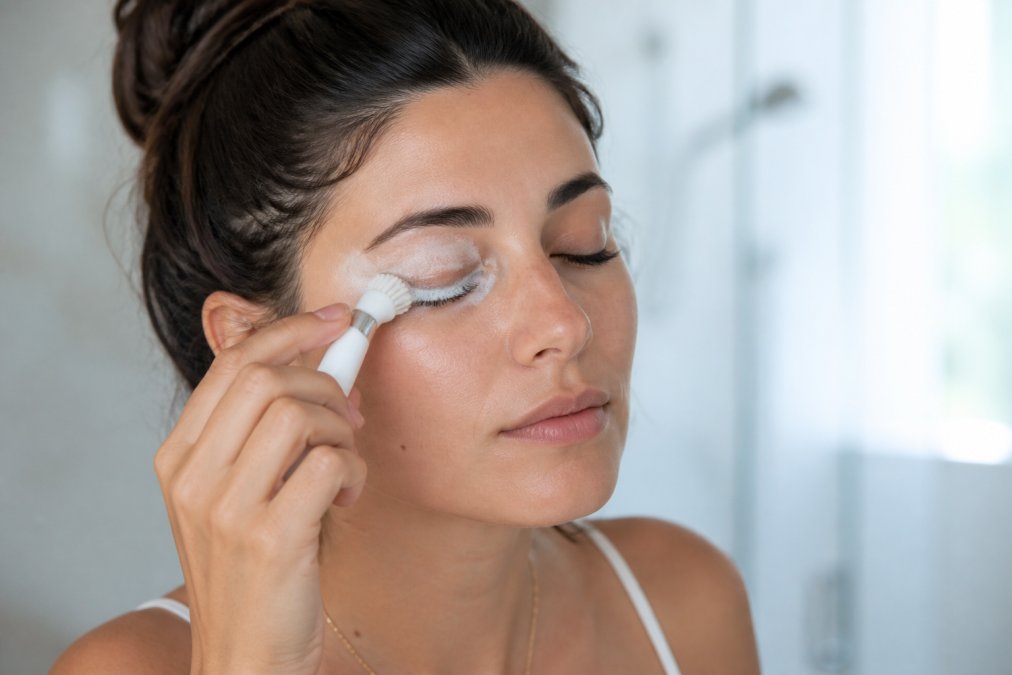
Step 2: Cleanse Gently with a Foaming Lash Cleanser
A foaming lash cleanser removes oil, debris, and makeup residue without stripping moisture. Use a soft brush and light downward strokes along the closed eyelid.
Avoid rubbing. Friction along the lash line is one of the most common causes of lash breakage during recovery.
Step 3: Condition with Oils and Serums That Support Follicle Health
Apply a non-medicated serum or a nutrient-rich oil to the lash line each night. Castor oil and vitamin E are traditional choices for lash conditioning because they help maintain hydration and flexibility.
If you prefer a serum, look for formulas containing panthenol, hyaluronic acid, or biotin. These ingredients support lash hydration and help reduce brittleness while new growth comes in.
Eyelash Growth Serum Benefits for Post-Extension Recovery
An eyelash growth serum can accelerate recovery by supporting follicle health during the regrowth window. The eyelash growth serum benefits go beyond length: consistent use can improve lash diameter, density, and retention over time.
At Lashes by Shigeru, we manufacture our own growth serums in-house. Our formulas were perfected with input from our salon clients.
Here’s what a quality serum does:
- Supports follicle stimulation during the anagen phase
- Improves lash retention so new growth stays in place longer
- Increases eyelash density by supporting healthier regrowth
- Reduces premature shedding over time
Apply serum along the upper lash line once daily, ideally at night. Give it at least six weeks before judging results.
Ingredient Safety: What to Look For and What to Avoid in Lash Serums
Not all lash serums are safe for long-term use, and the ingredient list matters more than the marketing claims. A hypoallergenic formula is the baseline, especially if you’ve had reactions to lash adhesives in the past.
What to look for:
- Panthenol, biotin, hyaluronic acid
- Peptides that support keratin production
- Preservative systems suitable for sensitive eyes
What to avoid:
- Analogs of prostaglandin (often listed as isopropyl cloprostenate), which can cause iris discoloration and orbital fat loss
- Fragrance and essential oils that irritate the lash line
- Alcohol-based formulas that dry out lashes
Patch test any new serum on your inner forearm for 48 hours before applying it near your eyes. If you’ve reacted to lash adhesive before, ask for an ingredient list and compare it against what caused your previous reaction.
Nutrition, Patience, and the Mental Side of Lash Recovery
Lashes grow slowly, and that slowness is the hardest part for most people. Many clients tell us the waiting feels worse than the damage itself. This section covers both what to eat and how to survive the weeks when your lash line looks worse before it looks better.
What Actually Feeds a Lash Follicle
A lash is roughly 90% keratin protein. The follicle needs a steady supply of building blocks and oxygen to produce it. The nutrients with the clearest roles:
- Protein. Keratin is protein. Chronically low protein intake slows hair and lash growth before it shows up anywhere else.
- Biotin (B7). Supports keratin infrastructure. Most people get enough from diet; true deficiency is rare, and mega-doses have not been shown to speed lash growth in people who are not deficient.
- Iron. Low ferritin (stored iron) is one of the most common reversible causes of slow hair and lash growth, particularly in menstruating women. This is worth a blood test rather than guessing.
- Omega-3 fatty acids. Support the oil glands along the eyelid margin that keep lashes conditioned.
- Vitamin D and zinc. Both play roles in follicle cycling; deficiency is common and easy to test for.
Biotin supplements can interfere with certain lab tests, including thyroid and cardiac troponin tests. Tell your doctor you take biotin before any bloodwork, and stop it a few days ahead if instructed.
The Psychological Side Nobody Warns You About
The ‘bald lash phase’ is real and it is demoralizing. You removed the extensions expecting relief, and instead you are looking at sparse, short lashes in the mirror every morning. A few things help:
- Reframe the goal. You are not trying to look like you have extensions. You are trying to restore follicle health. Those are different finish lines.
- Stop the daily mirror check. Lashes grow about 0.12 to 0.14 mm per day. That is invisible day to day and obvious week to week. Checking hourly guarantees you will feel stuck.
- Use photos, not feelings. Take a clear, well-lit photo of each closed eye every two weeks, same lighting, same angle. This is the only reliable way to see progress.
- Consider a temporary bridge. If the sparse phase is affecting your confidence at work or socially, a light strip of magnetic or glue-on lashes worn occasionally, removed gently the same day, is far less stressful to the follicle than a full extension set. Skip waterproof mascara, which requires friction to remove.
A Realistic Week-by-Week Expectation
| Week | What Most People See | What Is Happening Underneath |
|---|---|---|
| 1 | Shedding continues; gaps look the same or worse | Follicles recovering from adhesive and traction stress |
| 2-3 | First short, fine ‘baby’ lashes at the lash line | New anagen lashes emerging |
| 4-5 | Density starts to fill in; length still short | Multiple follicles now in active growth |
| 6-8 | Lashes approach natural length; gaps close | Cycle stabilizing |
| 8-12 | Full natural density for most people | Mature lash line restored |
If you are past 12 weeks with no visible new growth, that is the point to see a dermatologist or oculoplastic specialist rather than adding more products.
Recovery is not linear. Some weeks you will see obvious new growth; others you will not notice a change. Track your progress with photos every two weeks rather than judging day by day.
Post-Recovery Maintenance: Keeping Natural Lashes Strong Long-Term
Once your lashes have recovered, the goal shifts from repair to maintenance. Lash maintenance prevents the cycle of damage and regrowth from repeating.
A few habits protect your investment:
- Take a two-week break between extension sets to let follicles rest
- Continue using a conditioning serum two to three times per week
- Stick with a foaming lash cleanser instead of harsh makeup removers
- Avoid waterproof mascara, which requires friction to remove
At Lashes by Shigeru, our Japanese AirLash® technique uses virtually weightless extensions and hypoallergenic adhesives that we manufacture ourselves. That control over materials is why our clients can wear extensions consistently without the cumulative damage that leads to brittle lashes and thinning. Our master stylist Shigeru Hanai trained in Tokyo and New York, and our team continues education to keep application techniques gentle on the natural lash.
If you’ve had a bad experience elsewhere and you’re worried about how to strengthen natural lashes after extensions before booking again, we assess your lash health first and recommend a recovery plan before we apply a single extension. Results last up to five weeks, and the application is comfortable enough that clients with sensitive eyes come back consistently.
Damaged lashes from extensions are recoverable, but they require a real routine and realistic expectations. If you’re ready to rebuild your natural lash health with a team that prioritizes follicle safety over speed, Lashes by Shigeru offers personalized recovery guidance, in-house growth serums, and a virtually weightless application technique designed for sensitive eyes and long-term lash health. Get started with Lashes by Shigeru and book an appointment to restore the lashes you thought you’d lost.
Frequently Asked Questions
How can I help my natural lashes grow back after getting extensions?
Start with a professional removal to avoid further breakage, then follow a gentle daily routine: cleanse with a foaming lash cleanser, apply a non-medicated lash serum or castor oil to condition follicles, and avoid mascara or curlers during the first few weeks. Patience matters because the lash growth cycle runs in phases, and visible regrowth typically takes four to eight weeks depending on your individual cycle and how much damage occurred.
How long does it take for natural lashes to recover after extensions?
Most people see meaningful recovery within four to six weeks, though full density can take two to three months. The timeline depends on how long you wore extensions, the weight of the lashes applied, and your natural growth cycle. During the anagen phase, new lashes push through, but they need time to reach full length and thickness. Using a lash serum and avoiding mechanical stress speeds up the process.
What are the best ingredients for strengthening natural lashes?
Look for biotin, panthenol, hyaluronic acid, vitamin E, and keratin in lash serums, as these support hydration and follicle health. Castor oil is a popular natural conditioner that helps reduce brittleness. Avoid serums with prostaglandin analogs unless prescribed by a doctor, since they can cause irritation and iris discoloration. A hypoallergenic, non-medicated formula is safest for sensitive eyes and delivers steady conditioning without side effects.
Can I wear mascara while recovering my natural lashes?
It is best to skip mascara for at least two to three weeks after extension removal. Mascara application and removal involve rubbing and pulling that causes mechanical stress on already weakened lashes, leading to premature shedding and breakage. If you must wear something, choose a lash tint or a lightweight serum-based mascara and remove it gently with a non-oil cleanser. Give your follicles a true rest period to rebuild strength.