

Natural Lash Results That Last Up to 5 Weeks
Table of Contents
- Why Japanese AirLash® Delivers Natural Results Up to 5 Weeks
- Why Do Lash Extensions Fall Out Before the 5-Week Mark?
- Lash Extension Aftercare Tips for Long-Lasting Wear
- How to Extend Lash Life: A Step-by-Step Maintenance Guide
- The Science of 5-Week Longevity: Active Ingredients and Skin Cycle Timing
- Hypoallergenic and Dermatological Safety: What Sensitive Eyes Need to Know
- Frequently Asked Questions
Last Updated: September 28, 2026
Why Japanese AirLash® Delivers Natural Results Up to 5 Weeks
Most lash extensions start shedding within seven to ten days. The proprietary Japanese AirLash® technique changes that timeline by addressing the two factors that determine longevity: adhesive chemistry and lash weight distribution. At Lashes by Shigeru, we’ve refined this method to deliver natural lash results that last up to 5 weeks for clients who want low-maintenance definition without constant touch-ups.
Traditional methods bond a heavy extension directly to the natural lash, creating stress at the base. AirLash® distributes weight across multiple attachment points, reducing tension that causes premature shedding. Combined with sensitive LED curing, the adhesive sets without the harsh fumes that irritate sensitive eyes.
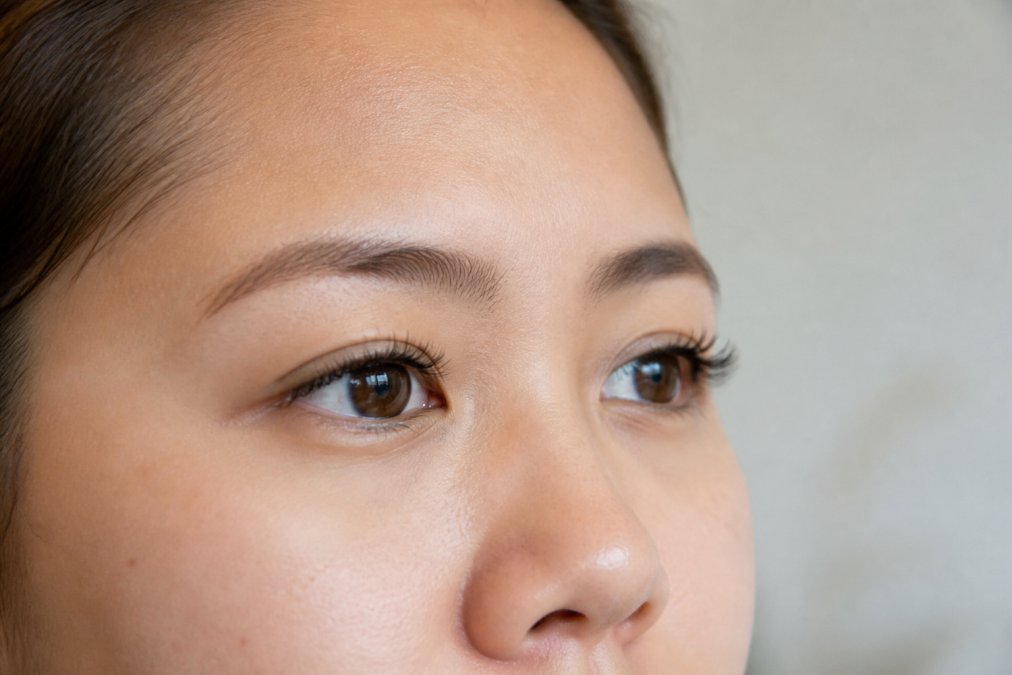
The result: extensions that move with your natural lashes, look undeniably real, and hold their shape through weeks of daily life.
Why Do Lash Extensions Fall Out Before the 5-Week Mark?
Lash extensions fall out early for two reasons: poor adhesive bonding and disruption of the natural lash growth cycle.
The Natural Skin Cycle and Lash Shedding
Your natural lashes follow a predictable growth cycle. Each lash grows for weeks, rests, then sheds to make room for a new one. A healthy person sheds several natural lashes daily. Extensions attached to those lashes leave with them.
The question is whether extensions fall out with the natural cycle or ahead of it. When they shed prematurely, the adhesive bond failed before the lash reached its natural shed point.
Adhesive Quality and Application Technique
Adhesive is where most longevity promises break down. Cheap adhesives cure too fast or too slow, creating weak bonds that fail within days. Technique matters equally: too much adhesive creates heavy, clumpy bonds that stress the natural lash, while too little makes the extension pop off at the first sign of moisture.
The American Academy of Ophthalmology’s guidance on eyelash extension safety notes that improper application can damage natural lashes and cause irritation.
If your extensions shed within the first week, the problem is almost always the adhesive bond, not your aftercare. No amount of careful cleansing will fix a weak attachment.
Lash Extension Aftercare Tips for Long-Lasting Wear
Aftercare is the single largest variable in whether you get five weeks or two from the same application. Cyanoacrylate-based lash adhesives cure by pulling moisture from the air, and once cured, the polymer bond is sensitive to oils, friction, and heat. Every aftercare rule below maps to one of those three stressors.
The First 48 Hours: What to Avoid
Keep extensions completely dry for the first 24 to 48 hours. Water exposure interrupts polymerization before the bond reaches full strength, and a bond that cures at 70% strength will fail weeks earlier than one that cures fully. Skip steam, saunas, swimming, and hot showers, avoid touching or rubbing your eyes, and sleep on your back if possible.
Daily Habits That Protect Your Extensions
Once the adhesive has cured, your routine should protect the bond without extra effort. Each habit targets a specific failure mode:
- Cleanse with a lash-safe foam cleanser, not oil-based products. Oils break down cyanoacrylate bonds over time. A single use of a heavy oil cleanser won’t destroy a set, but daily exposure will shorten wear by a week or more.
- Pat dry gently with a lint-free cloth; never rub. Friction is the second-largest cause of premature shedding after oil exposure. Rubbing also pulls on the natural lash, which can loosen the follicle over time.
- Brush lashes with a spoolie each morning. This prevents tangling and cross-linking between adjacent lashes, which is what causes that “clumped” look around week three.
- Avoid waterproof mascara. Waterproof formulas require oil-based or solvent-based removers, both of which attack the adhesive bond directly.
- Use a silk or satin pillowcase. Cotton creates friction against the lash line during sleep. Silk reduces that friction dramatically and is one of the cheapest longevity upgrades available.
What Actually Shortens Wear: A Realistic Trade-Off List
Most aftercare guides tell you what to avoid without telling you what it costs. Here’s an honest breakdown of common habits and their typical impact on a five-week set:
| Habit | Frequency | Typical Wear Impact |
|---|---|---|
| Oil-based cleanser or makeup remover | Daily | Loses 1-2 weeks |
| Waterproof mascara | Weekly | Loses 1-2 weeks |
| Face-down sleeping on cotton | Nightly | Loses 1 week |
| Sauna or steam room | Weekly | Loses 3-7 days |
| Skipping daily cleanse | Daily | Loses 3-5 days (buildup weakens bonds) |
| Consistent silk pillowcase + foam cleanse | Daily | Full 5-week potential |
If you can only change one habit, switch to a lash-safe foam cleanser and a silk pillowcase. Those two changes alone account for most of the difference between clients who consistently hit five weeks and clients who never do.
How to Extend Lash Life: A Step-by-Step Maintenance Guide
Extending lash life comes down to a consistent routine that takes under two minutes daily.
| Maintenance Task | Frequency | Time Required |
|---|---|---|
| Morning brush-out | Daily | 30 seconds |
| Lash-safe cleanse | Daily | 60 seconds |
| Deep clean | Weekly | 2 minutes |
| Touch-up appointment | Every 2-3 weeks | 45-60 minutes |
Set a phone reminder for your touch-up two weeks after each appointment. Clients who book proactively consistently get more weeks of full-looking lashes than those who wait for visible gaps.
The Science of 5-Week Longevity: Active Ingredients and Skin Cycle Timing
Five-week wear isn’t marketing language. It’s the result of aligning adhesive performance with the natural lash growth cycle.
The Lash Growth Cycle, Phase by Phase
Every natural lash moves through three phases:
- Anagen (growth phase): The lash actively grows. This phase lasts roughly 30 to 45 days for most people (pubmed.ncbi.nlm.nih.gov).
- Catagen (transition phase): Growth stops and the follicle begins to shrink. This lasts about 2 to 3 weeks.
- Telogen (resting phase): The lash sits dormant before shedding. This lasts roughly 3 to 4 months, though the lash is typically shed well before the full resting period ends.
At any given moment, roughly 90% of your upper lashes are in anagen, and the remaining 10% are spread across catagen and telogen. That’s why you naturally shed a few lashes daily, and why no lash extension set can last indefinitely: every extension is bonded to a lash already on its own countdown.
Why Five Weeks Is the Realistic Ceiling
Here’s the math. If a lash enters anagen today and you attach an extension tomorrow, that lash has roughly 30 to 45 days of growth left before it transitions. Add the catagen window and you get a theoretical maximum of around 7 to 9 weeks before the natural lash sheds and takes the extension with it. Understanding these biological cycles requires a deeper look at the science behind beauty efficacy to appreciate how consistent maintenance protocols support the longevity of such delicate aesthetic enhancements.
What Active Ingredients Actually Do
Growth serums and lash conditioners don’t extend the life of the adhesive. They strengthen the natural lash so it holds an extension better and sheds less prematurely. Biotin, peptides, and keratin nourish the follicle for a stronger anchor point, while niacinamide and plant-derived squalane support the delicate skin around the eye, reducing irritation that leads to rubbing and premature loss.
The Three-Factor Model
The 5-week lash results claim holds when three factors align:
- Quality adhesive that cures fully without becoming brittle.
- Precise application that distributes weight across multiple attachment points rather than stressing a single bond.
- Consistent aftercare that keeps oils, friction, and heat away from the bond.
Five weeks isn’t a promise about the adhesive. It’s a promise about the natural lash cycle, and it only holds when adhesive quality, application technique, and aftercare all support it.
Hypoallergenic and Dermatological Safety: What Sensitive Eyes Need to Know
Hypoallergenic lash extensions aren’t about weaker adhesive. They’re about refined formulations and controlled curing that deliver the same hold without the irritants that trigger reactions.
Clients with sparse or short natural lashes often worry they don’t have enough to work with. A skilled artist assesses your natural lashes and selects extension weight and length that complement what you have, never overwhelming the follicle.
Frequently Asked Questions
Why do lash extensions fall out before 5 weeks?
Extensions fall out early for three main reasons: poor adhesive quality, improper application technique, or natural lash shedding. Your natural lashes go through a skin cycle and shed every 60 to 90 days, so some loss is expected. However, if extensions are falling out within the first week, the adhesive bond likely failed or the extensions were too heavy for your natural lashes. A skilled lash artist using high-quality adhesives and weightless application can help you achieve natural lash results that last up to 5 weeks.
How can I make my lash extensions last longer naturally?
Follow these lash extension aftercare tips: avoid water, steam, and oil-based products for the first 48 hours after application. Clean your lashes gently every day with a lash-safe cleanser. Avoid rubbing your eyes, sleeping face-down, and using waterproof mascara. Brush your lashes daily with a clean spoolie. These habits help extend lash life and protect the adhesive bond. If you have naturally thin lashes, a growth serum with peptides and biotin can strengthen lashes over time.
What is the difference between standard lashes and AirLash® technology?
Standard lash extensions often feel heavier and use adhesives that may irritate sensitive eyes. AirLash® technology uses virtually weightless extensions and hypoallergenic adhesives applied with LED precision. This method reduces strain on natural lashes and creates a more comfortable, natural look. The lighter weight also means less tension on the lash follicle, which supports longer retention. For clients with sensitive eyes or thin natural lashes, AirLash® offers a safer path to long-lasting results.
Are hypoallergenic lash extensions better for long-term wear?
Yes. Hypoallergenic adhesives contain fewer harsh chemicals, which lowers the risk of irritation and allergic reactions. When your eyes are not inflamed, the adhesive bond stays stronger and lashes last longer. For anyone who has experienced redness, itching, or swelling with standard extensions, hypoallergenic options are worth trying. Always ask your lash artist about allergy testing before your first full set if you have a history of sensitivities.