
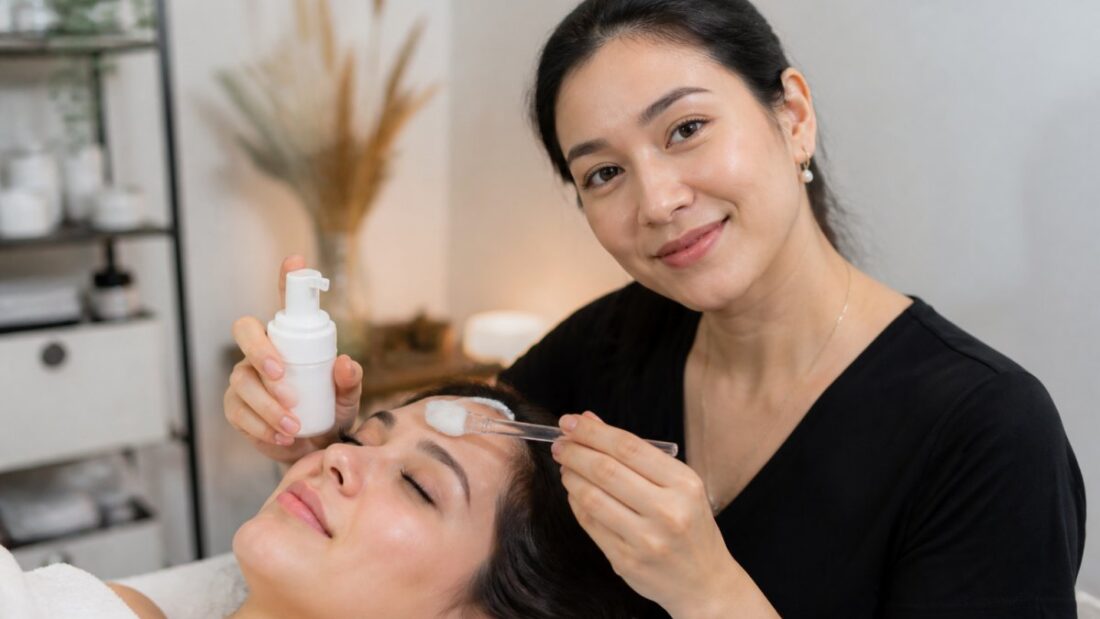
How to Clean Lash Extensions With Foam Cleanser
Table of Contents
- Why Foam Cleanser Beats Wipes and Water Alone
- How to Clean Lash Extensions With Foam Cleanser: Step by Step
- How Often to Wash Lash Extensions (and When to Skip It)
- Choosing the Best Lash Extension Cleanser for Sensitive Eyes
- Your Daily Lash Extension Aftercare Routine
- What Happens If You Don’t Clean Your Lash Extensions
- Conclusion
- Frequently Asked Questions
Last Updated: September 27, 2026
Why Foam Cleanser Beats Wipes and Water Alone
Most lash extension wearers think a splash of water or a makeup wipe does the job. It doesn’t. Foam cleanser is the only method that lifts oil, makeup residue, and debris from the lash line without pulling at the adhesive bonds.
What Foam Cleanser Removes That Water Leaves Behind
Water can’t break down oil. Your skin produces oil buildup every day, and it collects at the lash line. That oil sits on the adhesive and slowly eats away at it.
Foam cleanser removes:
- Sebum and oil buildup from the lash line
- Makeup residue trapped between extensions
- Dead skin cells and daily debris
- Environmental grit that causes eye irritation
How to Clean Lash Extensions With Foam Cleanser: Step by Step
Cleaning lash extensions with foam cleanser takes about two minutes and three simple steps. Do it gently, and your lash retention will hold. Rush it, and you’ll pull out natural lashes along with the extensions.
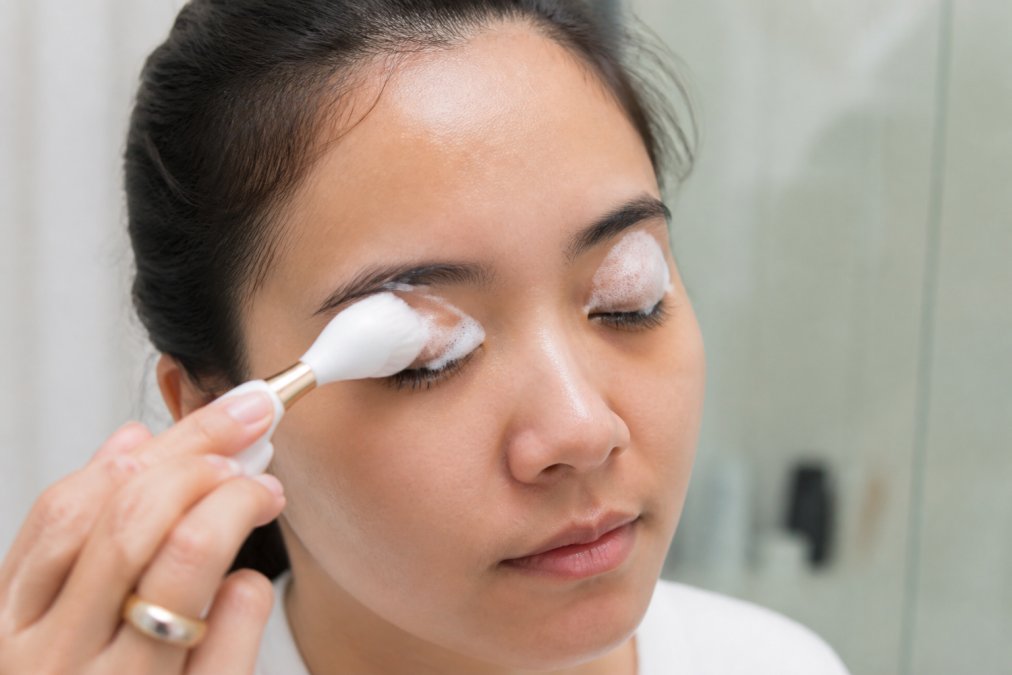
Step 1: Prep Your Hands and Lash Line
Wash your hands first. Dirty hands undo the whole point of cleansing.
- Clean: Individual extensions fan apart freely, the lash line looks matte, and there’s no visible film at the base.
- Dirty: Extensions stick together in clumps, the base looks shiny or waxy, and you can see a faint yellow or gray line where the adhesive meets the lid.
Step 2: Apply, Cleanse, and Rinse
- Pump one to two drops of foam cleanser onto a soft lash wand or your fingertips.
- Close one eye and gently sweep the foam along the lash line.
- Use a spoolie brush to comb through the extensions and remove clumps.
- Rinse with lukewarm water until the foam is gone.
- Repeat on the other eye.
Don’t scrub. Light pressure is all you need.
Step 3: Dry and Fluff Without Damaging Bonds
Pat dry with a lint-free towel. Then brush the lashes with a clean spoolie to fluff them back into shape.
Step 4: The Post-Brushing Routine Most People Skip
Brushing is not the last step. What you do in the sixty seconds after brushing determines whether your set stays full until the next fill. Run this sequence every time:
- Check for tangles. Look at the lash line in a magnifying mirror. If two extensions are crossed, separate them with the tip of a clean spoolie, never with your fingers.
- Fluff the fans. For volume and hybrid sets, use the spoolie to gently open each fan back to its original spread. A closed fan traps debris and reads as a clump.
- Inspect the base. If you see a white or cloudy ring at the base of an extension, that’s adhesive that has already started to degrade. Note it and mention it at your next appointment.
- Check for loose extensions. A lash that slides freely on the natural lash is no longer bonded. Don’t pull it, let your technician remove it.
- Lay flat and leave them alone. Don’t touch, rub, or sleep on your face for the rest of the evening.
A common mistake is brushing lashes while they’re still wet. Wet lashes stick together, and combing them pulls at the bond. Always fluff after they’re dry.
How Cleaning Changes by Lash Style
Density changes how debris gets trapped, so the same routine needs small adjustments depending on your set:
- Classic sets (one extension per natural lash): Debris sits mostly on the surface. A two-minute foam cleanse every one to two days is usually enough. Because there’s space between lashes, air circulates and buildup dries out faster.
- Hybrid sets: The mix of classic and volume lashes creates uneven gaps. Pay extra attention to the volume sections, where fans trap oil and dead skin cells between the individual lashes.
- Volume and mega-volume sets: The dense fans act like a filter. Oil, makeup, and skin cells collect inside the fan rather than on top of it, so surface cleansing alone leaves residue behind. Use a soft cleansing brush to work foam into the fan bases, and expect to cleanse daily rather than every other day.
How Often to Wash Lash Extensions (and When to Skip It)
Wash your lash extensions every one to two days. Daily is best if you wear makeup or have oily skin. Every other day works if your lashes stay clean.
Skip washing when:
- Your lash technician just applied a fresh set (wait 24 to 48 hours)
- You have an eye infection or irritation until it clears
- You’re using a lash serum your technician hasn’t approved
Choosing the Best Lash Extension Cleanser for Sensitive Eyes
The best lash extension cleanser for sensitive eyes is oil-free, fragrance-free, and pH-balanced. Oil breaks down adhesive. Fragrance and harsh detergents trigger irritation.
Check the label for:
- “Oil-free” and “extension-safe” wording
- No sulfates or alcohol
- A gentle foaming formula, not a gel or cream
Your Daily Lash Extension Aftercare Routine
A simple lash extension aftercare routine protects your investment. Keep it short and consistent, but understand what each step is actually doing, because the why is what keeps you from skipping it.
- Morning: Brush lashes with a clean spoolie. This separates lashes that stuck together overnight and redistributes natural oils away from the lash line.
- Evening: Cleanse with foam cleanser and lukewarm water. This is the step that removes the day’s sebum before it reaches the adhesive.
- Twice a week: Do a deeper lash bath with a soft cleansing brush. This reaches inside volume fans where surface lather can’t.
- Always: Keep oil-based products away from the lash line. Oil is the single fastest way to shorten retention.
- Never: Rub your eyes or sleep face-down. Both create friction that breaks bonds and bends extensions out of shape.
Why Oil Is the Real Enemy
Lash extension adhesive is a cyanoacrylate. It cures into a hard, cross-linked polymer that holds the extension to the natural lash. Oil, whether from your skin, a moisturizer, or a makeup remover, works its way into that polymer and disrupts the cross-links. The bond doesn’t snap all at once. It softens, then fails, which is why lashes shed gradually instead of in a single clump.
Adjusting the Routine by Lash Style
| Lash Style | Cleanse Frequency | Deep Lash Bath | Watch For |
|---|---|---|---|
| Classic | Every 1-2 days | Once weekly | Surface film at the lash line |
| Hybrid | Daily | Twice weekly | Buildup in the volume sections |
| Volume / Mega | Daily | Twice weekly | Dullness or heaviness by day 3 |
If you wear a volume set and your lashes look tired before your next fill, the fix is usually more frequent deep lash baths, not a new set.
Troubleshooting Common Aftercare Problems
- Lashes feel stiff or crunchy after cleansing. You likely didn’t rinse all the foam out. Rinse again with lukewarm water and fluff with a clean spoolie once dry.
- Lashes clump together within a day of cleansing. Either the foam wasn’t worked into the fan bases, or you’re using a product with oil in it. Check the label.
- Retention dropped suddenly. Look at what changed: a new moisturizer, a new eye cream, a new cleanser. Oil sneaks in through skincare more often than through makeup.
- Lash line looks red or feels itchy. Stop cleansing with the product and see a doctor if it persists. Irritation that doesn’t clear is a medical issue, not a maintenance issue.
- One section sheds faster than the rest. That’s usually a sleep-position pattern. If you sleep on one side, that side’s lashes take more friction.
The Weekly Reset
Once a week, give your set a longer session. Cleanse with foam, work a soft brush through the lash line, rinse thoroughly, and inspect the base of each section in a magnifying mirror. This is when you catch the early signs of buildup, the faint film, the slightly closed fan, the extension that’s starting to slide, before they turn into a fill appointment that can’t be saved.
Consistency beats intensity. A two-minute cleanse every day protects your set better than a twenty-minute deep clean once a month.
| Task | Frequency | Time Needed |
|---|---|---|
| Spoolie brush | Daily, morning | 30 seconds |
| Foam cleanse | Every 1-2 days | 2 minutes |
| Deep lash bath | Twice weekly | 3 minutes |
| Weekly base inspection | Once weekly | 2 minutes |
| Touch-up appointment | Every 2-3 weeks | Varies |
What Happens If You Don’t Clean Your Lash Extensions
Skipping cleanser leads to real problems. Oil and debris build up along the lash line. Bacteria grow. The CDC overview of blepharitis and eyelid hygiene explains that poor eyelid hygiene can lead to blepharitis, an inflammation of the eyelids.
The risks stack up fast:
- Bacterial growth around the lash follicles
- Blepharitis and chronic eye irritation
- Clumping and tangles that ruin the look
- Faster shedding as adhesive breaks down
- Damage to natural lashes from constant pulling
Never pick or pull at clumped lashes. You’ll rip out natural lashes that take months to grow back. Cleanse instead, and let a lash technician fix stubborn clumps.
Conclusion
Caring for lash extensions comes down to one habit: cleanse with foam, and do it often. Skip it, and you risk clumping, shedding, and eye irritation that no touch-up can fix.
Frequently Asked Questions
How often should I clean my lash extensions with foam cleanser?
Most lash artists recommend using a foam cleanser once daily, or at minimum every other day, to prevent oil buildup, makeup residue, and bacterial growth along the lash line. If you wear makeup or live in a humid climate, daily cleansing is best. Always follow the specific guidance from your lash technician, since your adhesive type and lash style may call for a slightly different schedule.
Can I use any foam cleanser on my lash extensions?
No. Choose a foam cleanser formulated specifically for eyelash extensions. Look for oil-free, fragrance-free, and pH-balanced formulas, since oils and harsh surfactants can break down adhesive bonds and shorten lash retention. A dedicated lash shampoo or foam cleanser designed for extensions will clean thoroughly without weakening the bond or irritating sensitive eyes.
Will cleaning my lash extensions with foam cleanser make them last longer?
Yes, in most cases. Regular foam cleansing removes oil buildup, debris, and makeup residue that degrade adhesive over time. Clean lashes experience less clumping and fewer tangles, and the adhesive bond stays intact longer. Combined with proper drying and a consistent aftercare routine, cleansing can help your extensions hold their shape and last closer to your full refill cycle.
Can I brush my lash extensions after cleaning with foam?
Yes, but only once the lashes are fully dry. Brushing wet extensions with a spoolie brush or lash wand can stretch the adhesive bonds and cause premature shedding. After cleansing, pat the lashes gently with a lint-free towel or use a lash fan on a cool setting, then brush upward and outward to separate and fluff the lashes. Never tug or force tangles apart.