
Can You Maintain Lash Extensions on a Budget?
Last Updated: October 24, 2026
Quick Summary
Maintaining lash extensions on a budget means protecting retention so you need fewer fills. Clean them daily with oil-free lash shampoo, avoid rubbing and oil-based products, and book fills based on gaps and bond condition rather than the calendar. Fills typically run $60 to $100 every two to three weeks.
- Clean lashes daily with foaming lash shampoo, rinse with cool water, and pat dry with a lint-free cloth.
- Keep oil-based products away from the lash line and skip waterproof mascara.
- Book a fill only when more than about a third of lashes are missing or bonds look crusty.
- Choose a lower-maintenance classic style to reduce fill time and frequency.
- Pause extensions and see a professional if you notice redness, itching, or pain.
Table of Contents
- Why Lash Extension Aftercare Decides Your Real Cost
- How to Clean Lash Extensions Without Wrecking Retention
- Habits That Protect Your Investment Between Fills
- Your Lash Extension Refill Schedule: Timing It to Save Money
- Budget-Friendly Lash Extensions: Saving Without Cutting Corners
- When to Pause Extensions or Call a Professional
- Booking a Fill That Protects Your Lashes and Your Budget
- Frequently Asked Questions
Why Lash Extension Aftercare Decides Your Real Cost
Maintaining lash extensions on a budget starts with one hard truth: the application is the cheap part. Retention is where the money goes. A 2024 study in Clinical Ophthalmology on ocular side effects of lash extensions found that improper care and application can lead to irritation, allergic reactions, and premature shedding, all of which send you back to the salon sooner.
The Two Costs of Extensions: Application and Retention
Your total spend splits into two buckets. The full set is the one-time application. The fill appointment is the recurring cost, and it repeats every two to three weeks. Stacy Lash notes that refills typically run $60 to $100, compared with a $12 mascara, which is why a smart routine matters so much. For a full breakdown of whether the spend pays off, see our guide on whether lash extensions are worth the investment.
How to Clean Lash Extensions Without Wrecking Retention
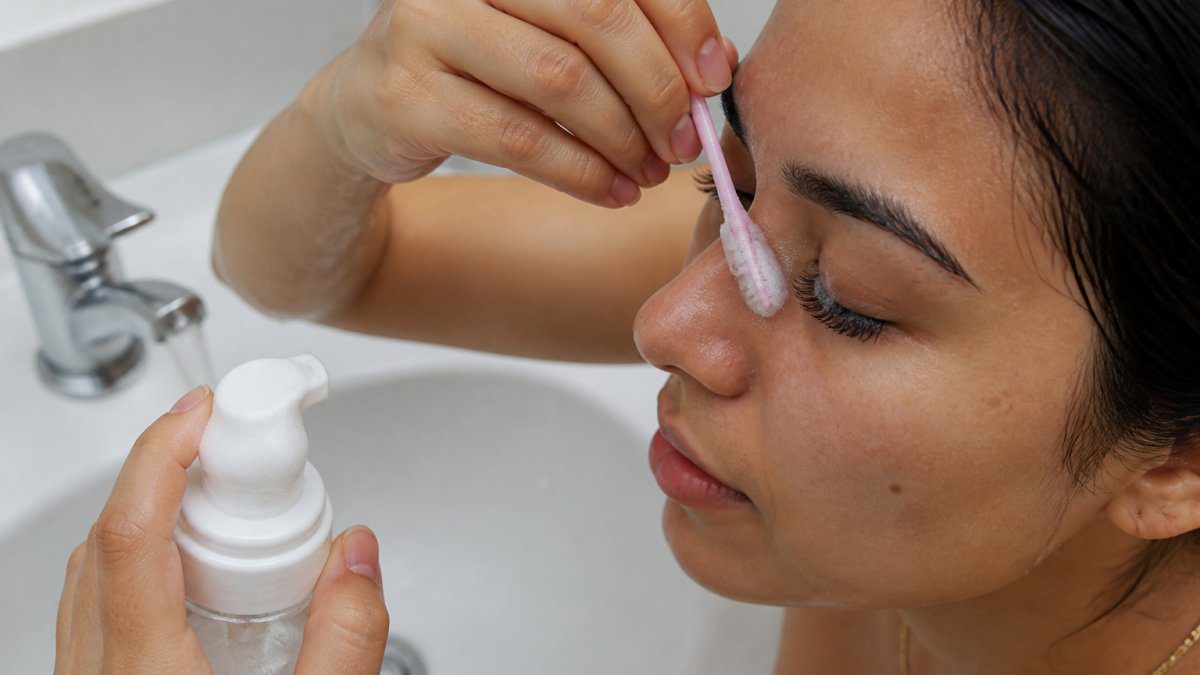
Learning how to clean lash extensions properly is the highest-return skill you can build. Skip it and buildup clogs the lash line, weakens the adhesive, and causes premature shedding.
A Daily and Weekly Cleansing Routine
Follow this simple lash aftercare schedule:
- Daily: Foam a lash shampoo in your hand, sweep a soft lash brush along the lash line, and rinse with cool water.
- Daily: Pat dry with a lint-free cloth. Never rub.
- Weekly: Deep-clean with an oil-free cleanser to strip makeup residue.
- Always: Keep oil-based products away from the lash line.
Our step-by-step daily lash cleaning guide walks through each motion in detail.
Habits That Protect Your Investment Between Fills
The habits that stretch a set are boring, and they work. The American Academy of Ophthalmology advises that lashes be applied by an experienced aesthetician in a sanitary setting, and that same care applies at home.
- Stop rubbing eyes. Friction breaks bonds.
- Quit pulling lashes or picking at loose ones.
- Avoid waterproof mascara and cut back on mascara use overall.
- Sleep on your back to reduce pillow friction.
- Limit water exposure like hot showers and saunas in the first 24 hours.
Your Lash Extension Refill Schedule: Timing It to Save Money
A realistic lash extension refill schedule is every two to three weeks, but that’s a range, not a rule. The budget-smart move is to judge each set on its own retention instead of booking on autopilot. Stretch it too far and you lose the set. Book too often and you overpay.
Why Retention Varies From Person to Person
Lash shedding follows your natural lash cycle, so some loss is normal and expected. Each natural lash grows, rests, and sheds on its own timeline, which is why a set thins gradually rather than all at once. Retention also depends on:
- Adhesive bond quality at application, a clean, well-isolated bond lasts longer.
- Your aftercare, daily cleansing and no rubbing preserve bonds; oil and friction break them down.
- Sleep position, side and stomach sleepers put more pillow friction on one side.
- Hormones and season, shedding patterns shift for many people, so a schedule that worked in one season may not in another.
How to Judge Whether a Fill Is Worth It
Before you book, look at the set rather than the calendar:
- Count the gaps. If more than about a third of your lashes are missing or visibly separated, a fill is due. If the set still looks full, you can usually wait.
- Check the bond line. Crusty or lifted bonds mean the set is failing, not just thinning, that’s a fill signal regardless of timing.
- Look at your natural lashes. If they look sparse or stressed, a fill may do more harm than good; see the pause guidance below.
- Compare the fill price to a new set. When a fill quote approaches the price of a fresh set, a new set is often the better value.
The cheapest fill is the one you didn’t need yet. A two-minute check of gaps and bond condition before booking prevents both premature fills and lost sets.
Fill Timing and Budget Impact
| Situation | Fill Timing | Budget Impact |
|---|---|---|
| Strong retention | 3 weeks or longer | Lowest annual cost |
| Average retention | 2 weeks | Moderate annual cost |
| Weak retention | 1 week fill | Highest annual cost |
Our guide to the 5 signs you need a lash fill helps you spot the difference between normal shedding and a set that’s failing, so you can time the appointment to the set instead of the calendar.
Budget-Friendly Lash Extensions: Saving Without Cutting Corners
Budget-friendly lash extensions come from smart habits, not cheap shortcuts. Cost savings should never come at the expense of eye safety. The useful question isn’t “what’s the cheapest kit?” but “what does a realistic month actually cost, and which line items can I safely shrink?”
A Realistic Monthly Budget, Itemized
Most practitioners find that a maintenance budget has four recurring lines and one occasional line. Use this as a planning template and plug in your own salon’s quotes:
| Line item | Typical frequency | What drives the cost | Safe way to reduce it |
|---|---|---|---|
| Fill appointment | Every 2-3 weeks | Artist skill, style volume, your retention | Extend to the longest interval your retention supports; choose a lower-maintenance style |
| Lash cleanser | Every 4-8 weeks | Foam volume per wash | Buy a basic foaming lash shampoo instead of a branded kit; a pea-sized pump is enough |
| Spoolies / brushes | Every 2-4 weeks | How often you brush | Buy a multi-pack; one clean spoolie per day is plenty |
| Silk pillowcase | One-time, replaced yearly | Fabric quality | A single silk or satin pillowcase is the whole purchase, no gadget needed |
| Removal (occasional) | When you pause | Artist time | Budget for it before you start; never remove at home |
The fill line dominates everything else. If a fill runs $60-$100 every two weeks, that’s roughly $120-$200 a month before products, which is why the refill-timing decisions in the next section matter more than any coupon.
Track two numbers for one month: your actual fill interval and your product spend. Most people overestimate product costs and underestimate how much an extra week of retention saves.
Low-Cost Lash-Safe Products by Category
You only need a few items, and the criteria matter more than the brand:
- Cleanser: A gentle foaming lash shampoo labeled oil-free and formulated for eyes. Avoid anything with heavy oils, and skip cleansers that sting if they reach the waterline.
- Brush: A soft spoolie for combing and brushing. Stiff brushes tug the bond; soft ones separate without pulling.
- Sealant: Optional. Read whether lash extension sealant actually helps retention before you buy, many sets do fine without it.
- Pillow: A silk or satin pillowcase cuts pillow friction. This is a one-time purchase, not a subscription.
Skip the expensive extras. Clean lashes and gentle handling do more than any gadget, and a basic foaming cleanser plus a bag of spoolies covers nearly all of your at-home needs.
Ways to Cut Cost Without Cutting Lash Health
- Choose a lower-maintenance style. Classic sets generally need less fill time and shed more gracefully than heavy volume sets, which can lower both the fill price and the frequency.
- Space fills to your real retention. Booking every two weeks when your set holds for three is the single most common budget leak.
- Wash daily. Skipping cleanser causes buildup that weakens adhesive and shortens the set, the cheapest habit is also the highest-return one.
- Never DIY removal or re-gluing. A home fix that damages natural lashes costs far more to correct than a professional removal.
How Extensions Compare With the Alternatives
A budget decision is a comparison, not an absolute. Strip lashes and DIY clusters have a low upfront price but recurring adhesive and remover costs plus a learning curve. A lash lift is a periodic salon service with no daily maintenance but a shorter, more natural look. Natural-lash routines cost the least in cash but the most in daily effort. Extensions sit in the middle: higher recurring cost, but no daily application and a consistent look. The right choice depends on which cost, money, time, or effort, you’re most able to spend. Balancing these beauty investments requires a holistic view of your vanity shelf, where establishing an affordable skincare routine ensures that your skin remains healthy enough to support whichever lash method you ultimately choose.
When to Pause Extensions or Call a Professional
Sometimes the budget move is to stop. Pause extensions if you notice persistent redness, itching, or pain. The 2024 Clinical Ophthalmology study linked these symptoms to chemical conjunctivitis and allergies.
Call a professional if natural lashes look sparse or damaged. A premium lash artist can assess whether your natural lash health supports another set. Never glue a loose extension back on yourself.
Booking a Fill That Protects Your Lashes and Your Budget
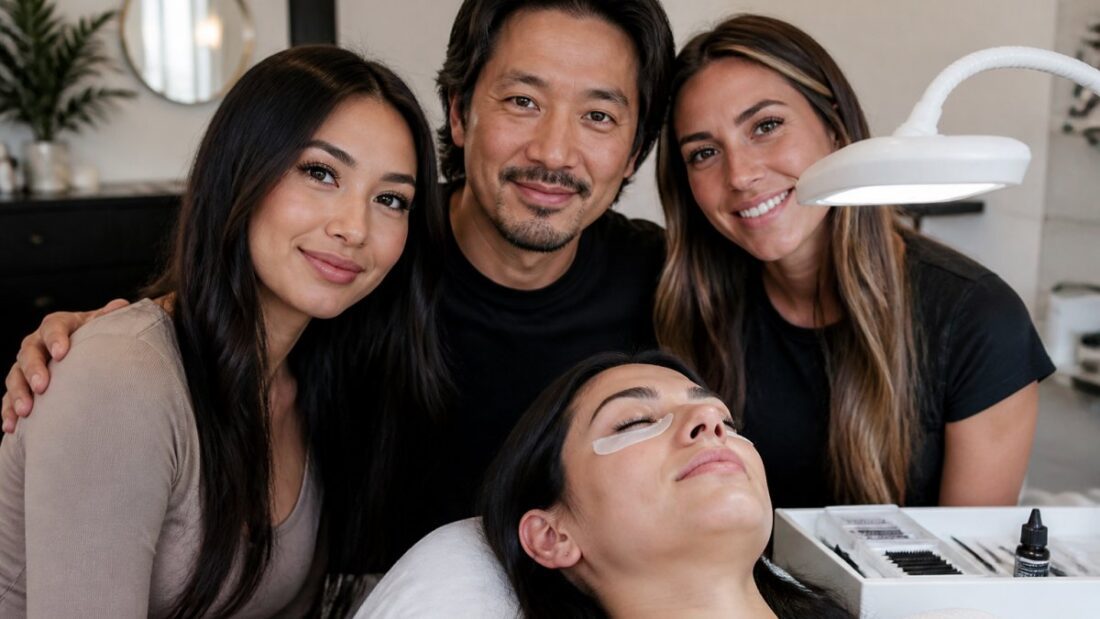
The best way to protect both your lashes and your wallet is a fill with a skilled hand. At Lashes by Shigeru, our proprietary Japanese AirLash® technique and virtually weightless application help lashes last up to five weeks. That longer wear means fewer appointments and lower annual maintenance cost. Our in-house adhesives and hypoallergenic formulas keep the process comfortable.
Ready to make your set last? Contact us to book your appointment and get a fill that protects your investment.
Frequently Asked Questions
How can I make my lash extensions last longer on a budget?
The biggest lever is aftercare, not price. Clean your lash extensions daily with an oil-free lash cleanser, brush them with a spoolie, avoid oil-based products and waterproof mascara, and sleep on your back to reduce pillow friction. These habits protect the adhesive and cut premature shedding, so you stretch more wear out of every fill appointment. A 2024 study in Clinical Ophthalmology also linked poor lash hygiene to irritation and conjunctivitis, so cleaning protects your eyes as well as your budget.
How often should I get lash extension refills?
Most clients need a fill every two to three weeks, which matches the natural lash cycle of shedding and regrowth. If you notice gaps appearing within a week, that points to retention problems, not a need for more frequent appointments. Stacy Lash notes refills typically run $60 to $100 per visit, so stretching safely from two weeks to three saves real money over a year. Ask your stylist to assess retention at each fill rather than automatically booking the shortest interval.
Can I maintain lash extensions without frequent refills?
You can extend the time between fills, but not eliminate them. Lash extensions shed with your natural lashes, so some regrowth appointment is unavoidable. What you can control is how much you lose early. Avoid rubbing your eyes, pulling lashes, and water exposure in the first 24 hours after application. Use a lash-safe cleanser instead of oil-based makeup removers, and skip waterproof mascara. Good lash extension aftercare is the difference between a full three weeks of wear and a one-week fill.
How can I save money on lash extensions without damaging my natural lashes?
Cut costs on products and timing, never on application safety. The American Academy of Ophthalmology advises that lashes be applied by an experienced aesthetician in a sanitary setting, so a bargain application from an unqualified tech is a false saving. Instead, buy a basic oil-free lash cleanser and a spoolie, skip mascara entirely, and time fills by retention rather than habit. If your natural lashes feel weak or sparse, a lash and brow serum can support them between appointments.
Maintaining lash extensions on a budget is really about protecting your retention. Lashes by Shigeru makes that easier with weightless Japanese AirLash® application, hypoallergenic in-house adhesives, and results that last up to five weeks. Get started with Lashes by Shigeru and make every fill count.

No Comments