
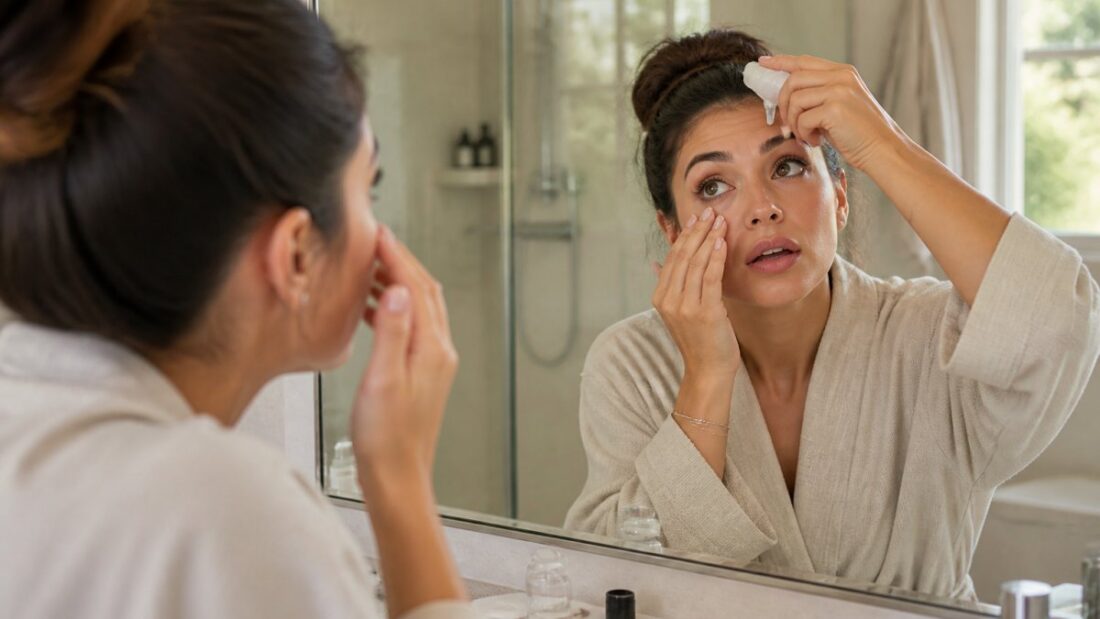
7 Things to Do If Lash Glue Gets in Your Eye
Last Updated: October 27, 2026
Quick Summary
If lash glue gets in your eye, stop touching it and flush with clean, lukewarm water or sterile saline for a full 15 minutes, blinking gently and letting the water run from the inner corner outward. Remove contacts if you wear them, and call poison control or a doctor if pain or vision changes continue.
- Wash your hands before flushing, and use lukewarm water rather than hot or icy water.
- Do not pick out visible glue with a cotton swab or tweezers, as you risk scratching the cornea.
- Never use acetone, alcohol, or any solvent near the eye to remove bonded glue.
- For glued-shut lids, hold a warm compress on the closed lid for several minutes to soften the bond.
- Call 911 or go to an emergency room if vision is suddenly lost or pain is severe or worsening.
Table of Contents
- Act Fast: Immediate Steps When Lash Glue Gets in Your Eye
- How to Flush Eye with Water the Right Way
- Lash Glue in Eye Symptoms: What You’ll Feel and See
- Chemical Eye Burn from Eyelash Extensions: When It’s More Than Irritation
- Eyelash Glue Allergic Reaction vs. Irritation: Telling Them Apart
- What to Do When Your Eyelids Are Glued Shut
- Red Flags That Mean You Need Urgent Medical Attention
- Choosing a Lash Studio That Protects Your Eyes
- Frequently Asked Questions
Act Fast: Immediate Steps When Lash Glue Gets in Your Eye
Lash glue in the eye needs fast action, not panic. The moment adhesive touches your eye, stop what you are doing and flush it with clean water or sterile saline for several minutes. Do not rub, and do not try to peel your lids apart.
Here is the short version of what to do if lash glue gets in eye territory, and it is worth reading twice:
- Stop touching the eye immediately
- Flush with clean, lukewarm water or saline
- Blink gently while rinsing to move fluid around
- Remove contacts if you wear them
- Call poison control or a doctor if pain or vision changes continue
The urgency matters. A case report on nail glue eye injuries published in the Canadian Journal of Ophthalmology described how saline irrigation and gentle eyelid work helped open affected eyelids. Adhesive in the eye is a chemical exposure first and a beauty mishap second.
How to Flush Eye with Water the Right Way
Flushing is the single most important step, and most people do it wrong. They splash once, blink hard, and stop. That is not enough.
Here is how to flush eye with water properly:
- Wash your hands first. Dirty fingers make a bad situation worse.
- Use lukewarm water. Hot or icy water adds irritation on top of the glue. Aim for a temperature that feels neutral on the inside of your wrist.
- Hold the eyelid open safely. Place your thumb and index finger on the bony rim above and below the eye, not on the eyeball, and gently draw the lids apart. If the lids resist, do not force them; move to the glued-shut guidance below.
- Rinse for a full 15 minutes. Fifteen minutes is the standard first-aid irrigation duration for chemical eye exposure. Set a timer on your phone so you do not stop early. If you cannot tolerate 15 minutes continuously, rinse in shorter bursts and keep returning to it, but total time matters more than any single pass.
- Let the water run from the inner corner outward. This carries glue away from the other eye and off the face rather than across it.
- Blink slowly during the rinse. Blinking helps fluid reach the whole surface, including under the lids.
- Do not delay urgent care to finish rinsing. If pain is severe, vision is changing, or you cannot open the eye, start rinsing and call for help at the same time, do not wait until the timer ends to seek care.
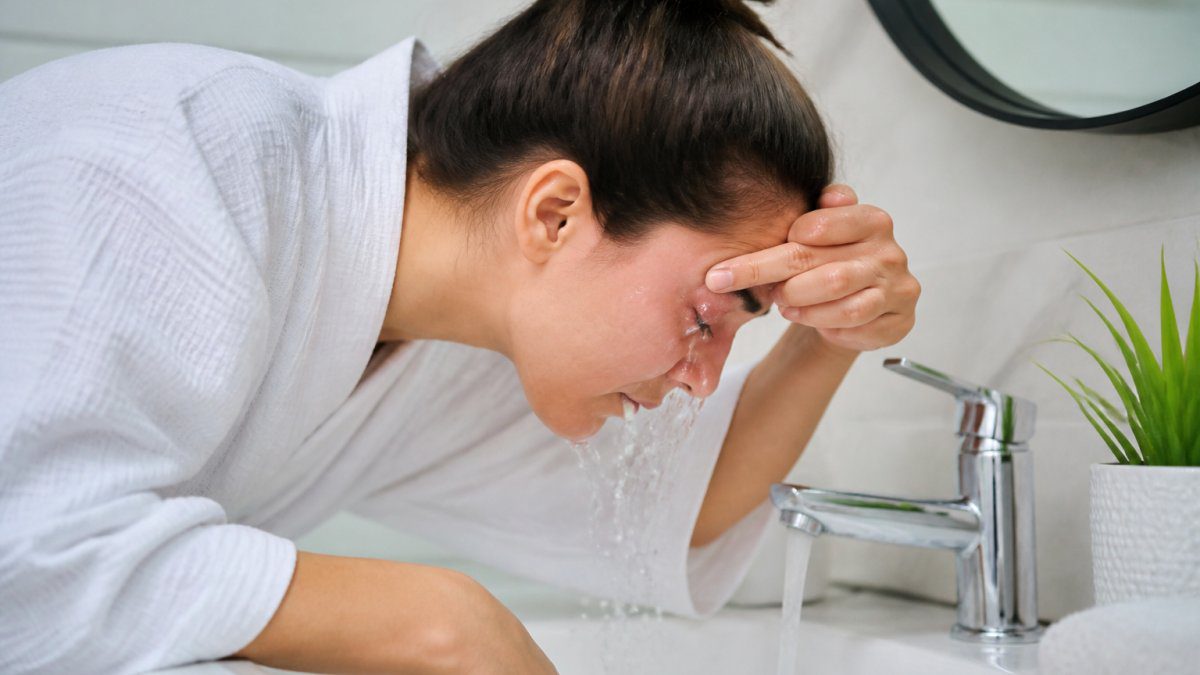
Persistent irritation or blurred vision after thorough rinsing indicates that you should seek urgent eye care to prevent potential corneal damage.
If you are alone and cannot hold your eyelid open, lie on your side over a sink or basin and pour lukewarm water from a clean cup across the eye from the inner corner outward. Keep pouring steadily rather than splashing.
After flushing, do not put makeup, eye drops, or any other product in the eye unless a clinician tells you to. Do not try to pick out visible glue with a cotton swab or tweezers, you risk scratching the cornea.
Lash Glue in Eye Symptoms: What You’ll Feel and See
Lash glue in eye symptoms usually show up within seconds. The most common ones are burning, stinging, redness, tearing, and a gritty feeling under the lid.
Watch for these signs:
- Sharp burning or stinging
- Watery, tearing eyes
- Redness in the white of the eye
- Swelling of the eyelid
- Blurred vision
- Light sensitivity
- A scratchy, foreign-body sensation
Most mild irritation eases after a good flush. Symptoms that stick around, or get worse, tell you something more is going on. A peer-reviewed study on ocular side effects of eyelash extensions examined how extension use patterns relate to eye symptoms, which is why we treat any lasting discomfort as a signal to get checked.
Chemical Eye Burn from Eyelash Extensions: When It’s More Than Irritation
This is where glue type matters. Guidance distinguishing strip-lash glue from extension adhesive notes that strip-lash glue is often water-based and rinses away more easily, while extension adhesives can grip the eye quickly.
Signs it may be more than simple irritation:
- Pain that does not fade after rinsing
- A feeling that something is stuck to the eye
- Blurred or cloudy vision
- Severe light sensitivity
Do not try to remove bonded glue yourself. Do not use acetone, alcohol, or any solvent near the eye. Those cause their own damage.
Eyelash Glue Allergic Reaction vs. Irritation: Telling Them Apart
Here is the difference in plain terms:
| Feature | Irritation | Allergic Reaction |
|---|---|---|
| Timing | Minutes after contact | Hours, sometimes a day later |
| Main feeling | Burning, stinging | Itching, swelling |
| Eyelid | Mild redness | Puffiness, tightness |
| Response to rinsing | Improves | May keep worsening |
If itching and eyelid swelling are the main story, read our guide on identifying allergic reactions to lash extension adhesive. For a fuller walkthrough of warning signs, see signs of allergic reaction to lash glue.
What to Do When Your Eyelids Are Glued Shut
Glued-shut eyelids feel terrifying, but the fix is gentler than instinct suggests. Do not pull, pry, or force the eye open. You can tear lashes, skin, or the eye surface.
Try this instead:
- Soak a clean cloth in warm water and hold it against the closed lid
- Keep the compress on for several minutes to soften the bond
- Gently pull the lid away from the eye, not the eye open
- Flush with saline once the lids separate
Red Flags That Mean You Need Urgent Medical Attention
Call 911 or go to an emergency room immediately if:
- Vision is suddenly lost, severely blurred, or clouded and does not clear after flushing
- Pain is severe or rapidly worsening
- The eye is cut, scratched, or you feel something sharp stuck to the surface
- The eyelids are glued shut and will not separate after gentle warm compresses
- There is heavy swelling that is closing the eye or spreading to the cheek
Contact poison control or an eye-care professional the same day if:
- Burning or stinging persists after a full 15-minute flush
- Redness, tearing, or light sensitivity lasts more than a few hours
- You are unsure what is in the adhesive or whether it contains cyanoacrylate
- Symptoms improve and then return
Do not wait for symptoms to become severe before calling.
Have this information ready before you call:
- The product name, brand, and full ingredient list from the label
- The safety data sheet if the product came with one, clinicians use it to identify the adhesive chemistry
- The time the glue entered the eye and how long you flushed
- Whether you wear contact lenses and whether you removed them
- Any known allergies to adhesives, latex, or cosmetics
Choosing a Lash Studio That Protects Your Eyes
Best for: sensitive eyes and clients who want a virtually weightless, natural result that lasts up to five weeks. If you are worried about reactions, find out how to perform a patch test for lash extensions before your next appointment. Before booking, see how to find a lash tech for sensitive eyes. If you want to avoid another glue-in-eye scare, learn how to prevent eye irritation from lash extensions.
Frequently Asked Questions
What should I do immediately if lash glue gets in my eye?
Start flushing right away. Hold your eyelid open and rinse the eye with clean, lukewarm water or sterile saline. Do not rub the eye or try to peel glue off the lashes or lid. If your eyelids are stuck together, do not force them apart.
How long should I rinse my eye after getting lash glue in it?
Use clean running water or sterile saline, keep the eyelid open, and avoid rubbing.
Can lash glue damage your eye, and how do I know if it’s serious?
Yes, lash extension adhesives often contain cyanoacrylate, which can bond to the cornea quickly and cause chemical irritation or injury. Strip-lash glue is often water-based and may rinse away more easily, but extension adhesive is a different risk. Seek urgent care if you have blurred vision, light sensitivity, severe pain, or a feeling that something is stuck in the eye. A case report in the Canadian Journal of Ophthalmology described nail-glue eye injuries where saline irrigation and gentle eyelid pulling helped open the eyelids, which shows how serious adhesive exposure can be.
Should I pull out lashes or try to remove glue from my eye myself?
No. Do not pull out lashes, pick at glue, or try to force stuck eyelids open. Never use acetone, alcohol, or solvent near the eye to dissolve glue. Instead, flush with water or saline and keep your hands away from the eye.
Glue in the eye is scary, but a fast, calm response protects you. If you want extensions done with adhesives made in-house and applied by a trained master stylist, get started with Lashes by Shigeru and book an appointment for a comfortable, problem-free lash experience.

No Comments