
Signs of Eyelash Extension Glue Allergy in Los Angeles
Quick Summary
Signs of eyelash extension glue allergy usually include redness, itching, and swelling around the lash line, often appearing within hours of an appointment. Allergic reactions can worsen over 24 to 72 hours rather than fade. If symptoms build or return with each set, stop wearing extensions and see a doctor or eye care professional.
- Redness, itching, and swelling along the lash line are the most common warning signs.
- Redness or swelling that worsens over 24 to 72 hours can point to an allergic reaction.
- Irritation usually fades within a day or two, while allergy symptoms can build or return.
- Do not pull, peel, or use household solvents on the lashes; have a trained technician remove them.
- Seek emergency care for breathing trouble, throat tightness, sudden vision changes, or rapidly worsening swelling.
Table of Contents
- What Are the Signs of an Eyelash Glue Allergy?
- Eyelash Extension Allergy vs Irritation: How to Tell the Difference
- When Symptoms Start and How Long an Allergic Reaction to Eyelash Glue Lasts
- Common Causes and Adhesive Ingredients Behind Lash Glue Reactions
- How to Treat Eyelash Glue Allergy Safely at Home
- Safe Removal, What Not to Do, and When to Seek Urgent Care in Los Angeles
- Choosing a Lower-Risk Alternative If You React to Lash Glue
- Frequently Asked Questions
Signs of Eyelash Extension Glue Allergy in Los Angeles
Last Updated: November 22, 2026
What Are the Signs of an Eyelash Glue Allergy?
Signs of eyelash extension glue allergy usually show up as redness, itching, and swelling around the lash line, often within hours of an appointment. An allergic reaction is your immune system responding to an ingredient in the adhesive, and it can get worse over time rather than better.
A 2024 study on ocular side effects among women who used eyelash extensions reported chemical conjunctivitis, allergies, pain, dermatitis, and conjunctivitis among the side effects users experienced Ocular Side Effects of Eyelash Extension Use Among Female Users, Journal of the Nigerian Optometric Association. The study did not give sample sizes or numbers, so treat it as a list of what can happen, not a measure of how common it is.
Eyelid redness, itching, and swelling
Redness, itching, and puffiness along the lash line are the most common warning signs. Redness and swelling that get worse over 24 to 72 hours can point to an allergic reaction to lash glue Signs of Allergic Reaction to Lash Glue: 2026 Guide.
- Redness that spreads past the lash line
- Itching that does not ease with time
- Swelling that makes the eyelids feel heavy
- Skin that feels hot or tight
Watery, stinging, or uncomfortable eyes
Some people notice watery eyes, a burning feeling, or general discomfort after their set. These symptoms can also come from irritation, so the pattern matters. If the feeling gets stronger each day, do not ignore it.
Other symptoms such as nasal or throat irritation
Some clients report a runny nose, a blocked nose, or a scratchy throat after a fresh set. Adhesive fumes are one possible trigger. These symptoms are less common, but they still deserve attention if they keep coming back.
The main warning signs of a lash glue reaction are summarised below, based on what the article describes.
| Sign | Where it shows | When it tends to appear |
|---|---|---|
| Redness | Around the lash line | Within hours of an appointment |
| Itching | Along the lash line | Within hours of an appointment |
| Swelling | Eyelids | Within hours of an appointment |
| Watery eyes | Eyes | After a fresh set |
| Stinging or burning | Eyes | After a fresh set |
| Runny or blocked nose | Nasal passages | After a fresh set |
| Scratchy throat | Throat | After a fresh set |
Eyelash Extension Allergy vs Irritation: How to Tell the Difference
Irritation usually shows up quickly and fades within a day or two once the trigger is gone. An allergy can take longer to appear and may keep getting worse with each new exposure. Symptoms alone cannot prove which one you have, because the signs overlap.
Irritation is not the same thing as an allergy, and a source focused on lash extension adhesives makes this distinction clearly Eyelash Extension Adhesive Allergy vs Irritation: How to Tell the Difference. For a deeper look, read identifying allergic reactions to lash extension adhesive.
Here is a simple way to think about it:
- Irritation: Stinging or redness that fades within a day or two
- Allergy: Symptoms that build over 24 to 72 hours or come back with each set
- Both: Need a patch test or a visit with an eye doctor to sort out
When Symptoms Start and How Long an Allergic Reaction to Eyelash Glue Lasts
There is no single timeline for an eyelash extension glue allergy. When symptoms start depends on whether you are having an irritant reaction or a true allergic reaction, and on how many times you have been exposed to the adhesive.
Irritant reactions tend to show up during or shortly after the appointment, often within minutes to a few hours. They usually stay confined to the area that touched the glue or the fumes and begin to settle within a day or two once the exposure stops.
Allergic reactions work differently. A first sensitization can happen without obvious symptoms, and the visible reaction may not appear until a later appointment. A common pattern is redness, itching, or swelling that begins 24 to 72 hours after a set and then builds over the next day or two. Because the immune system is involved, the reaction can be delayed rather than immediate, and it can look milder at first than it becomes.
Once someone is sensitized, re-exposure tends to bring the reaction back faster and sometimes more strongly. That is why a client who reacted mildly to one set may react more noticeably to the next one with the same adhesive. The reaction is not necessarily a one-time event, and it does not reliably fade with continued use.
How long a reaction lasts depends on how quickly the adhesive is removed, how strong the response is, and whether the person keeps being exposed to the glue or its fumes. Mild reactions often improve over several days after removal, but skin can stay reactive for longer. A reaction that keeps worsening after removal, spreads beyond the lash line, or returns with each new set is a reason to see a clinician rather than wait it out.
Watch out: assuming a reaction will pass on its own while you keep getting fills can prolong exposure and make the sensitization harder to manage.
Common Causes and Adhesive Ingredients Behind Lash Glue Reactions
Reactions can come from the glue itself, from fumes, or from skin that has become sensitized over time. Many people do not know which ingredient is responsible until they have a reaction.
Ingredient lists vary between products. Ask your lash artist which adhesive is used and check its ingredient list before your next appointment.
How to Treat Eyelash Glue Allergy Safely at Home
If you think you are reacting to lash glue, start with these steps:
- Stop wearing extensions until the skin has settled.
- Rinse the area gently with cool water.
- Use a clean cold compress for short periods to ease swelling.
- Avoid rubbing your eyes or lash line.
- Contact a doctor or eye care professional if symptoms are severe or getting worse.
A patch test can help you learn whether a product is a trigger before you use it again. A doctor can guide this process for you.
Safe Removal, What Not to Do, and When to Seek Urgent Care in Los Angeles
If you think you are having a reaction to lash glue, the safest next step is to stop adding exposure and get the extensions removed by a trained professional rather than doing it yourself.
What not to do:
- Do not pull, peel, or pick at the extensions. This can pull out natural lashes, break the skin at the lash line, and make irritation worse.
- Do not apply household solvents, nail polish remover, rubbing alcohol, or oil-based products near the eye to loosen the glue. These can burn or irritate the eye and are not designed for use on the eyelid.
- Do not use a new adhesive or a different salon as a test while the skin is still reacting.
Ask the original lash artist, or another trained technician, to remove the set with proper adhesive remover. If the eyelids are very swollen or painful, contact an eye care professional first about the safest way to proceed.
Urgent versus emergency symptoms:
Seek care the same day for eye pain, pus or discharge, swelling that spreads to the cheek or face, or a reaction that keeps worsening after the glue is removed. These can point to an infection or a stronger reaction that needs treatment.
Treat the following as emergency warning signs and get immediate medical help: severe eye pain, sudden vision changes or loss of vision, rapidly worsening swelling around the eye, swelling that closes the eye, or any trouble breathing, wheezing, or throat tightness. Breathing difficulty after an exposure can signal a serious allergic reaction and should not wait for an office visit.
Finding care in Los Angeles:
In the Los Angeles area, options include urgent care clinics, hospital emergency departments, and eye care providers such as optometrists and ophthalmologists. For mild redness or itching, a same-day appointment with an eye doctor is often appropriate. For severe pain, vision changes, or breathing problems, go to an emergency department or call 911 rather than driving yourself.
A clinician, not a salon, is the right person to diagnose whether the cause is an allergy, irritation, fumes, or an infection. Bring the name of the adhesive used and, if available, its ingredient list to the appointment.
Watch out: a salon cannot diagnose an allergy, and a reaction that involves breathing difficulty or vision changes is a medical emergency, not a reason to book another lash appointment.
Choosing a Lower-Risk Alternative If You React to Lash Glue
If you react to standard adhesives, ask your lash artist about hypoallergenic options. At Lashes by Shigeru, our Japanese LED AirLashes® are made for clients with sensitive eyes or past reactions at other salons.
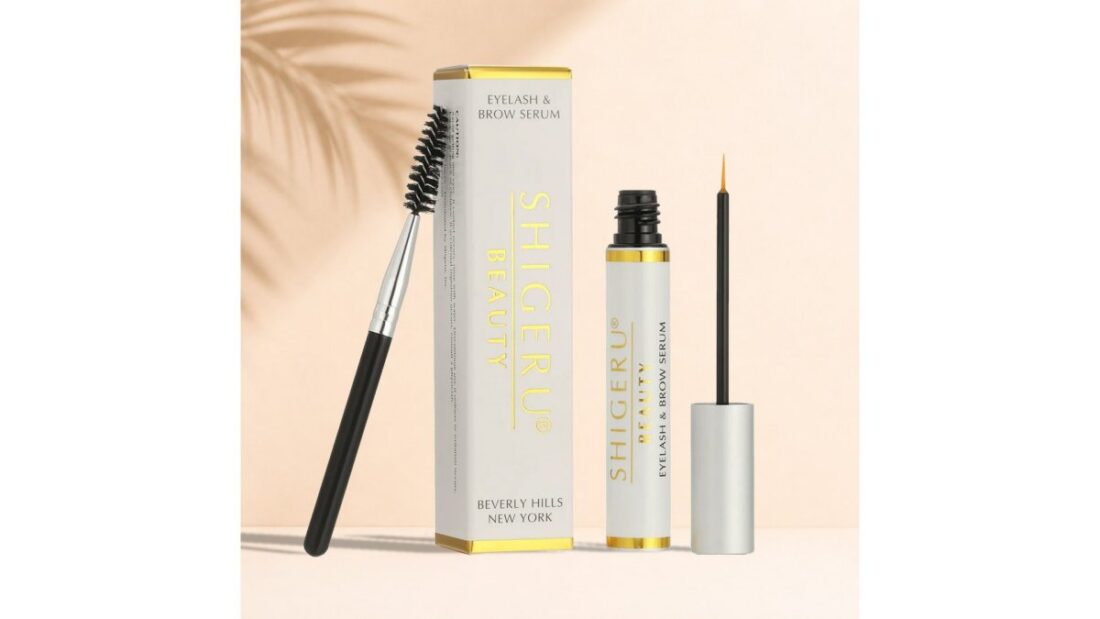
For lash and brow care between appointments, our Shigeru Lash & Brow Growth Serum is a prostaglandin-free, oil-free blend. Most people see visible results in about 30 days, with the fullest results at around 60 days.
Dealing with lash glue reactions can be stressful, and you should not have to guess about your next set. Book an appointment with Lashes by Shigeru in Los Angeles and let our team talk through your sensitivities before anything touches your lashes.
Frequently Asked Questions
How can you tell an eyelash glue allergy from irritation?
An allergy is an immune reaction that often causes itching, redness, and swelling that can spread beyond the lash line, and it may recur with each new exposure. Irritation is usually a direct reaction to the adhesive or fumes that can cause stinging, watering, or discomfort that often improves once the glue is removed. Symptoms alone cannot prove an allergy, so a persistent or worsening reaction should be checked by a doctor, ideally an eye doctor or allergist, who can evaluate the cause.
How long does an allergic reaction to eyelash glue last?
Many mild reactions improve within a few days once the exposure stops, but symptoms that worsen over 24 to 72 hours or persist beyond that window should be evaluated. Lingering redness, swelling, or vision changes need prompt medical attention. Avoid re-exposing your eyes to the same adhesive while symptoms are present, since repeated contact can prolong the reaction.
What should you do if you think you are allergic to lash glue?
Stop further exposure, avoid rubbing your eyes, and apply a cold compress for comfort. Have a licensed professional remove the extensions rather than pulling them off yourself, which can damage natural lashes. Contact a healthcare provider if symptoms are severe, spreading, or affect your vision. A medical evaluation can help determine whether a patch test or other testing is appropriate.
What alternatives are available if you are allergic to lash glue?
If you react to standard lash adhesives, ask your technician about products made with medical-grade, non-toxic fiber and adhesives, and bring a list of any past reactions to your appointment. At Lashes by Shigeru, the Japanese LED AirLashes® are designed for clients with sensitive eyes or past reactions at other salons, and the Shigeru Lash & Brow Growth Serum is a prostaglandin-free, oil-free option for lash and brow care. Always confirm suitability with a professional before booking.

No Comments