

How to Maintain Lash Extensions Longer
Table of Contents
- Why Do Lash Extensions Fall Out Faster Than They Should
- Your Daily Lash Extension Aftercare Routine
- Best Lash Extension Cleanser: What to Use and What to Skip
- How to Maintain Lash Extensions Longer: Lifestyle Habits That Matter
- Lash Extension Fill Frequency: When to Book Your Next Appointment
- Troubleshooting Poor Retention: The Aftercare Kit Checklist
- Conclusion
Last Updated: August 17, 2026
Why Do Lash Extensions Fall Out Faster Than They Should
Most people blame their lash artist when extensions shed too early. The real culprit is almost always aftercare. At Lashes by Shigeru, we see this pattern constantly: a client leaves with a flawless set and returns two weeks later with half the lashes gone. Understanding why retention fails is the first step to fixing it. The good news: learning how to maintain lash extensions longer doesn’t require a complicated routine. A few precise habits make the difference between a set that lasts five weeks and one that barely makes it to three.
How the Adhesive Bond Actually Works
Lash extension adhesive is a cyanoacrylate-based bonding agent that cures through a chemical reaction with moisture. Once cured, the bond is firm but not indestructible. It has two main enemies: oil and mechanical stress. Oil degrades cyanoacrylate bonds by breaking down the adhesive’s polymer chains, which is why oil-based makeup removers, facial oils, and some moisturizers cause premature shedding. Mechanical stress, rubbing, tugging, friction from pillowcases, physically separates the extension from the natural lash before the bond fails naturally. Understanding this chemistry directly explains every rule in a proper lash extension aftercare routine.
The Natural Lash Cycle and What It Means for Retention
Natural lashes follow a three-phase growth cycle: anagen (growth), catagen (transition), and telogen (shedding). Each lash is at a different stage at any given time, which means some shedding is always happening regardless of aftercare. According to American Academy of Ophthalmology’s guidance on eyelash health, the average person sheds between one and five natural lashes per day.
Extensions attached to lashes in the telogen (shedding) phase will fall out sooner, not because of poor application, but because the natural lash itself is ready to shed. This is why fill-in appointments are necessary and why no set will last indefinitely. Good aftercare protects the bonds on lashes that aren’t in the shedding phase, maximizing retention on the lashes that can hold.
Your Daily Lash Extension Aftercare Routine
A solid daily routine is the single biggest factor in lash extension longevity. The goal is to keep the adhesive bond intact, prevent lash debris buildup, and protect the synthetic fibers from damage.
Here is a practical daily framework:
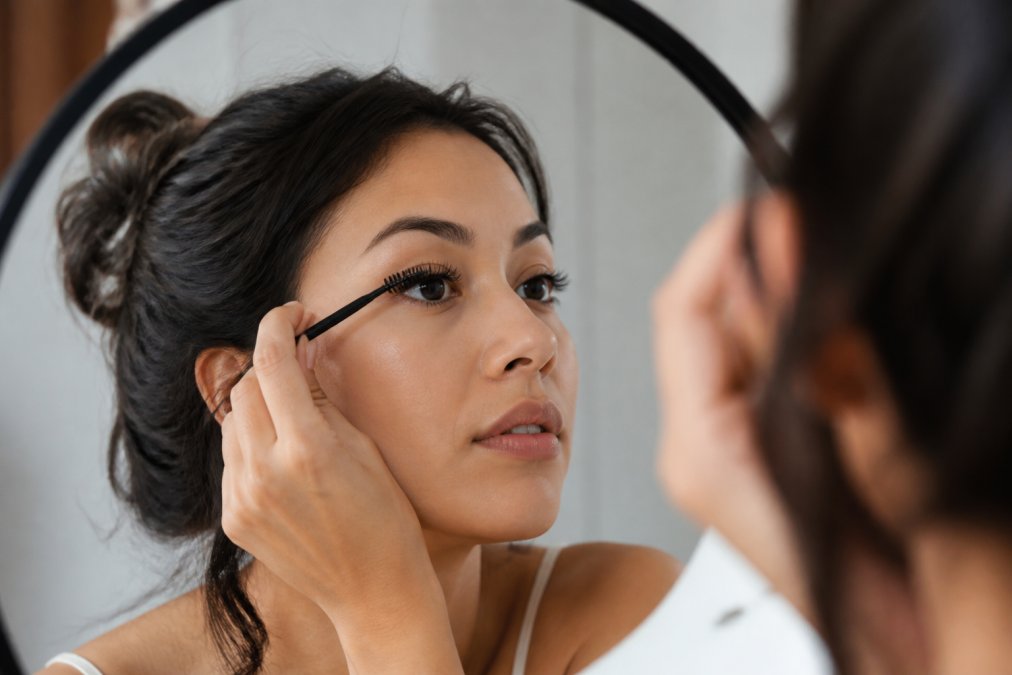
- Morning: Brush extensions gently with a clean spoolie to separate any lashes that crossed overnight.
- After cleansing: Pat (never rub) the eye area dry with a lint-free cloth or pad.
- Evening: Perform a proper lash bath using an oil-free cleanser formulated for extensions.
- Before bed: Do one final brush-through to reset the lashes before sleep.
The routine takes under three minutes once you’ve done it a few times.
The First 24-48 Hours: What to Avoid
The first 24 to 48 hours after application are the most critical window for lash extension retention. Cyanoacrylate adhesive continues curing during this period, and any interference can permanently weaken the bond.
Avoid the following without exception during this window:
- Water and steam: No washing the face directly, no hot showers directed at the face, no saunas, no swimming.
- Sweating: Intense exercise that produces significant facial perspiration can introduce moisture before the cure is complete.
- Touching or rubbing: Any friction risks displacement.
- Makeup around the eyes: Foundation, concealer, and eye shadow applied too close to the lash line can contaminate the adhesive bond.
Skipping the 48-hour rule is the most common reason a fresh set starts shedding in the first week.
Brushing Technique and Spoolie Use
Brushing lash extensions is non-negotiable, but technique matters. Aggressive brushing causes friction that weakens bonds and can snag lashes in a delicate phase of the growth cycle.
The correct approach: hold the spoolie at the base of the extensions and use light, downward strokes from mid-lash to tip. Never drag from root to tip with pressure. Brush once in the morning and once before bed. Replace your spoolie every few weeks; a dirty or bent spoolie transfers bacteria and debris directly to the lash line.
Keep a spare spoolie in your bag for midday touch-ups. A quick 10-second brush after a workout or a windy commute prevents tangling before it becomes a problem.
Best Lash Extension Cleanser: What to Use and What to Skip
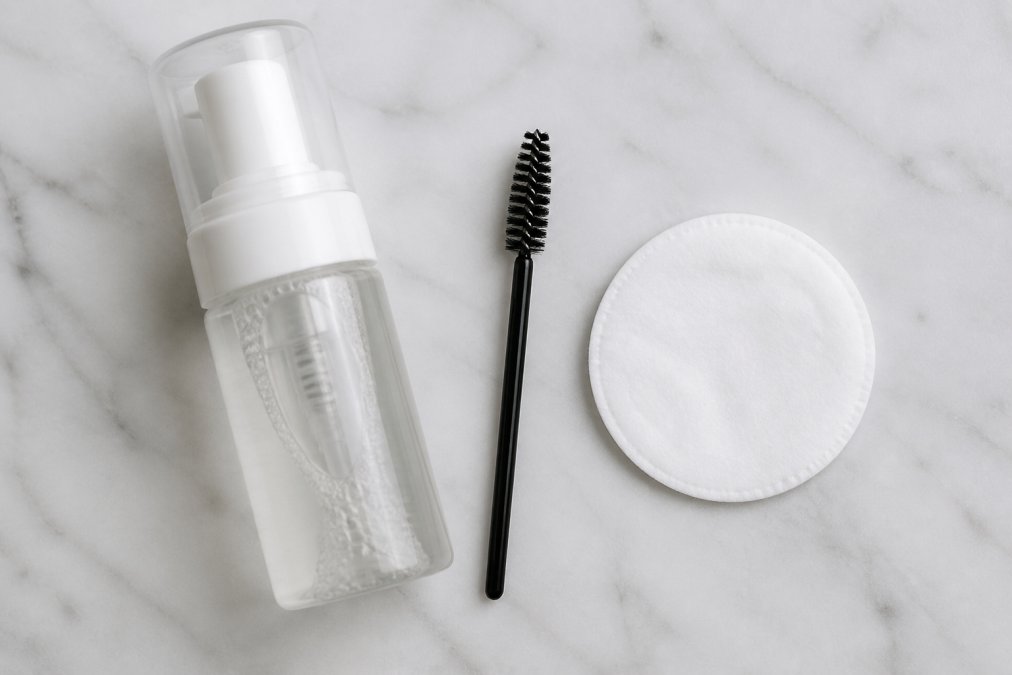
The best lash extension cleanser is an oil-free, pH-balanced foam specifically formulated for extensions. These cleansers break down lash debris, makeup residue, and skin oils without attacking the adhesive bond.
What to use:
- Oil-free foam cleansers designed for lash extensions
- Micellar water explicitly labeled oil-free and extension-safe
- A soft, lint-free applicator pad or dedicated lash cleansing brush
What to skip entirely:
- Any cleanser containing coconut oil, mineral oil, glycerin in high concentrations, or petroleum derivatives
- Waterproof mascara removers (almost universally oil-based)
- Cotton balls and cotton pads (fibers snag and tangle in extensions)
- Makeup wipes, even those labeled "gentle"
A proper lash bath means applying the cleanser to a brush or pad, working it gently through the lashes with soft downward strokes, then rinsing with lukewarm water. Rinse thoroughly; residue buildup causes irritation and lash debris accumulation at the lash line.
As noted in guidance from the American Contact Dermatitis Society on cosmetic ingredient safety, oil-based ingredients are among the most common causes of adhesive bond degradation in cosmetic applications, which is why the lash industry has standardized around oil-free formulations.
Using a regular facial cleanser “just this once” is one of the most common mistakes that leads to sudden mass shedding. Even a single application of an oil-based product can compromise dozens of bonds simultaneously.
How to Maintain Lash Extensions Longer: Lifestyle Habits That Matter
Beyond daily cleansing, several lifestyle factors determine how long lash extensions last. These variables account for a significant portion of retention complaints.
Sleeping Positions and Pillow Choices
Sleeping face-down or on your side presses extensions directly into a pillowcase for hours. That sustained friction is one of the most underestimated causes of premature shedding. Sleep on your back, or use a silk or satin pillowcase. Silk and satin create far less friction than cotton. If you’re a side sleeper, a contoured sleep mask designed for lash wearers can create a barrier between the extensions and the pillow surface.
Heat, Steam, and Humidity Exposure
Steam exposure after the initial 48-hour cure period won’t destroy a bond, but repeated exposure to high heat and steam degrades adhesive over time. Saunas, steam rooms, and hot yoga classes are particularly hard on extensions. Keep sauna sessions shorter, avoid directing hot air from a blow dryer directly at the lash line, and let the face cool before post-workout cleansing.
If you use a blow dryer regularly, switch to the cool setting for the final pass over your face. It takes 30 extra seconds and meaningfully reduces cumulative heat stress on the adhesive bond.
Makeup, Oil-Based Products, and Waterproof Formulas
Waterproof mascara on lash extensions requires an oil-based remover to dissolve, which directly attacks the adhesive bond. The same logic applies to oil-based foundations, heavy eye creams applied too close to the lash line, and facial oils. If a product contains oil and touches the lash line, it works against retention.
Extension-safe mascara (water-based, oil-free, applied only to the tips) is an option if you want additional volume, but most clients with a well-applied set find it unnecessary.
| Habit | Impact on Retention | Better Alternative |
|---|---|---|
| Sleeping face-down | High negative impact | Back sleeping or silk pillowcase |
| Waterproof mascara | High negative impact | Oil-free, extension-safe formula |
| Oil-based cleanser | High negative impact | Oil-free foam cleanser |
| Daily sauna use | Moderate negative impact | Limit sessions, cool down before cleansing |
| Cotton pads for cleansing | Moderate negative impact | Lint-free applicator pad |
| Rubbing eyes | High negative impact | Pat dry, no rubbing |
Lash Extension Fill Frequency: When to Book Your Next Appointment
Lash extension fill frequency depends on your natural lash cycle, lifestyle, and how full you want the set to remain. A general guideline for most clients is every two to three weeks for fills, with a full new set every six to eight weeks.
Waiting too long between fills creates a compounding problem: as more natural lashes shed and grow back without extensions, the remaining extensions become isolated on fewer lashes, increasing mechanical stress on each bond and accelerating shedding.
Signs it’s time to book:
- Visible gaps in the lash line
- Extensions that look noticeably longer than the natural lashes beneath them
- Lashes that feel heavier or less balanced than usual
- More than 30% of the original set has shed
At Lashes by Shigeru, the proprietary Japanese AirLash® technique uses virtually weightless extensions that are gentler on the natural lash cycle, which many clients find extends the time between fills compared to heavier traditional sets.
Troubleshooting Poor Retention: The Aftercare Kit Checklist
Poor retention almost always traces back to one of a handful of root causes. Before assuming the application was flawed, work through this checklist systematically.
The Aftercare Kit Checklist
- Are you using an oil-free cleanser specifically formulated for lash extensions?
- Are you cleansing daily, or skipping days?
- Did you follow the 24-48 hour no-water rule after your last appointment?
- Are you sleeping on your back or using a silk/satin pillowcase?
- Have you checked all skincare and makeup products for oil-based ingredients?
- Are you brushing with a clean spoolie at least once daily?
- Are you avoiding waterproof mascara and oil-based makeup removers?
- Are you limiting steam and heat exposure (saunas, hot yoga, steam rooms)?
- Are you booking fills every two to three weeks?
- Are you patting the eye area dry rather than rubbing?
If you check all ten boxes and retention is still poor, the issue may be product contamination from a skincare ingredient you haven’t identified, or a mismatch between extension weight and natural lash strength. A professional lash health consultation is the right next step.
As outlined in the Cosmetic Ingredient Review’s safety assessment guidelines, certain skincare actives, including some retinoids and exfoliating acids, can affect the skin’s surface around the lash line in ways that indirectly impact adhesive performance. If you use prescription-strength retinoids or chemical exfoliants, mention this to your lash artist before your appointment.
Retention troubleshooting is usually not a single cause but two or three small habits compounding over time. Fixing one while ignoring the others produces partial improvement at best.
For clients with sensitive eyes or a history of reactions to lash adhesives, the hypoallergenic formulas used at Lashes by Shigeru are specifically developed to minimize irritation while maintaining strong adhesive performance. Sensitive eyes are not a barrier to wearing extensions; the right products make a significant difference.
According to the FDA’s cosmetic safety resources for eye area products, products applied near the eye must meet specific safety standards, and working with a salon that manufactures and quality-controls its own adhesives provides an additional layer of assurance that generic third-party products cannot match.
Maintaining lash extensions longer comes down to consistent daily habits, the right products, and understanding why the adhesive bond behaves the way it does. Most retention problems are preventable. Lashes by Shigeru offers a complete aftercare approach backed by in-house manufactured adhesives, growth serums, and the expertise of master lash stylist Shigeru Hanai, whose work spans over a decade across top salons. Book an appointment and experience a set designed to last, with the guidance to keep it looking that way.
Frequently Asked Questions
Why do my lash extensions only last 2 weeks?
Two-week shedding usually points to one of three causes: oil-based products breaking down the cyanoacrylate adhesive bond, skipping the lash bath cleansing routine so debris accumulates at the base, or sleeping face-down creating friction against the pillow. Humidity and steam exposure in the first 24-48 hours can also weaken the initial bond before it fully cures. Correcting these habits consistently is the fastest way to push retention closer to the full natural lash cycle.
Does washing your lash extensions make them last longer?
Yes. Gentle cleansing with an oil-free lash extension cleanser removes skin oils, makeup residue, and lash debris that accumulate at the lash line. That buildup weakens the adhesive bond over time and accelerates premature shedding. A daily lash bath, using a soft brush and foaming oil-free cleanser, then air drying, keeps the bonding agent intact and supports lash health far better than avoiding water altogether.
How often do you have to upkeep lash extensions?
Most clients schedule a lash extension fill every two to three weeks. Because each natural lash follows its own growth cycle, extensions shed as the underlying lash sheds, typically 20-25% of lashes turn over in any given two-week window. Waiting longer than three weeks usually means more lashes need replacing, which increases appointment time and cost. Clients with faster natural lash cycles or active lifestyles often find two-week fills keep their set looking consistently full.
Can I use oil-based products with lash extensions?
Oil-based products, including oil-based makeup removers, cleansing balms, and moisturizers applied near the eye area, break down cyanoacrylate adhesive and are the leading cause of premature shedding. Swap to an oil-free cleanser and micellar water for eye makeup removal. Check ingredient labels on any serum or eye cream used near the lash line. Waterproof mascara is equally problematic: removing it requires oil-based solvents that attack the adhesive bond.
This article was written using GrandRanker