

Lash Lifts vs Lash Extensions: Key Benefits Compared
Table of Contents
- How Lash Lifts and Lash Extensions Work
- Lash Lifts vs Lash Extensions: Feature Comparison
- How Long Do Lash Lifts Last Compared to Extensions?
- Are Lash Extensions Damaging to Natural Lashes?
- The Best Lash Enhancement for Sensitive Eyes
- Cost Per Wear: Which Option Gives More Value?
- Frequently Asked Questions
Last Updated: September 23, 2026
How Lash Lifts and Lash Extensions Work
Choosing between a lash lift and lash extensions comes down to one question: do you want to enhance the lashes you already have, or add new ones? A lash lift is a semi-permanent chemical treatment that curls and lifts your natural lashes from the base. Lash extensions are synthetic fibers bonded individually to each natural lash with adhesive.
Clients who understand how each option interacts with their natural lash growth cycle make better long-term decisions. Natural lashes shed continuously, each in its own phase, and that biology drives longevity, maintenance, and cost.
Below, we break down lash lifts vs lash extensions by feature, timeline, cost per wear, and lash health.
What a Lash Lift Does to Natural Lashes
A lash lift uses a chemical processing solution applied to a silicone shield placed on the eyelid. The solution breaks and reforms bonds in the hair, creating a lasting curl while lifting lashes upward from the root. An optional tint can darken lashes at the same time.
Think of it as a perm for your lashes: nothing is added or glued, and your natural lashes simply point in a more flattering direction, opening up the eye. The trade-off: a lift cannot add density or length where lashes are sparse or short.
How Lash Extensions Add Length and Volume
Lash extensions attach a single synthetic fiber, or a hand-fanned set of finer fibers, to each individual natural lash. A professional technician isolates each lash to prevent sticking, then bonds the extension with a cyanoacrylate-based adhesive.
The result is fully customizable length, curl, and volume, from subtle to dramatic. Extensions eliminate daily mascara and curling, but require refills every few weeks as natural lashes shed. Technician skill and adhesive quality determine how well they hold.
Lash Lifts vs Lash Extensions: Feature Comparison
The fastest way to see the difference is side by side. Lash lifts vs extensions differ most in what they add, how long they last, and how much upkeep they demand.
| Feature | Lash Lift | Lash Extensions |
|---|---|---|
| What it does | Curls and lifts natural lashes | Adds synthetic length and volume |
| Application time | 45-60 minutes | 1.5-2.5 hours for a full set |
| Longevity | 4-6 weeks | 3-5 weeks with fills |
| Maintenance | None between appointments | Fills every 2-4 weeks |
| Best for | Subtle enhancement, low upkeep | Density, length, dramatic looks |
| Sensitive eyes | Gentler, no adhesive on lash line | Depends on adhesive formula |
A lash lift suits anyone who wants a polished, natural look without a maintenance schedule. Extensions win for density, length, or a glamorous finish.
If you cannot commit to refill appointments every two to four weeks, a lash lift will fit your lifestyle far better than extensions.
How Long Do Lash Lifts Last Compared to Extensions?
A lash lift typically lasts four to six weeks, while extensions hold three to five weeks with regular fills. Neither result is permanent, because both are tied to your natural lash growth cycle and shedding.
With a lift, the curl gradually relaxes as lashes shed and regrow in their natural shape; no touch-ups, but you will eventually book another lift.
Sleeping face-down and rubbing your eyes are the two fastest ways to lose extensions. Many clients blame the adhesive when the real culprit is friction overnight.
Are Lash Extensions Damaging to Natural Lashes?
Properly applied extensions do not damage natural lashes. Damage happens when the application is wrong, not when extensions exist. The most common causes are oversized fibers that weigh down a lash, poor isolation that glues several lashes together, and adhesive applied too close to the skin.
The Best Lash Enhancement for Sensitive Eyes
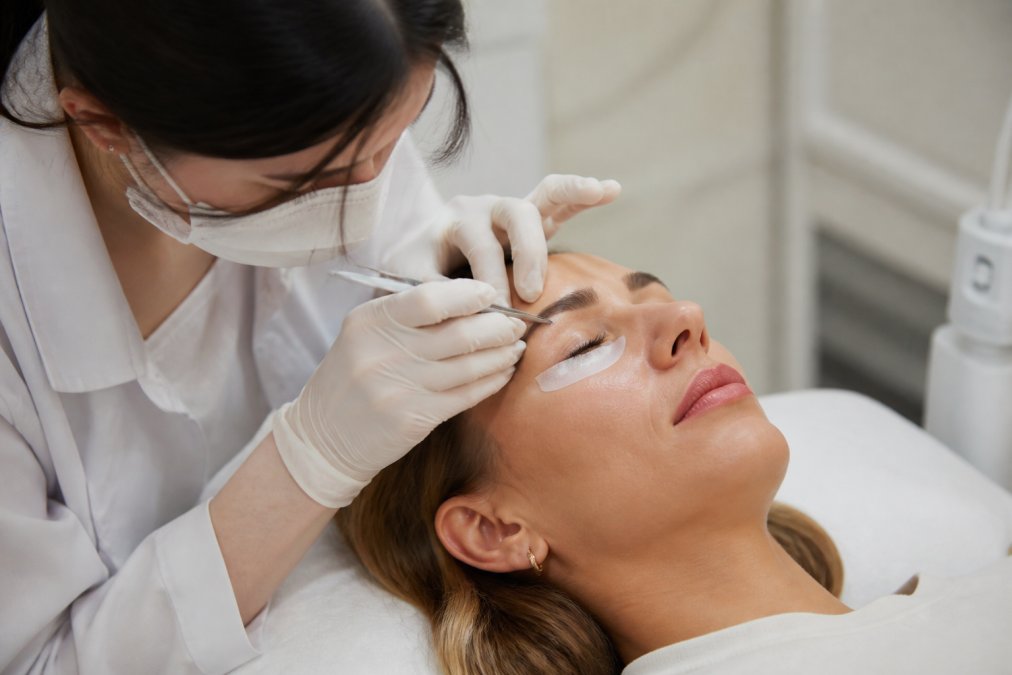
The best lash enhancement for sensitive eyes is usually a lash lift, or extensions applied with a hypoallergenic adhesive by a trained technician. Sensitivity almost always traces to the adhesive, not the fibers: cyanoacrylate, the main bonding agent in most lash glues, triggers reactions in some clients, while the fibers, typically synthetic polyester or PBT, are rarely the culprit.
- Irritation is a physical response. Symptoms include redness, itching, or a gritty feeling along the lash line, usually appearing within hours of application and fading within a day or two once the irritant is removed. Low-fume and hypoallergenic formulas reduce this for many sensitive clients.
- Allergic contact dermatitis is an immune response to cyanoacrylate. It tends to appear 24 to 72 hours after application, sometimes after months of problem-free wear, and presents as swelling, intense itching, flaking skin, or a rash that can spread to the eyelid and cheek. Once sensitized, a client typically reacts to cyanoacrylate permanently, even in low-fume formulas.
Patch Testing Before Your Appointment
If you have reacted to lash adhesive before, or have a history of eczema, psoriasis, or adhesive allergies, tell your technician before the appointment. A patch test on the inner arm or behind the ear 24 to 48 hours ahead can flag a reaction before it reaches your eyes: apply a small drop of the exact adhesive your technician will use, not a generic “sensitive” formula, and check the site at 24 and 48 hours.
What to Do If a Reaction Occurs
If you notice swelling, spreading redness, or itching that worsens rather than fades, act quickly:
- Remove the extensions promptly. Do not wait to see if it settles. A trained technician can remove them with a solvent-based remover; do not pull or pick at the fibers yourself, which can tear natural lashes and worsen irritation.
- Stop all adhesive exposure. Skip mascara, lash serums, and any eye product until the lash line is calm.
- Soothe with a cool compress and a fragrance-free, ophthalmologist-tested moisturizer if the skin is dry or flaking. Avoid hydrocortisone near the eye unless a doctor directs it.
- See a doctor if symptoms spread beyond the eyelid, affect your vision, or do not improve within a few days. A physician can confirm whether the reaction is irritant or allergic and prescribe treatment if needed.
Cost Per Wear: Which Option Gives More Value?
Cost per wear, not sticker price, is the honest way to compare these two. A lash lift is a single appointment lasting four to six weeks with zero maintenance. Extensions cost more up front and require refills every two to four weeks, so the true cost accumulates across the year, and the gap depends on how disciplined you are about refill timing.
How to Calculate Cost Per Wear
Use this framework with a salon’s current prices:
- Lift: Divide the lift price by the number of weeks it lasts. A lift that runs four to six weeks lands in a predictable per-week range with no hidden appointments.
- Extensions: Add the full-set price to the cost of every fill you will need across the same period. If a set lasts three to five weeks with fills every two to four weeks, you may need one to two fills before a new full set. Divide the total by the number of weeks covered.
- Compare the two per-week figures, not the per-appointment figures. The lift almost always wins on raw math for a natural look; extensions justify their premium when you want density and length a lift cannot create.
Clients often underestimate extension costs because they budget for the full set and forget the fills. Fills are not optional if you want the set to keep looking full, skipping them means living with gaps until the next full set.
Where the Math Gets Complicated
Three variables move the numbers more than the salon’s menu prices:
- Retention. If your natural lashes shed quickly or you sleep face-down, you may need fills closer to every two weeks rather than four. That can nearly double your annual extension spend.
- Fill pricing structure. Some salons price fills by the week since your last appointment; others price by the number of lashes replaced. Per-lash pricing can quietly inflate annual cost if retention is average, because a “full” fill replaces more lashes than expected.
- Lift frequency. A lift that fades at four weeks instead of six means more appointments per year. If your lash growth cycle is fast, budget for the shorter end of the range.
Ask any salon whether fills are priced by the week or by the number of lashes replaced. Per-lash pricing can quietly double annual cost if retention is average.
The Lifestyle Multiplier
Cost per wear also depends on how often you would otherwise wear mascara or use a curler. If you apply mascara daily and replace tubes every few months, that recurring cost partially offsets the lift. If you book extensions only for events and let them lapse between, the per-wear cost of a single set can far exceed a lift you maintain continuously.
Frequently Asked Questions
What lasts longer, a lash lift or lash extensions?
A lash lift typically holds its curl for four to six weeks because it works with your natural lash growth cycle. Lash extensions can last up to five weeks with proper aftercare, but they usually need refill appointments every two to four weeks as natural lashes shed. Neither option is permanent, and both require some upkeep to keep the look consistent.
Do lashes go back to normal after a lash lift?
Yes. A lash lift works on the natural lashes you already have, so once the curl relaxes and those lashes shed through their normal growth cycle, your lashes return to their original state. There is no lasting change to the follicle. Following aftercare guidance, like avoiding oil-based cleansers for the first 24 to 48 hours, helps the curl hold longer without affecting your natural lash health long term.
Are lash extensions damaging to natural lashes?
Extensions are not inherently damaging when a trained technician applies them correctly with appropriate weight and adhesive. Problems usually come from oversized extensions, poor isolation, or skipping refill appointments. A professional assessment of your natural lash density and strength before application protects your lash health. If your lashes feel weak or sparse, a technician may recommend a lighter set or a break between full sets.
What is the best lash enhancement for sensitive eyes?
For sensitive eyes, the adhesive matters as much as the technique. Hypoallergenic, low-fume adhesives and lightweight extensions reduce irritation risk. A patch test before your first full set helps identify reactions early. Lash lifts use chemical processing near the eye, so some sensitive clients tolerate extensions better. Discuss your history of reactions with your technician so they can choose the gentlest option for your eyes.