

8 Reasons to Switch to Natural Lash Extensions
Table of Contents
- 1. Natural Lash Extensions Look Like Your Own Lashes (Only Better)
- 2. How Long Do Natural Lash Extensions Last?
- 3. Choosing the Right Lash Style for Eye Shape
- 4. Eyelash Extension Aftercare Best Practices for Lasting Results
- 5. Fewer Salon Visits and Less Daily Effort
- 6. Gentler on Sensitive Eyes and Natural Lash Health
- 7. Cost and Convenience Over 12 Months
- Conclusion
- Frequently Asked Questions
Last Updated: September 16, 2026
1. Natural Lash Extensions Look Like Your Own Lashes (Only Better)
Natural lash extensions are individual synthetic fibers applied to your own lashes one at a time, matched to your natural lash diameter, curl pattern, and length. The result reads as “you, on a good day” rather than “you, wearing strips.”
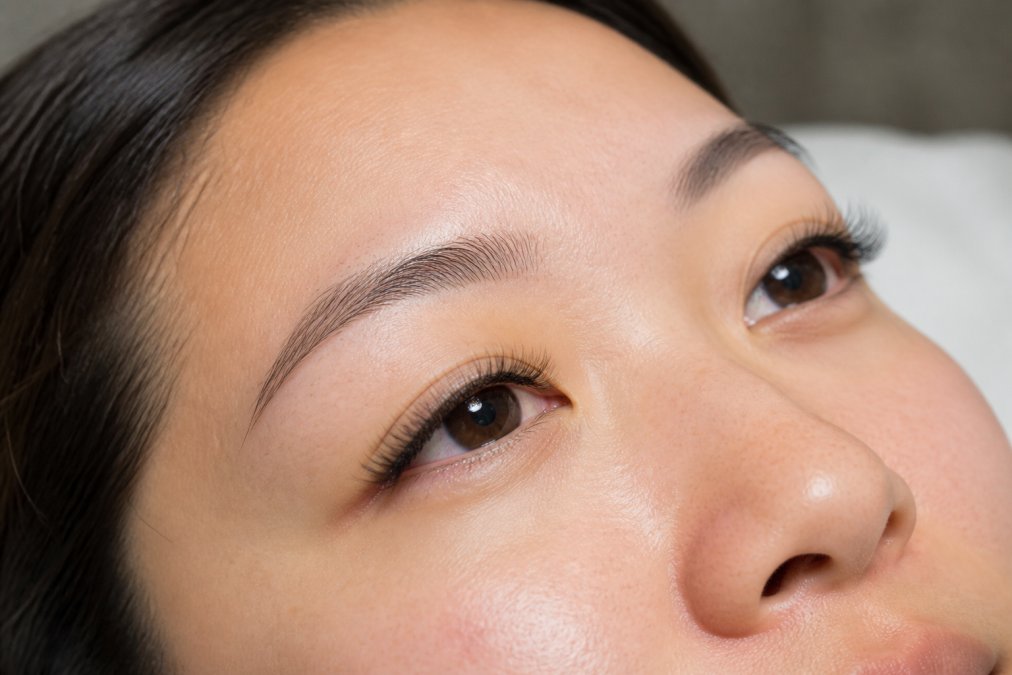
2. How Long Do Natural Lash Extensions Last?
A well-applied full set typically lasts four to five weeks before enough natural lash shedding makes a refill worthwhile.
The Natural Lash Cycle and Why It Affects Retention
Every natural lash moves through a growth cycle: it grows, rests, then sheds, roughly every 60 to 90 days. You shed a few lashes every day without noticing. When an extension is bonded to a lash that’s ready to shed, it leaves with it.
Ask your lash technician how they select lash diameter for your natural lashes. If the answer is “we use the same size for everyone,” that’s your cue to leave. Matching diameter to your natural lash is the single biggest factor in retention.
3. Choosing the Right Lash Style for Eye Shape
The right lash style depends on eye shape, not trend cycles. Lash mapping, the practice of assigning different lengths and curl patterns across the lash line, is what makes a set look custom instead of uniform.
- Almond eyes: Most curl patterns work. A cat-eye map, longest at the outer corner, adds lift.
- Round eyes: A doll-eye map, longest in the center, opens the eye vertically.
- Hooded eyes: A curl pattern with more lift (C or D curl) keeps lashes visible when the eye is open.
- Monolid eyes: A graduated map that peaks just past the center avoids a droopy outer corner.
- Downturned eyes: A lifted outer-corner map draws the eye upward.
American Academy of Ophthalmology guidance on eyelash health
4. Eyelash Extension Aftercare Best Practices for Lasting Results
Eyelash extension aftercare comes down to three rules: keep them clean, keep them dry for the first 24 hours, and keep oil away from the lash line.
Keeping Lashes Clean and Healthy
- Cleanse daily with an oil-free cleanser and a soft lash brush
- Avoid waterproof mascara and oil-based makeup removers entirely
- Don’t rub your eyes or sleep face-down on the lashes
- Brush lashes gently in the morning with a clean spoolie
- Book refills before gaps get noticeable
For active lifestyles, sweat is the real enemy. Runners, swimmers, and hot-yoga regulars should rinse lashes with cool water after workouts and pat dry, never rub. A sweatband that sits above the lash line helps more than most people expect.
Picking at loose extensions is the fastest way to damage natural lashes. You’ll pull out the natural lash along with the extension, and that lash won’t grow back for weeks. Let a professional remove anything that’s lifting.
::: Maintaining the integrity of your lash line requires a gentle approach to your entire beauty routine, which is why many enthusiasts are transitioning toward natural skincare options to ensure that harsh additives do not compromise the health of delicate follicles.
5. Fewer Salon Visits and Less Daily Effort
Compare the daily routine: mascara application, drying time, mid-day smudging, evening removal, and the raccoon-eye risk on a humid day. Natural lash extensions eliminate nearly all of it.
| Routine | Daily Time | Monthly Salon Visits | Yearly Time Cost |
|---|---|---|---|
| Mascara + removal | 8-12 min/day | 0 | 50-70 hours |
| Natural lash extensions | 0-1 min/day | 1-2 refills | 12-18 hours |
6. Gentler on Sensitive Eyes and Natural Lash Health
Sensitive eyes are the number-one reason people avoid lash extensions, and the number-one reason they end up with a bad experience when they finally try them. The difference between a comfortable set and a reaction almost always comes down to three things: adhesive chemistry, application technique, and how the reaction is handled when it appears.
Why Adhesive Causes Reactions
Most lash adhesives are cyanoacrylate-based. Cyanoacrylate cures by reacting with moisture in the air, which is why it bonds so fast, and why it can irritate. Two distinct problems get lumped together as “allergy”:
- Irritation. Redness, itching, or watering caused by fumes, adhesive touching the skin, or a poorly sealed bond. This is the common one, and it usually resolves with better technique.
- True allergic reaction. A sensitized immune response to cyanoacrylate. It can appear suddenly even after months of problem-free wear, and it tends to worsen with each exposure rather than fade.
Signs to Watch For
- Redness or swelling along the eyelid margin, not just the lash line
- Itching that starts within hours of application and does not settle
- Watery, gritty, or burning eyes that persist past the first day
- Small bumps or flaking at the base of the lashes
- Swelling that extends to the eyelid or under-eye area
Mild irritation in the first 24 hours can be normal as adhesive fully cures. Anything that intensifies after day one, or that involves swelling, is not.
What to Do If You React
- Do not pick or pull. Removing extensions yourself risks pulling natural lashes and worsening irritation.
- Contact the studio. A professional removal with a dissolving gel is the safe route.
- Give the eye a break. Most practitioners recommend a rest period before any reapplication.
- See an eye care professional if swelling, pain, or vision changes are involved. Persistent eyelid inflammation has a name, blepharitis, and it needs proper care, not another appointment.
Lower-Risk Options for Sensitive Clients
- Patch test first.
- Lower-fume or low-odor adhesives. These cure more slowly but off-gas less, which helps with fume sensitivity.
- Faster-curing adhesive used correctly. Paradoxically, a fast adhesive applied by a skilled artist can mean less fume exposure because the bond sets before fumes linger.
- Nano or misting systems. Some studios use a curing mist or nano mister to speed polymerization and reduce residual fumes.
- Ventilation and a fan. A studio with real airflow matters more than most clients realize.
Protecting Natural Lash Health
The horror stories about permanent lash loss almost always trace back to one of three mistakes: extensions applied too heavy for the natural lash, extensions glued to the skin instead of isolated to a single lash, or a client pulling extensions out instead of having them removed. None of those are inherent to extensions, they are technique and aftercare failures.
If you have reacted to lash adhesive before, tell your technician before the appointment, not after. A patch test and a lower-fume adhesive solve most irritation cases. A true cyanoacrylate allergy requires removal plus a break, not a stronger adhesive or a second attempt the same week.
FDA information on cosmetic safety and eyelash products
American Academy of Ophthalmology guidance on eyelash health
7. Cost and Convenience Over 12 Months
The honest way to evaluate the switch is to price out a full year of each routine, not a single appointment versus a single tube of mascara. Most people underestimate their current lash spend because it is spread across several products and a revolving salon cycle.
What the Mascara-and-Makeup Routine Actually Costs
A typical daily lash routine is not one purchase. It is a stack:
- Mascara replaced regularly
- Waterproof mascara or a separate remover for stubborn formulas
- Oil-free eye makeup remover or micellar water
- Cotton rounds or reusable remover pads
- A lash serum or conditioner
- Occasional strip or cluster lashes for events, plus their adhesive
What a Year of Natural Lash Extensions Actually Costs
A year of extensions is driven by three variables, and only one of them is the sticker price:
- Full-set price. Varies by technique (classic, hybrid, volume), lash count, and artist experience. Ask for the full-set rate and the refill rate separately, some studios bundle, some do not.
- Refill frequency. This is the real cost lever. A set that holds three weeks needs roughly 17 refills a year; a set that holds five weeks needs roughly 10. Same service, nearly double the annual spend.
- Refill price. Usually a fraction of a full set, but only if you return within the studio’s refill window (commonly two to three weeks). Past that window, many studios charge a full set again.
The Retention Multiplier
Run the math on refill frequency and the picture sharpens fast. If a full set is priced at X and a refill at roughly half of X, then:
- Three-week retention: about 17 refills per year, roughly 9.5X in annual service cost
- Five-week retention: about 10 refills per year, roughly 6X in annual service cost
Where the Switch Pays Off
Extensions replace the daily product stack, not just mascara. Once a client stops buying mascara, remover, cotton rounds, and a lash serum subscription, the gap between the two annual totals narrows considerably, and the time savings (50-70 hours a year, per the earlier table) are pure gain.
The switch is rarely cheaper than mascara alone, and rarely as expensive as people fear. The number that decides it is refill frequency.
Consumer information on cosmetic product shelf life and expiration
Conclusion
The real question isn’t whether natural lash extensions look good. It’s whether the set you book will still look good in week four.
Frequently Asked Questions
What are the benefits of natural lash extensions?
Natural lash extensions offer a weightless, subtle look that mimics your own lashes without the harshness of dramatic volume sets. They reduce daily makeup time, stay smudge-proof and waterproof, and typically last up to five weeks with proper care. Because they use lighter fibers and lower-density mapping, they also put less strain on your natural lashes, making them a better choice for anyone concerned about long-term lash health.
How do natural lash extensions differ from volume sets?
Natural lash extensions apply one lightweight extension per natural lash, while volume sets fan multiple thinner fibers onto a single lash. The result is a fuller, denser look with volume lashes. Natural sets focus on length and definition rather than density. If you want a soft, polished appearance instead of a dramatic one, a natural set is the better fit.
Are hypoallergenic lash extensions better for sensitive eyes?
Hypoallergenic lash extensions and adhesives are formulated to reduce the risk of irritation, making them a safer option for clients who have reacted to standard lash adhesive in the past. Choosing a salon that manufactures its own adhesives, like Lashes by Shigeru, gives you more transparency about what touches your eyes.
How often do I need refills for natural lash extensions?
Following eyelash extension aftercare best practices, such as using an oil-free cleanser and avoiding rubbing, helps retention. Your lash technician can recommend the right schedule for your growth cycle.
Can I wear natural lash extensions if I have thin or weak lashes?
Yes. A skilled lash technician can work with thin or weak natural lashes by selecting lighter lash diameters and shorter lengths that won’t weigh down the follicle. Lash mapping techniques customize the placement so each extension sits on a healthy lash in the right growth phase. This approach protects your natural lashes while still giving you a defined, polished look that lasts.