

Lash Extensions for Sensitive Eyes: A Complete Guide
Table of Contents
- Understanding Eye Sensitivity and Lash Extensions
- The Importance of a Patch Test
- Lash Extension Allergy Symptoms vs. Irritation
- Hypoallergenic Adhesive Options for Sensitive Eyes
- Do Lash Extensions Damage Natural Lashes?
- LED Lash Extension Benefits for Sensitive Eyes
- Aftercare and Recovery for Sensitive Eyes
- Conclusion
- Frequently Asked Questions
Last Updated: September 15, 2026
Understanding Eye Sensitivity and Lash Extensions
Lash extensions for sensitive eyes require a different playbook, and at Lashes by Shigeru we’ve built our method around that reality. The core issue isn’t the lashes, it’s the adhesive, the application technique, and the weight on each natural lash. Most reactions blamed on “extensions” trace back to one of those three factors.
If your eyes water, itch, or turn red after a lash appointment, you’re not stuck with bare lashes forever. You need a stylist who understands why the reaction happened.
Why Some Eyes React to Lash Extensions
The most common culprit is cyanoacrylate, the base compound in nearly all lash adhesives. It cures fast and bonds hard, but releases fumes that trigger irritation, and the thin skin around the lash line absorbs those fumes readily.
Other triggers include:
- Formaldehyde traces in some adhesive formulations
- Application weight that pulls on the natural lash
- Poor isolation that lets extensions stick to each other or to the skin
- Latex or nickel in tools and tweezers
According to the American Academy of Ophthalmology guidance on cosmetic eye procedures, the eyelid margin is one of the thinnest skin surfaces on the body, which is why reactions there escalate quickly.
The Importance of a Patch Test
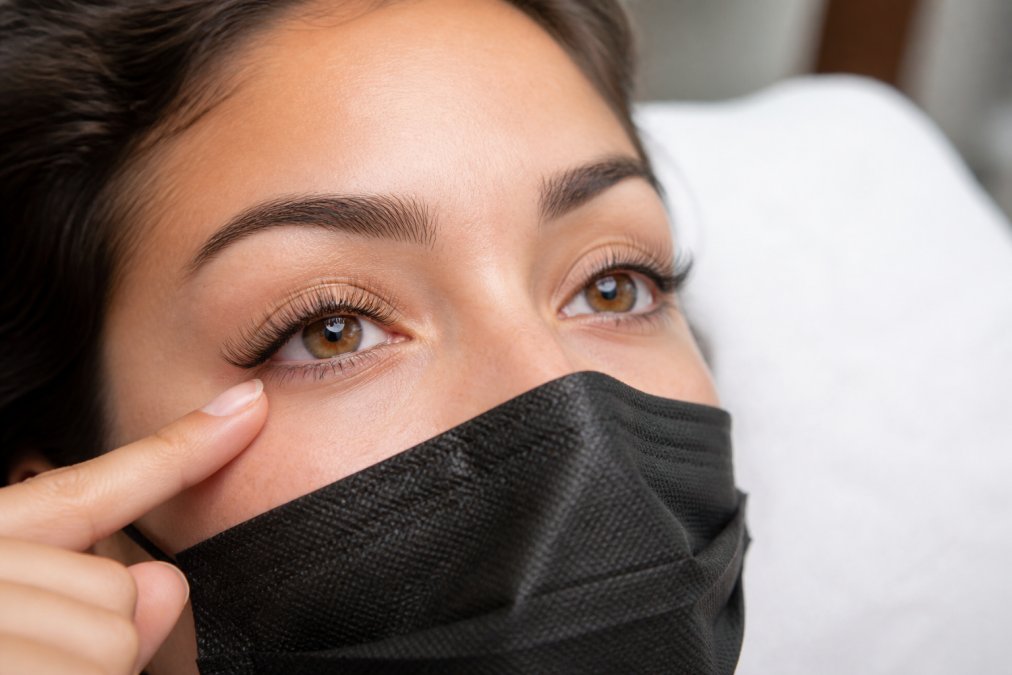
A patch test is a 24 to 48 hour trial where a small amount of adhesive is applied behind the ear or at the outer corner of one eye (Eyelash Extension Facts and Safety). It’s the most reliable way to predict whether a full set will cause a reaction.
A common mistake is skipping the patch test because you’ve “never had a reaction before.” Sensitivities develop over time, someone can wear extensions for years, then suddenly react to the same adhesive. Testing before every new adhesive batch is the safer habit.
Ask your stylist which specific adhesive they’ll use and request the patch test with that exact product, not a generic sample. Adhesives vary widely between brands, and a reaction to one says nothing about another.
Lash Extension Allergy Symptoms vs. Irritation
Allergy symptoms and irritation look similar but behave differently. Irritation is localized, appears during or right after application, and fades within a day or two. A true allergy builds over 12 to 72 hours, spreads beyond the lash line, and worsens with each exposure.
Telling them apart matters because the fix differs: irritation usually means technique or fume exposure, while an allergy means the adhesive is no longer compatible with your body.
| Symptom | Irritation | True Allergy |
|---|---|---|
| Onset | During or immediately after | 12-72 hours later |
| Location | Lash line only | Eyelid, under-eye, sometimes cheeks |
| Duration | Fades in 24-48 hours | Worsens with each exposure |
| Sensation | Mild sting or dryness | Persistent itching, burning, swelling |
| Response to removal | Resolves quickly | May need medical care |
Recognizing the Signs of a True Allergic Reaction
Contact dermatitis is the red, itchy, swollen reaction that develops when skin meets an allergen. On the eyelid it can present as flaking, crusting, or a rash extending past the lash line, often with watery eyes and light sensitivity.
If you experience any of the following, remove the extensions and see a doctor:
- Swelling that affects your vision or the shape of your eye
- Blistering or weeping skin around the eye
- Symptoms that continue for more than 72 hours
- Difficulty opening the eye in the morning
Hypoallergenic Adhesive Options for Sensitive Eyes
“Hypoallergenic” is a marketing term, not a regulated one. No federal standard defines it on a lash adhesive label, so a manufacturer can print it after removing one sensitizer while leaving others in the bottle. The ingredient list matters more than the front label.
The Chemistry Behind Lash Adhesive Reactions
Nearly every traditional lash adhesive is built on cyanoacrylate, the fast-curing compound family used in medical skin glue and household super glue. It polymerizes on contact with moisture, creating the bond and releasing the vapor that irritates sensitive eyes.
The specific cyanoacrylate matters. Common types in lash adhesives include:
- Ethyl cyanoacrylate, fast cure, strong bond, higher fume output. The most common sensitizer.
- Methoxyethyl cyanoacrylate, slower cure, lower vapor pressure, generally better tolerated by reactive clients.
- Alkoxy cyanoacrylate, used in some low-fume and medical-grade formulations; slower set, less odor.
- Butyl cyanoacrylate, less common in lash work, sometimes used in sensitive-skin formulations.
A client who reacts to one ethyl-based adhesive may tolerate a methoxyethyl or alkoxy formula, which is why a patch test with the exact product matters.
Carbon Black vs. Clear Adhesive
Most black lash adhesives get their color from carbon black, a pigment that can act as an additional irritant. Clear adhesives skip the pigment entirely, so for a client whose reaction is pigment-driven rather than cyanoacrylate-driven, switching from black to clear can resolve symptoms without changing the base chemistry.
Cyanoacrylate-Free Alternatives
A small but growing category of adhesives avoids cyanoacrylate altogether. These typically use:
- Polyurethane-based formulas, slower cure, weaker initial hold, but far lower fume release.
- Acrylate-free bio-adhesives, often marketed for medical or sensitive-skin use; retention is shorter, so appointments are more frequent.
The trade-off is real: cyanoacrylate-free adhesives cure slower, hold for less time, and cost more. For someone whose eyes react to every cyanoacrylate formula, that’s often worth it; for mild irritation, a low-fume methoxyethyl adhesive is the better first step.
What to Look For and What to Avoid
Ask your stylist for the Safety Data Sheet (SDS) for the adhesive they plan to use. Every manufacturer is required to provide one, and it lists the base cyanoacrylate, any pigments, and known sensitizers. A stylist who can produce the SDS on request is a stylist who knows what’s in the bottle.
Never let a stylist talk you into a “stronger” adhesive to improve retention if you’ve had a reaction. Stronger almost always means higher cyanoacrylate concentration and more fumes, the opposite of what sensitive eyes need. Retention problems are usually a technique issue, not an adhesive-strength issue.
Do Lash Extensions Damage Natural Lashes?
LED Lash Extension Benefits for Sensitive Eyes
Aftercare and Recovery for Sensitive Eyes
The Safest Way to Remove Lash Extensions During a Reaction
When to See a Doctor vs. When to Use OTC Drops
The dividing line is vision and skin integrity.
Post-Reaction Recovery Protocol
If you do react, here’s the sequence that works:
A reaction is not a reason to give up on extensions. It’s a reason to change the adhesive, the removal method, and the aftercare. Clients who document what triggered the reaction, the adhesive brand, the base cyanoacrylate, the cure time, usually find a compatible formula on the next attempt.
Conclusion
Frequently Asked Questions
What lash extensions are best for sensitive eyes?
The best lash extensions for sensitive eyes are typically made from synthetic PBT fibers and applied with a hypoallergenic, low-fume adhesive. Look for formaldehyde-free formulas and choose a stylist who offers a patch test. LED-cured extensions are also a strong option because the adhesive cures instantly, reducing fume exposure. Always prioritize a consultation to discuss your specific sensitivities before booking a full set.
Can I get lash extensions if my eyes are sensitive?
Yes, many people with sensitive eyes safely wear lash extensions. The key is choosing a stylist experienced with sensitive clients and using a hypoallergenic adhesive. A patch test 24-48 hours before your appointment is essential. During your consultation, be clear about past reactions, allergies, or conditions like dry eye. With the right preparation and aftercare, extensions can be comfortable even for sensitive eyes.
How do I know if I am allergic to lash extension glue?
Signs of an allergic reaction to lash extension glue include redness, swelling, itching, and watery eyes that start within 24-72 hours after application. Irritation from fumes usually happens during the appointment and fades quickly. If symptoms persist or worsen, remove the extensions and see a doctor. A patch test before your full set is the best way to check for a reaction in advance.
Are LED-cured lash extensions safer for sensitive eyes?
LED-cured lash extensions can be safer for sensitive eyes because the adhesive cures instantly under LED light, which means less fume exposure and a shorter application time. This reduces the chance of irritation from airborne cyanoacrylate. However, an allergic reaction is still possible if you are sensitive to the adhesive ingredients. A patch test is still recommended, even with LED systems.
Do lash extensions damage natural lashes?
When applied correctly by a trained stylist, lash extensions do not damage natural lashes. Damage usually happens when extensions are too heavy, applied too close to the lash line, or removed improperly. A skilled stylist will isolate each natural lash and choose a weight that suits it. Proper aftercare, like avoiding rubbing and using a lash serum, also helps maintain natural lash health.
What are the best practices for maintaining lash health with sensitive eyes?
To maintain lash health with sensitive eyes, cleanse your lashes gently with a lash-safe foam cleanser, avoid oil-based products near the eyes, and brush them daily with a clean spoolie. Schedule touch-ups every 2-3 weeks to prevent weight imbalance. If you notice any redness or itching, contact your stylist. Using a biotin- or peptide-infused lash serum can also support natural lash strength between appointments.
What should I do if I have a reaction to my lash extensions?
If you have a reaction, do not rub your eyes. Contact your lash stylist immediately to have the extensions removed safely. Use a cold compress to reduce swelling and avoid wearing eye makeup. If symptoms like redness, swelling, or itching persist for more than 24 hours, see a doctor. Once the reaction clears, a patch test with a different adhesive can help determine if you can try extensions again.