

Lash Extensions for Eczema Sufferers: Safe Guide
Table of Contents
- Can You Get Lash Extensions With Eczema?
- Lash Extensions for Sensitive Eyes: What Makes a Safer Set
- The Lash Extension Patch Test: Why 48 Hours Matters
- Lash Extensions Allergic Reaction Symptoms to Watch For
- Eyelash Extensions After an Allergic Reaction: Your Recovery Plan
- Choosing a Lash Technician and Preparing for Your Appointment
- Eczema-Safe Lash Alternatives and Aftercare
- Frequently Asked Questions
Last Updated: October 9, 2026
Can You Get Lash Extensions With Eczema?
Lash extensions for eczema sufferers are possible, but the answer depends less on the diagnosis and more on where your eczema is and what your eyelid skin is doing right now. Eczema is a barrier problem: when the lipid barrier is compromised, irritants and allergens penetrate more easily.
That is why “I have eczema” is not a yes-or-no answer. Two clients with the same diagnosis can have opposite outcomes.
Where Your Eczema Is Changes the Risk
- Eyelid eczema (periocular eczema): Highest risk. Adhesive, fumes, gel pads, and remover all contact already-inflamed skin. Extensions are usually inadvisable during a flare and require a longer calm period before booking.
- Eczema on the face but not the eyelids: Moderate risk. Fumes and transfer from fingers can still reach the lid, so patch testing matters more.
- Eczema on the body only (hands, elbows, knees): Lower risk from the adhesive itself, but higher risk from transfer. Scratch your body eczema, then touch your eyes, and you can move irritants to the lid.
When to Postpone Your Appointment
Postpone if your eyelids are actively flaring. Redness, weeping, crusting, scaling, or raw patches mean the barrier is open; adhesive fumes and gel pads will worsen it, and the reaction can spread beyond the lash line. Wait until your eyelid skin has been calm for at least one week, longer if you needed prescription treatment.
Also postpone if:
- You are using a topical steroid near the eyes. Ask your dermatologist when it is safe to resume; steroids thin the skin, raising reaction risk.
- You are using a topical calcineurin inhibitor (such as tacrolimus or pimecrolimus) on the lids. These are common for eyelid eczema, and skin is often more reactive while adjusting.
- You have an active eye infection, stye, or blepharitis. Adhesive and occlusion can worsen it.
The Clinician Decision Pathway
A salon patch test is not medical clearance: it reduces risk but does not eliminate it. Before booking, work through this order:
- Primary care or dermatologist first if your eyelid eczema is active, recurrent, or requires prescription treatment. Ask: “Is my eyelid barrier stable enough for repeated adhesive exposure?”
- Ophthalmologist if you have eye symptoms: tearing, burning, foreign-body sensation, light sensitivity, or vision changes. Eye symptoms are not a lash problem.
- Allergist or dermatologist for patch testing if you suspect a contact allergy. True patch testing uses standardized allergens under occlusion for 48 to 96 hours; a salon patch test is only a screening step.
- Technician last. Bring your clinician’s guidance to the consultation; a good technician will defer to it.
Do not use a salon patch test as a substitute for medical advice if your eyelids are inflamed, if you have had a prior reaction, or if you have any eye symptoms. Seek care first.
What “Calm Enough” Actually Looks Like
Most practitioners look for the same signs before proceeding:
- No redness, scaling, or crusting at the lash line or lid margin
- No weeping or oozing
- No new scratching or rubbing in the past week
If any are off, wait. Postponing costs a few weeks; a flare costs longer and can sensitize you to adhesives you might otherwise have tolerated.
Lash Extensions for Sensitive Eyes: What Makes a Safer Set
Lash extensions for sensitive eyes come down to three things: the adhesive, the materials, and the weight of each lash. Get all three right and most reactive clients wear extensions comfortably. Look for:
- Low-fume adhesive with a short cure time
- Synthetic PBT fiber lashes instead of mink or silk
- Lightweight fans that don’t pull on the natural lash
Adhesive Ingredients to Screen For
The main culprit in lash adhesive is cyanoacrylate, the same glue family used in medical skin closures. It cures fast by reacting with moisture, and that reaction releases fumes that irritate eyelids. Ask your technician what’s in the bottle. Screen for:
- Alkoxy-2-cyanoacrylate (gentler than standard ethyl)
- No added latex
- No formaldehyde releasers
Ask to see the adhesive bottle and its lot number. A technician who manufactures their own adhesive can tell you exactly what’s in it and when it was made. Fresh adhesive cures cleaner and fumes less.
The Lash Extension Patch Test: Why 48 Hours Matters
A lash extension patch test is a small trial application of adhesive placed on the skin before your full appointment.
The 48-hour window matters because contact allergies don’t show up in minutes. They build. A first exposure may look fine. The second exposure, days later, is when the skin reacts.
Here’s how to run one properly:
- Book the patch test at least 48 hours before your full set
- Have the technician place a few lashes on one eye only
- Leave the test lashes in place for the full 48 hours
If nothing changes, you’re likely clear. If anything itches, cancel the full set and see a dermatologist.
Lash Extensions Allergic Reaction Symptoms to Watch For
Lash extensions allergic reaction symptoms show up at the lash line, not the eyeball. The most common signs are itching, redness, swelling, and watery eyes, usually within 24 to 48 hours. Watch for:
- Itching along the upper lid
- Redness or heat at the lash line
- Puffy or swollen eyelids
Irritation vs. True Contact Allergy
Irritation and a true contact allergy look similar but behave differently. Irritation is a direct reaction to fumes or rough application: it shows up fast and fades once the irritant is removed. A contact allergy is an immune response that builds with repeat exposure and worsens each time; once sensitized to cyanoacrylate, even tiny amounts can trigger a reaction.
| Feature | Irritation | Contact Allergy |
|---|---|---|
| Timing | Within hours | 24-72 hours |
| First exposure | Can react | Usually no reaction |
| Repeat exposure | Same or better | Worse each time |
| Location | Lash line, eyelid | Eyelid, sometimes beyond |
| Goes away | Yes, once removed | Needs treatment |
If your reaction gets worse with each set, treat it as an allergy. Stop extensions and see a doctor.
Never ignore swelling that spreads past the eyelid or affects your vision. That’s a medical issue, not a lash issue. Remove the extensions and seek care the same day.
Eyelash Extensions After an Allergic Reaction: Your Recovery Plan
Eyelash extensions after an allergic reaction require a full reset: remove the current set, let the skin heal, and don’t book again until a doctor clears you. Your recovery steps:
- Remove the extensions. A professional removal with a gentle remover is safer than picking at them.
- Stop all eye makeup and lash products. Give the skin a break.
- Use a fragrance-free moisturizer on the eyelid if your doctor approves.
- Avoid rubbing. Dab with a tissue if your eyes water.
- See a dermatologist or ophthalmologist if symptoms last more than a few days.
If you want to try extensions again later, switch to a different adhesive type and always patch test first. Some clients do fine with an alkoxy-based glue after reacting to standard cyanoacrylate.
Choosing a Lash Technician and Preparing for Your Appointment
The technician matters more than the product. A skilled lash artist isolates each natural lash, controls adhesive volume, and keeps fumes away from the eye. A rushed application is where most reactions start.
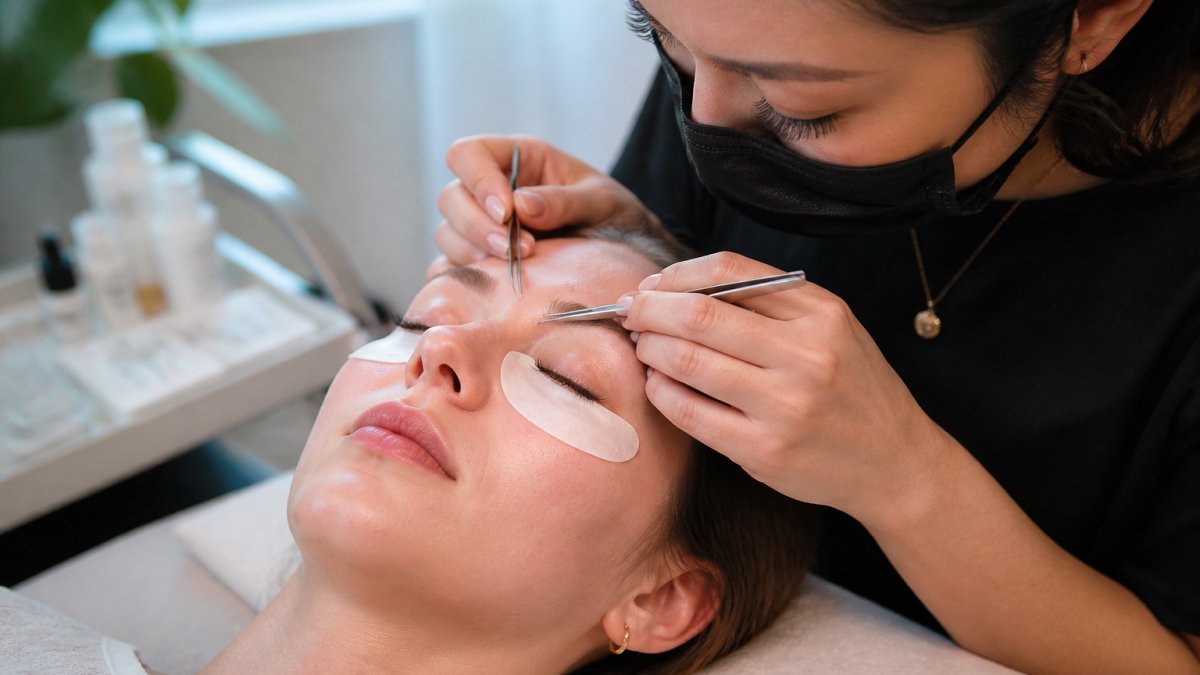
Ask questions before you book. A good technician will welcome them.
Salon Screening Checklist
Use this before you commit to an appointment:
- Does the technician ask about eczema, allergies, and past reactions?
- Can they name the adhesive brand and its main ingredients?
- Do they offer a patch test before the full set?
If a salon dodges these questions, walk away. Our technicians train in the Japanese AirLash® method and use adhesives we make ourselves, so we know exactly what touches your skin.
Eczema-Safe Lash Alternatives and Aftercare
If extensions keep triggering flares, you still have options. The goal is to add length and definition without putting adhesive on reactive skin, and to choose the option whose removal is easiest on your barrier. Every alternative below has trade-offs; the right pick depends on how reactive your lids are.
Alternatives, Ranked by Skin Contact
1. Going without eye cosmetics (lowest risk)
No adhesive, no remover, no pigment. The trade-off is obvious: no length or volume.
2. Lash growth serums (low skin contact, slow results)
Applied to the lash line, not the lid.
3. Magnetic lashes (no adhesive, but friction risk)
Magnetic lashes use tiny magnets and either a magnetic liner or a two-piece sandwich system.
**4.
**5.
**6.
Removal Matters as Much as Application
Most people focus on what goes on. What comes off is just as important for eczema-prone lids.
- Extension remover is typically a gel or cream solvent designed to break the cyanoacrylate bond, and it can sting on compromised skin. Ask your technician to keep it off the lid margin and remove residue with a gentle cleanser afterward.
- Lash lift solutions are rinsed, not dissolved, but the alkaline residue can linger. A cool-water rinse and a fragrance-free moisturizer help.
- Strip lash adhesive is usually removed by peeling, which pulls at the lid skin. Use a dedicated adhesive remover or micellar water on a cotton pad, press, and let it release.
Never pick, pull, or scrub at the lash line. That is the fastest way to open the barrier and start a flare.
Aftercare for Eczema-Prone Lids
Aftercare is where most flares are prevented or caused.
- Keep the lash line clean. A lash-safe cleanser once a day removes oils, dead skin, and buildup. Use a soft brush or your fingertips, close your eyes, and rinse with cool water.
- Avoid rubbing. If your eyes water, dab with a clean tissue. Rubbing is the most common trigger for eyelid flares in extension clients.
- Moisturize the lid margin carefully. A fragrance-free, dye-free moisturizer or a thin layer of a dermatologist-approved ointment can support the barrier. Do not apply it to the lash line itself if you have extensions.
The best routine for eczema-prone clients is simple: choose the option with the least skin contact that still meets your goal, keep the lash line clean, and never rub. Most flare-ups start with rubbing or with remover left on the lid, not with the adhesive itself.
If your natural lashes are thin or weak, a growth serum can help before you commit to extensions. We make our own lash and brow serums, a good starting point for clients who want stronger lashes first.
Frequently Asked Questions
Can you get lash extensions if you have eyelid eczema?
It depends on whether your eyelid eczema is in an active flare or calm. If the skin around your lash line is clear, not weeping, and not inflamed, extensions may be possible with a patch test and a sensitive-skin adhesive. If your eyelids are currently red, itchy, or broken, postpone the appointment until the flare resolves. A dermatologist or ophthalmologist can confirm whether your skin barrier is ready.
Should you get a patch test before lash extensions if you have eczema?
Yes. A lash extension patch test places a small amount of adhesive behind your ear or on your inner wrist and waits 48 hours. If you have eczema, your skin barrier is already compromised, so a patch test gives you a controlled way to check for a contact allergy before adhesive touches your lash line. Even if you have had extensions before, retest with any new adhesive.
What are the signs of an allergic reaction to lash extensions?
Watch for itching, redness, swelling, watery eyes, or a burning sensation that starts within 24 to 48 hours of application. These symptoms differ from simple irritation, which usually settles within a few hours. If you notice discharge, crusting, or your eyelid feels hot, remove the extensions and see a doctor. A true contact allergy will not improve while the adhesive remains on your lashes.
What should you do if you have eyelash extensions after an allergic reaction?
Have the extensions removed professionally as soon as possible, then avoid all lash adhesive until your eyelids fully heal. Use a gentle, fragrance-free cleanser and dab the area with a tissue instead of rubbing. A dermatologist may recommend a short course of topical treatment. Once healed, ask your technician about a different adhesive formula and always patch test before a full set.
Eczema shouldn’t keep you from great lashes, but it does mean choosing carefully. The right adhesive, a patch test, and a technician who understands sensitive skin make all the difference. At Lashes by Shigeru, we build our own adhesives, use the weightless Japanese AirLash® technique, and take the time to screen every client before we start. Book an appointment with us and get natural-looking lashes that last up to five weeks, without the flare-ups.