

Identifying Allergic Reactions to Lash Extension Adhesive
Table of Contents
- Understanding Lash Extension Adhesive Allergies
- Distinguishing Lash Glue Allergy vs Irritation
- Recognizing Common Symptoms of an Adhesive Reaction
- When Symptoms Begin and How Long They Last
- Eyelash Extension Glue Reaction Treatment and Response Steps
- The Role of Lash Extension Patch Testing
- Identifying Possible Causes: Cyanoacrylate and Adhesive Stabilizers
- Red Flags and When to Seek Medical Advice
- Frequently Asked Questions
Last Updated: October 10, 2026
Understanding Lash Extension Adhesive Allergies
An allergic reaction to lash extension adhesive is an immune system response triggered by contact with specific chemicals in the glue used during application. Unlike simple irritation, which fades quickly, a true allergy involves your body’s defense system reacting to particular adhesive ingredients. Identifying allergic reactions to lash extension adhesive early is crucial for protecting your eye health and comfort.
The most common culprit is cyanoacrylate, the primary bonding agent in lash glues. Other ingredients like adhesive stabilizers and formaldehyde-releasing compounds can also trigger allergic responses in sensitive individuals.
If you’ve had reactions to lash adhesive before, always inform your lash technician. Many salons offer hypoallergenic alternatives and can perform patch tests to identify safe options for your specific sensitivities.
Distinguishing Lash Glue Allergy vs Irritation
Irritation typically appears within the first 24 hours from fumes or application sensitivity and improves with rest. Allergic reactions develop over 24-72 hours as your immune system builds sensitivity to specific chemicals, and worsen with repeated exposure.
- Irritation: Appears within hours, improves with time, affects the immediate contact area
- Allergy: Develops over days, worsens with repeated exposure, can spread beyond the lash line
Recognizing Common Symptoms of an Adhesive Reaction
Identifying allergic reactions to lash extension adhesive requires attention to specific warning signs around your eyes and eyelids. Symptoms typically appear as localized reactions near where the adhesive contacted your skin and lash line.
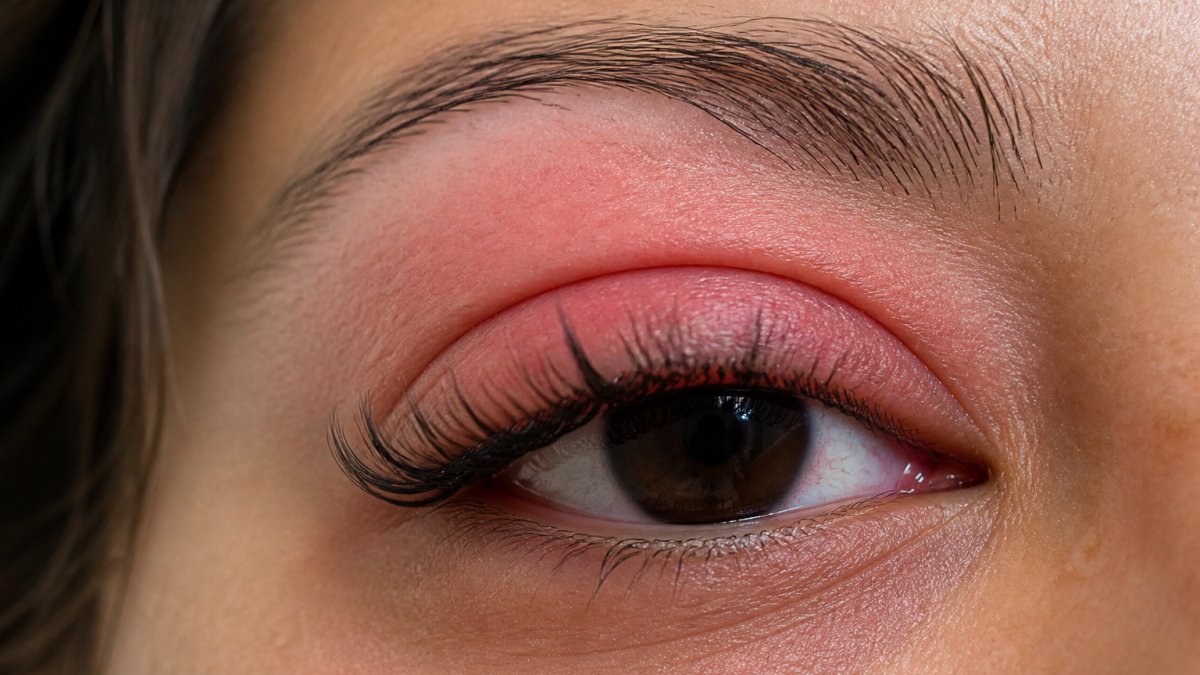
Redness and Swelling Around the Eyelids
Redness and swelling are among the first visible signs of an adhesive allergy. Your eyelids may appear inflamed, darker than usual, or puffy. This occurs because your immune system releases histamines in response to adhesive chemicals, dilating blood vessels. If you notice these symptoms 24-48 hours after application, your adhesive may be the culprit.
Itching, Burning, and Discomfort
Intense itching around the lash line is a classic sign of allergic contact dermatitis. Burning indicates inflammation as adhesive chemicals irritate nerve endings. Resist scratching, as it spreads the reaction and damages delicate eyelid skin.
Watery or Weeping Eyes
Excessive tearing represents your body’s attempt to flush out the irritant. Your eyes produce more tears than normal, and they may feel constantly wet or sticky. If your eyes water persistently after lash extension application, it signals a reaction to adhesive fumes or direct contact.
If watery eyes persist beyond 48 hours or worsen despite removing the extensions, seek medical attention. Persistent tearing can indicate a more serious allergic response requiring professional evaluation.
When Symptoms Begin and How Long They Last
Irritation typically appears within 24 hours and improves by day 2-3 as fumes dissipate. Allergic reactions usually develop 24-72 hours after application, with some delayed reactions appearing at the second or third appointment, a hallmark of allergic contact dermatitis as your immune system builds sensitivity.
Mild reactions resolve within 3-5 days after removal; moderate reactions persist 1-2 weeks; severe reactions last 2-4 weeks and may require medical treatment. If symptoms worsen after removal or last longer than two weeks, consult a healthcare provider.
Eyelash Extension Glue Reaction Treatment and Response Steps
If you suspect a reaction, remove extensions immediately using a professional removal service or lash extension remover. Do not pull or pick at them, as this damages natural lashes.
Cleanse thoroughly. Wash eyelids and lash line with gentle, fragrance-free cleanser and cool water. Pat dry gently.
Apply cold compresses. Use a clean, cold cloth or ice pack wrapped in a thin towel for 10-15 minutes several times daily to reduce swelling and soothe itching.
Avoid additional irritants. Skip makeup, avoid touching the area, and do not wear contact lenses until symptoms resolve.
Consider over-the-counter relief. Antihistamine eye drops can help manage itching. Hydrocortisone cream (1%) may reduce inflammation, but consult a pharmacist first.
Know when to seek medical help. If symptoms worsen after 48 hours, spread beyond the immediate lash line, or include difficulty opening your eyes, contact a healthcare provider. Severe reactions may require prescription treatment.
The fastest way to resolve an adhesive reaction is removing the extensions immediately, cleansing thoroughly, and avoiding further exposure to the same adhesive formula. Most mild reactions resolve within a week of extension removal.
The Role of Lash Extension Patch Testing
Patch testing applies a small amount of adhesive to your inner arm or behind your ear for 48 hours to observe any reaction. A positive result (redness, itching, swelling, or burning) indicates that adhesive will likely cause problems on your eyelids. Ask your lash professional to document results in writing, date, adhesive brand, application method, and reactions observed, for future reference.
Understanding patch test results:
- Positive reaction (redness, swelling, itching at patch site): You are likely sensitized to that adhesive. Do not proceed with a full application. Ask your technician about alternative adhesive formulas or request a patch test with a different brand.
- Negative result (no visible reaction after 48 hours): This is encouraging but not a guarantee. A negative patch test means your skin did not react to direct contact in a controlled setting. It does not account for inhaled fumes during application, the thinner and more sensitive skin of your eyelids, or cumulative exposure over multiple appointments.
- Ambiguous or mild reaction (slight redness that fades quickly): Discuss this result with your lash professional and consider a dermatologist consultation before proceeding. Some people tolerate mild patch-test reactions without developing full allergic symptoms, while others experience escalating reactions with repeated exposure.
Patch test limitations: A negative patch test does not eliminate allergic risk. Eyelid skin is thinner and more permeable than your forearm, making it more reactive. Patch testing does not replicate inhaled fumes during full application. Some people tolerate direct contact but react to fumes; others develop symptoms after repeated appointments as immune sensitization builds. Batch-to-batch formulation differences can also affect how your skin responds.
After a negative patch test, inform your technician of your sensitivity history and request a well-ventilated space with minimal fume exposure. If symptoms develop, remove extensions and contact your eye care provider with your patch test documentation.
After a positive or ambiguous result, ask your technician about adhesives with different stabilizer formulas, or consult a dermatologist for formal patch testing with a standardized allergen panel to identify which adhesive components trigger your reaction.
Identifying Possible Causes: Cyanoacrylate and Adhesive Stabilizers
The primary component in virtually all lash glues is cyanoacrylate, a fast-bonding resin. Cyanoacrylate itself rarely causes allergies in its cured form, but uncured cyanoacrylate and its fumes can trigger reactions during application when volatile compounds are strongest.
Adhesive stabilizers, hydroquinone, formaldehyde-releasing preservatives, and phthalates, are often the true culprits in allergic reactions. Someone might tolerate pure cyanoacrylate but react to the stabilizers mixed with it. This is why switching adhesive brands sometimes resolves reactions. During application, volatile organic compounds release into the air and irritate eyes and nasal passages. Good ventilation reduces fume exposure significantly.
Red Flags and When to Seek Medical Advice
Not all adhesive reactions are equal. Some resolve with simple home care; others require prompt professional evaluation or emergency care.
Seek emergency medical care (call 911 or go to an emergency department) if you experience:
- Difficulty breathing or shortness of breath: This suggests a systemic allergic reaction (anaphylaxis) and requires immediate treatment. Do not wait; call 911.
- Swelling of the lips, tongue, throat, or face beyond the eyelid area: Facial or throat swelling can obstruct airways and is a medical emergency.
- Severe eye pain or sudden vision changes: These may indicate corneal involvement, acute glaucoma, or serious inflammation requiring urgent ophthalmologic evaluation.
- Discharge from the eye that is thick, yellow, or green: This suggests bacterial infection, which requires prompt antibiotic treatment.
- Inability to open your eyes due to severe swelling: Severe edema can impair vision and may indicate a reaction severe enough to warrant immediate care.
- Symptoms that developed suddenly and are rapidly worsening: Rapid progression suggests a more serious allergic response.
Contact your eye care provider (ophthalmologist or optometrist) within 24 hours if:
- Symptoms persist or worsen 48 hours after removing the extensions
- Symptoms last longer than one week despite extension removal and home care
- You are unsure whether you have an allergic reaction, irritation, or infection
- You want formal allergy testing to identify which specific adhesive ingredients trigger your reaction
- You experience the same symptoms with multiple different adhesive brands (suggesting a pattern rather than a single-product issue)
- You have a history of contact dermatitis or other skin allergies and want professional guidance before trying lash extensions again
Your eye care provider can examine your eyelids under magnification, assess the extent of inflammation, and determine whether you have allergic contact dermatitis, irritant contact dermatitis, or a secondary infection. They may prescribe topical corticosteroids or antihistamine drops if home care is insufficient.
Contact your lash professional or salon within 24 hours if:
- You develop any symptoms you believe are related to the adhesive
- You want to discuss your reaction and explore alternative adhesive formulas
- You need guidance on safe removal or follow-up care
- You want to schedule a patch test with a different adhesive before your next appointment
Your lash technician has valuable information about the specific adhesive used, application conditions, and whether other clients have reported similar reactions. They may also recommend a different brand or formulation, or suggest a longer waiting period before your next appointment to allow your skin to fully recover.
What to document after a suspected reaction:
If you develop symptoms, record the following information to share with your eye care provider:
- Date and time symptoms began (relative to your lash application)
- Which symptoms appeared first and in what order (e.g., itching before swelling, or vice versa)
- Affected areas (upper eyelid only, both eyelids, spreading to cheek or forehead)
- Severity on a scale of 1-10 and whether symptoms are worsening, stable, or improving
- Adhesive brand and type (if you know it; ask your technician)
- Lash technician and salon name (for reference)
- Any previous reactions to lash adhesive or other products
- Photos of the affected area taken at 24 hours and 48 hours post-application (these help your clinician assess severity and progression)
- Any home treatments you’ve tried and whether they helped
This documentation helps your eye care provider distinguish between allergic contact dermatitis (which typically develops 24-72 hours after exposure and worsens with repeated contact) and irritant contact dermatitis (which may appear within hours and often improves as fumes dissipate).
Never ignore persistent symptoms. Your eyes are too important to gamble with. If something feels wrong beyond the first 24-48 hours, or if symptoms recur with different adhesive brands, get professional input. Early intervention prevents complications and helps you find adhesive formulas your eyes tolerate well.
Frequently Asked Questions
How can you tell the difference between a lash adhesive allergy and irritation?
An allergic reaction to lash extension adhesive involves the immune system and typically causes itching, redness, and swelling that spreads beyond the lash line. Irritation from adhesive fumes or the application process is localized, temporary, and usually resolves within hours. Allergies persist or worsen over time, while irritation improves once you remove the extensions or stop exposure to fumes. A patch test can help confirm a true allergy.
What does an allergic reaction to lash extension adhesive look like?
Visible signs include red, swollen eyelids, puffiness around the eye area, and sometimes a rash that extends beyond the lash line. Your eyes may water excessively, and you might notice flaking or dry skin on the eyelid. In severe cases, the swelling can partially close the eye. These symptoms typically appear within 24-48 hours of application and may worsen over several days if the extensions remain in place.
How long does a lash glue allergy last?
Once you remove the lash extensions, most allergic reactions improve within 24-48 hours, though some swelling or redness may persist for several days. Severe reactions can take up to a week to fully resolve. If symptoms continue beyond a week after removal, or if they worsen, seek medical advice. Avoiding exposure to the specific adhesive ingredient in the future prevents recurrence.
Can a patch test prevent an allergic reaction to lash adhesive?
A patch test applies a small amount of adhesive to your skin (usually behind the ear or on the inner arm) 24-48 hours before your appointment to identify sensitivity. While helpful, patch tests have limitations: they test skin sensitivity, not eye tissue sensitivity, and some reactions only appear after full application. However, a negative patch test significantly reduces risk and provides valuable safety information before committing to full extensions.