
Choosing the Right Lash Extension Style: A 2026 Guide
Table of Contents
- Why Your Eye Shape Decides Your Lash Extension Style
- Lash Extension Curl Types Explained: C, D, and L
- The Best Lash Style for Hooded Eyes and Other Shapes
- Matching Lash Styles to Your Eye Shape: A Visual Guide
- Classic vs. Volume Lashes: Finding the Right Density
- Natural Looking Lash Extensions 2026: Trends and Techniques
- Eyelash Extension Maintenance Tips for Long-Lasting Results
- Book a Consultation for Your Custom Lash Map
- Frequently Asked Questions
Last Updated: September 8, 2026
Choosing the right lash extension style is about engineering a look that complements your unique eye shape, natural lash health, and daily life. At Lashes by Shigeru, our master stylists perfect custom lash maps, and the first question we always ask is simple: what is your eye shape?
Most lash disappointment stems from a style mismatch, not a quality issue. A D-curl volume set can look heavy on hooded eyes, while a subtle classic set might disappear on deep-set monolids. Below, we show you how to diagnose your eye shape, decode curl types, and select a density that enhances your features, plus 2026 trends and maintenance habits.
Why Your Eye Shape Decides Your Lash Extension Style
Your eye shape is the architectural blueprint for your entire lash map. A skilled technician will assess the orientation of your eyes, the visibility of your lid crease, and the natural direction of your lash growth before recommending a single extension.
Almond, Round, and Monolid Eyes
Almond eyes are the most versatile canvas; because the outer and inner corners align on a horizontal axis, almost any style enhances their balanced proportions. Round eyes feature a more visible crease and wider appearance; styles that elongate the outer corner prevent an overly circular look. Monolid eyes lack a defined crease, so the lash line carries the full visual weight; stronger-lift curls like D or L create the illusion of depth where the crease would otherwise fall flat.
Hooded, Downturned, and Upturned Eyes
Hooded eyes have a fold of skin across the crease that can hide part of the lash line; extensions must peak at the center or slightly outward to create opening lift. Downturned eyes slant downward at the outer corner; a precise cat eye effect can visually lift the face without dragging it down. Upturned eyes naturally smile at the outer corners and suit an open-eye, doll-like style emphasizing the center. A common mistake is applying the same curl and length across all eye shapes, the lash extension style you choose must always follow your anatomy.
Lash Extension Curl Types Explained: C, D, and L
The curl is the shape of the extension itself, dictating how much lift and openness your final look will have. Choosing the right curl is about understanding the angle of the lift, the length of the base, and how that geometry interacts with your natural lash direction and eyelid structure.
The Curl Spectrum: From Subtle to Dramatic
Professional lash lines typically offer curls ranging from J to L, with the most common being B, C, CC, D, DD, and L. Each letter corresponds to a specific curvature angle measured at the base and the tip of the extension. Here is how the main categories break down:
| Curl Type | Base Angle | Lift Intensity | Best For | Visual Effect |
|---|---|---|---|---|
| J-curl | 15-20° | Minimal | Straight lashes pointing downward | Subtle, natural enhancement |
| B-curl | 25-30° | Soft | Clients new to extensions, straight lashes | Natural, mascara-like finish |
| C-curl | 35-40° | Natural | Almond eyes, first-time clients | Soft, everyday enhancement |
| CC-curl | 40-45° | Moderate | Round eyes, those wanting more visible lift | Open, defined look |
| D-curl | 45-50° | High | Round and monolid eyes | Doll-like, dramatic definition |
| DD-curl | 50-55° | Very High | Clients wanting maximum lift | Intense, wide-awake appearance |
| L-curl | 90° base, sharp upward | Sharp | Hooded and deep-set eyes | Visible lift that clears the lid fold |
Why the L-Curl Is a Game Changer for Hooded Eyes
The L-curl solves a problem that C and D curls cannot. Unlike C or D curls, which curve upward from the base, an L-curl has a straight, 90-degree base that angles sharply upward, allowing the extension to stand upright and clear the fold of skin that characterizes hooded eyes. For hooded or deep-set eyes, an L-curl in a classic or light volume density prevents extensions from disappearing when you blink and avoids lashes brushing against the upper lid.
Matching Curl to Lash Direction
Your natural lash growth direction matters as much as your eye shape. If your lashes grow straight out, a C-curl will only straighten them slightly, while a D-curl creates the illusion of an upward sweep. If your lashes already curve upward, a strong D-curl can look costumed. Your technician should hold a sample lash against your closed lid and have you open your eyes slowly to check that the curl clears your crease and does not poke your upper lid or brow bone.
Curl and Retention: The Trade-Off
A stronger curl is not always better for retention. D and DD curls have a higher center of gravity, making them prone to twisting if applied to downward-growing lashes. L-curls, with their straight base, bond more securely to downward-growing lashes because the contact area is larger. Experienced technicians often use an L-curl at the inner corner, where lashes are straighter, and a C or D curl toward the outer corner, where lashes sweep upward, creating a seamless lift while maximizing retention.
How to Communicate Curl Preference to Your Technician
During your consultation, do not just say “I want a D-curl.” Describe the effect you want, “I want my eyes to look more open without looking round,” or “I need a curl that will stay visible past my hooded lid.” Ask to see a physical sample of each curl placed against your closed eyelid; this 30-second check prevents choosing a curl that looks beautiful on a lash card but disappears or overwhelms on your actual eye.
If you wear glasses, mention this during your curl consultation (the CDC). High-index lenses can magnify or distort the appearance of your lashes, and a curl that is too long may brush against the lens, causing both discomfort and premature lash shedding.
The Best Lash Style for Hooded Eyes and Other Shapes
The best lash style for hooded eyes focuses on vertical lift at the center rather than length at the outer corner. Since the skin fold can weigh down longer lashes, extensions that are too long can brush against the skin and cause premature shedding. Opt for a stronger curl and staggered length to open the eye vertically, a D or L curl in a classic or light volume density prevents extensions from disappearing when you blink.
For other shapes, the logic shifts. Almond eyes handle a classic cat eye with elongated outer corners. Round eyes benefit from length concentrated at the center to create an oval illusion. Downturned eyes need a modified cat eye that lifts the outer corner without weighing it down. Monolid eyes can carry longer lengths and fuller volume because there is no crease to compete with the lash line. A professional lash mapping session is invaluable, as a generic style card cannot account for the asymmetry most faces naturally have.
Matching Lash Styles to Your Eye Shape: A Visual Guide
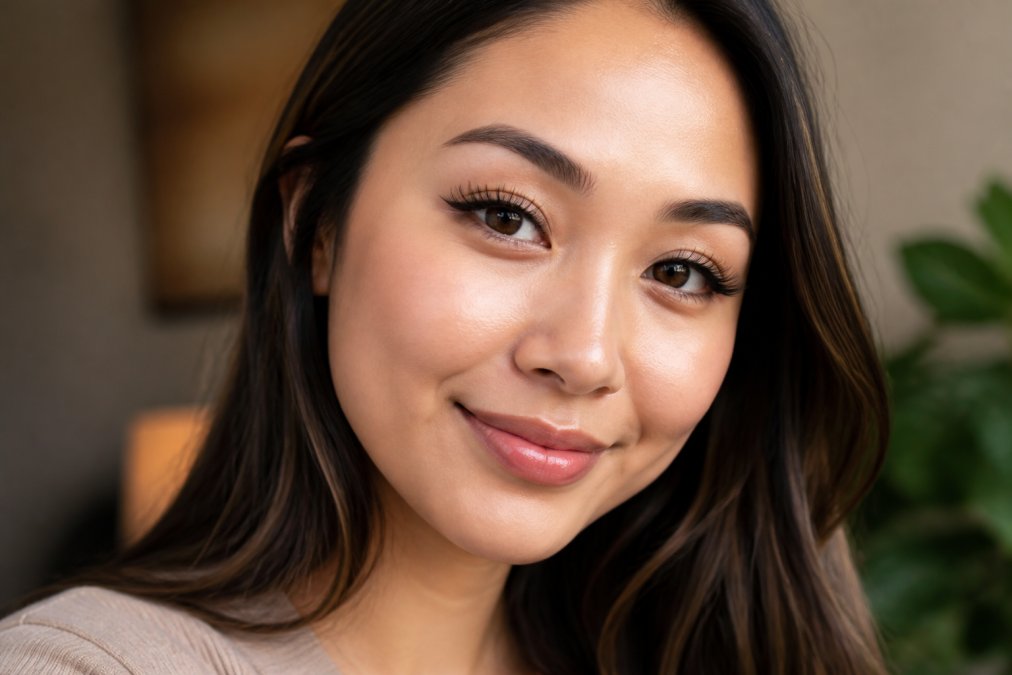
Visualizing the result before you commit is the smartest step in choosing the right lash extension style. Study your eye in a mirror with your head level, noticing where your natural lashes are densest and where they point. This self-diagnosis helps you communicate your goals to your lash artist, who can refine the plan during the consultation. natural botanical serums.
The Natural Eye Style
The natural eye style is the quiet luxury of the lash world. It uses shorter lengths and a C-curl to enhance your own lashes without announcing their presence, creating a polished, well-rested look that requires no mascara. It suits clients with strong natural lashes, professional environments, or first-time extension wearers, focusing on density that fills gaps while extending just a few millimeters past your natural lash line.
The Cat Eye Effect
The cat eye effect draws the eye outward and upward for a sultry, elongated silhouette, mapping the longest extensions to the outer third of the eye. While stunning on almond and upturned eyes, it requires careful adjustment for hooded eyes, where exaggerated outer length can pull the eye down. A skilled technician will soften the effect by balancing length with natural lash health and the angle of your brow bone.
Classic vs. Volume Lashes: Finding the Right Density
Classic vs. volume lashes is a question of weight and drama. Classic lashes apply one single extension to one natural lash, creating a clean, defined line ideal for those with a good natural base. Volume lashes use multiple ultra-thin extensions, often synthetic mink or silk fibers, fanned out and attached to a single natural lash, building a fluffy, dense texture without adding excessive weight.
The choice between classic, volume, and hybrid lashes should be guided by your natural lash health. If your lashes are sparse or weak, a heavy volume set can cause strain and premature loss; a light volume or classic set with a smaller fiber diameter protects the natural lash while still delivering visual impact. This decision is central to choosing the right lash extension style, as density must always respect the health and growth cycle of your own lashes.
Natural Looking Lash Extensions 2026: Trends and Techniques
The dominant trend in natural looking lash extensions 2026 is restraint. Clients are moving away from heavy, uniform fans toward styles that mimic the organic irregularity of real lashes. The wispy style, which staggers lengths and curls to create soft, feathered peaks, uses a mix of classic and light volume fans to build texture that looks like a naturally flawless lash line, just enhanced.
Another key technique is the open-eye style, which concentrates curl and length at the center of the eye for a youthful, awake appearance that photographs beautifully without looking costumed. The emphasis across 2026 is on lash mapping that respects eye symmetry and individual features rather than a one-size-fits-all set. For sensitive eyes, the shift toward hypoallergenic, virtually weightless materials has made extensions more comfortable than ever.
Eyelash Extension Maintenance Tips for Long-Lasting Results
Eyelash extension maintenance tips begin with how you sleep. Always sleep on your back or use a silk pillowcase to reduce friction that can bend or loosen the adhesive bond. Avoid oil-based cleansers, makeup removers, and moisturizers near the eye area, as oils break down the adhesive and shorten retention. Wash your lashes daily with a specialized, oil-free lash cleanser using a soft brush.
- Brush daily: Gently comb your lashes each morning with a clean spoolie to keep them aligned.
- Avoid pulling: Never tug or pull at extensions, as this can damage your natural lash follicle.
- Schedule fills: Plan for a fill every two to three weeks to maintain the full look as your natural lashes shed.
- Skip the curler: Do not use an eyelash curler on extensions; it will crush the curl and snap the fibers.
Why Your Lifestyle Should Dictate Your Lash Style, Not the Other Way Around
Most maintenance guides assume you will adapt your life to your lashes, but the reverse is more practical: your daily habits should determine which lash style you choose. A style that looks stunning on a mannequin can become a maintenance burden if it conflicts with how you actually live.
Contact lens wearers. Inserting and removing lenses can catch on long, dramatic extensions and cause premature shedding. A shorter classic set or a light volume set with lengths close to your natural lash line reduces the risk of snagging. Additionally, preservatives in contact lens solution can weaken lash adhesive over time, so choose a style that does not require frequent touching or rubbing.
Gym-goers and hot yoga enthusiasts. Sweat and steam are the enemies of lash adhesive. If you work out daily, a heavy volume set will not survive constant moisture and towel friction. A lighter classic or hybrid set with a stronger curl (C or D) holds up better because there is less weight pulling on the adhesive bond. After your workout, gently pat your lashes dry with a tissue, never rub, and brush them back into place.
Makeup-heavy routines. If you wear heavy eye makeup, including liquid liner and waterproof mascara (on your lower lashes only, never on extensions), you need a style that can withstand more aggressive cleansing. A dramatic volume set will trap makeup residue at the base, requiring more frequent deep cleaning. A wispy or open-eye style with staggered lengths allows cleansing brushes to reach the lash line more easily. If you cannot give up winged liner, a cat eye effect will complement your makeup rather than fight it.
Swimmers and beachgoers. Chlorine and saltwater break down cyanoacrylate adhesive faster than fresh water (PubMed). If you swim regularly, choose a classic set with shorter lengths and a C-curl, the smaller surface area means less exposure to water and chemicals. After swimming, rinse your lashes with fresh water immediately and dry them gently, planning fills closer to the two-week mark.
Side sleepers. If you cannot train yourself to sleep on your back, your lash style should account for it. Long, dramatic extensions are more likely to bend or tangle against a pillowcase. A natural eye style or a light volume set with lengths under 12 mm will survive side sleeping far better than a 15 mm cat eye. Pair this with a silk pillowcase, which creates less friction than cotton.
The Maintenance-Style Connection: What to Tell Your Technician
During your consultation, be honest about your lifestyle. A master technician will factor in your workout frequency, makeup habits, and sleep position when recommending a lash map. A client who runs five days a week and sleeps on her side might be advised against a full-volume cat eye, not because it would not look beautiful, but because it would require constant upkeep and shed unevenly. Choosing a style that matches your maintenance capacity is the difference between lashes that look flawless for three weeks and lashes that look ragged by day ten.
If you use a sauna or steam room regularly, be aware that the heat and humidity can soften the adhesive bond. Most practitioners recommend avoiding steam exposure for the first 24 to 48 hours after application, and scheduling fills before a planned spa day rather than after (aao.org).
Book a Consultation for Your Custom Lash Map
Choosing the right lash extension style is a collaborative process between you and a master artist. A professional consultation allows the technician to assess your eye shape, natural lash density, and lifestyle, shaping a custom lash map drawn specifically for your eyes to ensure every extension enhances your features and maintains natural lash health.
At Lashes by Shigeru, our proprietary Japanese AirLash® technique delivers a hypoallergenic, virtually weightless application that lasts up to five weeks. Master stylist Shigeru Hanai, with extensive experience in Tokyo and New York City, leads a team that manufactures its own adhesives and growth serums to guarantee a problem-free, comfortable experience. If you are searching for professional lash extensions that look effortlessly natural, book an appointment and let us create a custom lash extension style that is unmistakably you.
Frequently Asked Questions
What style of lash extensions should I get for my eye shape?
Your eye shape guides the mapping. Almond eyes suit most styles, from natural to cat eye. Round eyes benefit from a cat eye or doll eye effect to elongate. Hooded eyes need a curl that lifts, like a C or D curl, to open the eye. Downturned eyes look best with more length at the outer corner to lift the gaze. A consultation with a lash technician helps confirm the ideal lash extension style for your unique features.
Is C or D curl better for a natural look?
For a subtle, natural look, a C curl is usually the better choice. It provides a gentle lift that mimics the natural curve of most lashes. A D curl creates a more dramatic, wide-eyed effect because it has a stronger bend. If you have straight lashes that point downward, a D curl might be necessary to achieve any visible lift, even for a natural style.
What is the most popular eyelash extension style in 2026?
Natural looking lash extensions 2026 are defined by a wispy, textured aesthetic rather than uniform density. Natural looking lash extensions 2026 are defined by a wispy, textured aesthetic rather than uniform density. Styles that enhance natural lash health and eye symmetry, favoring a lighter look over a heavy, dramatic fan, are popular.
How do I maintain natural-looking lash extensions?
Proper eyelash extension maintenance tips include washing your lashes daily with a lash-safe cleanser to prevent oil buildup, which weakens the adhesive. Brush them gently with a clean spoolie each morning. Avoid oil-based makeup and eye creams. Also, try not to sleep on your face. Regular touch-ups every 3 to 4 weeks are essential to keep your set looking full and natural.
Can I get lash extensions if I have sensitive eyes?
Yes, but you need a hypoallergenic approach. Standard adhesives can irritate sensitive eyes. At Lashes by Shigeru, the Japanese AirLash® technique uses a sensitive LED adhesive that is virtually weightless and formulated to minimize reactions. Always request a patch test during your consultation to confirm your eyes tolerate the products before a full application.
How do I know what lash style suits me?
Beyond eye shape, your lifestyle matters. If you are a busy professional with little time, a natural classic set is low-maintenance. For a special event, you might prefer a dramatic volume set. Your lash technician will consider your natural lash health, fiber diameter, and curl intensity to create a custom lash map that complements your features and daily routine.