

How Long Should You Take a Break Between Lash Extensions?
Table of Contents
- Do You Really Need a Break From Lash Extensions?
- The Natural Lash Growth Cycle and Why It Matters
- Signs of Damaged Natural Lashes From Extensions
- How Long Should a Lash Break Last?
- How to Restore Natural Lashes After Extensions
- How Often to Get Lash Fills (and When to Pause)
- Planning Your Return: The Post-Break Transition
- Frequently Asked Questions
Last Updated: September 13, 2026
Do You Really Need a Break From Lash Extensions?
Not everyone needs a scheduled break, but anyone wearing extensions continuously for months should understand how long should you take a break between lash extensions before their natural lashes send signals. The difference comes down to application weight, adhesive quality, and whether the natural lash cycle gets room to complete itself.
When a Break Helps and When It Does Not
A break helps when your lashes show thinning, adhesive buildup has crept onto the skin, or extensions are heavier than your natural lash diameter can carry. It’s unnecessary when lashes shed on a normal cycle, retention is steady, and eyelids stay clean between appointments.
Here’s the framework we use:
| Situation | Break Needed? | Typical Duration |
|---|---|---|
| Healthy retention, no thinning | No | Continue normal fills |
| Slight thinning at the lash line | Yes, short | 2-3 weeks |
| Visible gaps and breakage | Yes, moderate | 4-6 weeks |
| Irritation or eyelid inflammation | Yes, extended | 6-8 weeks plus a dermatologist visit |
Panic about “permanent lash loss” usually comes from adhesive applied directly to the skin or extensions too heavy for the follicle. A properly applied set, like our virtually weightless Japanese AirLash® extensions, rarely causes that damage.
The Natural Lash Growth Cycle and Why It Matters
Your natural lash cycle runs through three phases: anagen (active growth), catagen (transition), and telogen (resting and shedding). A single lash spends roughly 30 to 45 days in anagen, a few weeks transitioning, then sheds. Because each lash sits at a different point in this cycle, you lose a few lashes daily, normal, not damage.
Extensions interrupt this cycle only when they’re bonded so heavily that the lash cannot shed on schedule. When that happens, the follicle stays in a stressed state, and new growth gets blocked. The American Academy of Dermatology’s guidance on hair and lash health notes that traction and chronic tension on hair follicles can lead to a condition called traction alopecia, where repeated pulling damages the follicle over time. Lash extensions applied with correct isolation and appropriate weight avoid this entirely.
The takeaway: a break isn’t about “resting” the lash. It’s about letting the growth cycle reset without interference.
Signs of Damaged Natural Lashes From Extensions
The clearest signs of damage are gaps at the lash line, brittle or wiry lashes, and extensions shedding faster than your natural cycle predicts. Redness along the eyelid margin or a gritty feeling when you blink points toward adhesive buildup or eyelid inflammation rather than simple shedding.
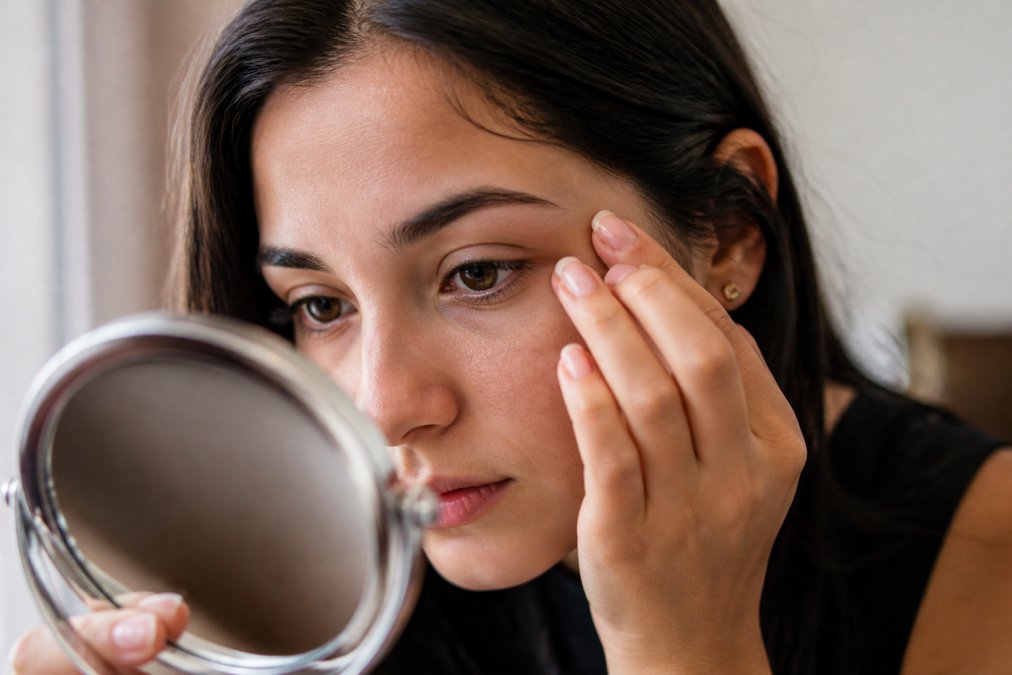
Watch for these specific signals:
- Lash gap wider than a single lash width
- Extensions falling out in clumps within the first week
- Natural lash diameter looking visibly thinner than a month ago
- Persistent itchiness or crusting along the lash line
- Lashes pointing in odd directions after removal
If you see crusting, swelling, or a stinging sensation, remove the extensions and see a doctor before booking another appointment. Applying a new set over irritated eyelids can turn a minor reaction into blepharitis, which takes weeks to clear (aao.org).
How Long Should a Lash Break Last?
The honest answer: most people need two to four weeks, not the six months repeated online. A short break lets the current set shed out naturally while new lashes cycle in. Six to eight weeks is only necessary with visible damage, irritation, or a history of adhesive reactions.
But your break length shouldn’t be guessed. Calculate it from three inputs: how much natural lash density is compromised, how fast your lash cycle runs, and your goal after the break. Most guides skip this and hand you a number. Here’s how to derive your own.
Step 1: Score Your Current Lash Health
Before deciding on a duration, run a self-assessment. Look at your bare lash line in a magnifying mirror under good light, ideally a week after removal so residual adhesive irritation has settled.
- Density: Compare the number of lashes along the upper lash line to a photo from before you started extensions. A loss of roughly a quarter or more of visible lashes points to a longer break.
- Diameter: Healthy natural lashes taper to a fine point. Lashes that look uniform in width or end bluntly have likely been trimmed or weakened by adhesive.
- Direction: Lashes that cross, twist, or point sideways suggest follicle stress or mechanical damage from rubbing.
- Lash line skin: Redness, flaking, or a crusty margin means the break is as much about eyelid recovery as lash recovery.
Score each area as healthy, mild concern, or significant concern. Two or more ‘significant’ scores push you into the extended range. All healthy or mild scores keep you in the short range.
Step 2: Match Duration to Your Lash Cycle
A single natural lash spends roughly 30 to 45 days in active growth, then a few weeks transitioning, then sheds, a full turnover of about six to eight weeks. A shorter break won’t fully replace lashes that were under extension load, but it lets the most stressed ones shed and be replaced by fresh growth.
| Break Type | Duration | Best For |
|---|---|---|
| Short reset | 2-4 weeks | Mild thinning, routine maintenance, no irritation |
| Standard recovery | 4-6 weeks | Noticeable gaps, brittle lashes, retention that dropped for two or more fill cycles |
| Extended recovery | 6-8 weeks | Visible density loss, eyelid irritation, adhesive reactions, or a history of traction damage |
Step 3: The Cost-Benefit Reality Check
This is the part most guides leave out. A break isn’t free: you pay for a removal, lose the look you paid for, and if you return too soon you’ll pay again to repair damage. Run the math honestly.
If you’re filling every two to three weeks and retention is dropping, you’re paying a premium for a set that isn’t holding. A four-week break plus a lighter return set often costs less over three months than continuing to fill a compromised lash line. The break isn’t a pause in spending, it’s a redirect.
Your break length should come from your lash health score, not a fixed rule. Two to four weeks for mild thinning, four to six for visible gaps, six to eight for damage or irritation. If you’re unsure, err on the longer side once, then reassess.
What to Do During the Break
A break only works if you support recovery: clean the lash line daily with a gentle, oil-free cleanser, apply lash serum to the base of the upper lash line each night, skip waterproof mascara for the first week, avoid rubbing your eyes, and sleep on your back if you can. Book a two-week check-in with your technician to confirm you’re on track before extending the break or planning your return.
How to Restore Natural Lashes After Extensions
Restoring natural lashes comes down to gentle removal, consistent conditioning, and patience with the growth cycle. Never pull extensions off yourself, professional removal with a proper bonding agent dissolver protects the follicle and prevents breakage.
Once the set is off, follow this routine:
- Clean the lash line daily with a gentle, oil-free cleanser
- Apply a lash serum to the base of the upper lash line each night
- Skip waterproof mascara for at least a week
- Avoid rubbing your eyes and sleep on your back if possible
- Book a check-in with your lash technician after two weeks
Nutrition and Growth Serums for Lash Recovery
Lash growth depends on protein structure and follicle health. A diet with adequate protein, biotin, and iron supports the anagen phase (ods.od.nih.gov). A lash serum formulated for the eyelid margin can help, but the ingredient list matters more than the marketing.
At Lashes by Shigeru, we manufacture our own growth serums in-house, which means we control the formulation. This allows us to create a serum that supports lash density.
Apply lash serum to dry, clean skin at the base of the lashes, not to the lash tips. The follicle is where growth happens. Serum on the tips does nothing for density and can cause the lashes to clump.
How Often to Get Lash Fills (and When to Pause)
Standard fill schedules run every two to three weeks, matching the natural shedding rate of roughly two to five lashes per day. Needing fills every ten days signals extensions that are too heavy or adhesive that isn’t holding, not a need for more frequent appointments.
Pause your fill schedule when:
- Retention drops below your usual rate for two cycles in a row
- You notice new gaps that weren’t there before
- Your lash technician recommends a break
- You’re planning a procedure or treatment near the eye area
The Cost-Benefit Math of Taking a Break
Most guides tell you to take a break without addressing what it costs you. A break isn’t just a pause in your lash look, it’s a financial decision that deserves the same math as any recurring expense.
Think in terms of cost per healthy lash day. Filling every two weeks with strong retention gives you a full two weeks of wear per appointment. If retention drops and you’re back every ten days, your cost per day of wear rises while quality falls, spending more to maintain a set that’s already failing.
A planned break changes that equation: pay for a removal, go bare a few weeks, then return to a lighter set that holds properly. Over three months, that often costs less than filling a compromised lash line, and it protects the natural lashes you’re paying to enhance.
When a Break Saves Money and When It Doesn’t
A break saves money when:
- Your retention has dropped and you’re filling more often than every two weeks
- Your technician has recommended a lighter set or a pause
- You’re noticing gaps that suggest damage is accumulating
A break doesn’t save money when:
- Your retention is steady and your lashes are healthy
- You’re only pausing because of a generic online rule
- You’d replace the extensions with a different paid lash service during the break
The point isn’t to break for the sake of breaking, but to avoid paying to fill lashes that are already stressed, the most expensive outcome of all.
Track your fill interval and your retention for two months. If your average interval is shrinking while your cost per appointment stays flat, that’s your signal to plan a break rather than book another fill.
Planning the Pause Without Losing Momentum
If you decide to pause, treat it like any other appointment: book the removal in advance, schedule a two-week check-in, and set a target return date. A break with a plan is a reset; without one, it drifts into months of bare lashes and a harder return.
When you come back, start lighter than you left. A classic or light hybrid set on recovered lashes holds better and costs less to maintain than jumping into full volume. Build density over two or three appointments, letting your technician adjust weight and curl to what your natural lashes can carry now.
Planning Your Return: The Post-Break Transition
Coming back after a break should be gradual, not a full volume set on day one. Start with a classic or light hybrid set and let your technician assess recovery. If density looks good, build back to a fuller set over two or three appointments.
Ask your lash technician these questions before your first post-break appointment:
- How does my natural lash density compare to before the break?
- What weight and curl can my lashes handle right now?
- Should we start with a lighter set and build up?
A skilled technician adjusts application to your current lash health rather than repeating the set you had three months ago, that’s how you avoid the cycle of damage and recovery repeating.
The real challenge with lash extensions isn’t deciding whether to take a break. It’s finding a lash technician who applies extensions correctly in the first place, so breaks stay optional rather than mandatory. At Lashes by Shigeru, our master stylist Shigeru Hanai brings over a decade of experience from Tokyo and New York, and every set uses our proprietary Japanese AirLash® technique with hypoallergenic adhesives and virtually weightless extensions that last up to five weeks. We manufacture our own products, adhesives, and growth serums, so we control every part of the process. Book an appointment with Lashes by Shigeru and get lashes that support your natural growth cycle instead of fighting it.
Frequently Asked Questions
How do I know if my natural lashes need a break from extensions?
Watch for lash shedding that outpaces normal growth, visible gaps along the lash line, or lashes that feel brittle and thin. If your extensions start falling out within a week or your natural lashes look sparse without them, your follicles need recovery time. A lash technician can assess follicle health and recommend a break length based on your individual lash cycle.
Do eyelash extensions permanently damage your natural lashes?
Extensions applied correctly do not permanently damage lashes. Damage happens when the weight of extensions exceeds what the natural lash can support, when adhesive buildup irritates the eyelid, or when clients pick and pull at their set. Following proper aftercare, keeping fills on schedule, and giving lashes periodic rest prevents long-term harm to follicle health.
Can I wear mascara while taking a break from lash extensions?
Yes, but wait at least 48 hours after removal to let adhesive residue clear and the eyelid settle. Choose a gentle, water-based mascara and remove it carefully with a lash-safe cleanser. Avoid waterproof formulas, which require harsh rubbing that can stress already weakened lashes during their recovery phase.
How can I strengthen my natural lashes during a break?
Keep the lash line clean with a gentle eyelid cleanser, avoid rubbing your eyes, and use a lash serum formulated for follicle health. Protein-rich foods and adequate sleep support the anagen phase of the growth cycle. Most people see visible improvement in lash density and diameter within four to six weeks of consistent care.