
How to Sleep With Eyelash Extensions Properly
Table of Contents
- Why Sleep Habits Decide How Long Your Eyelash Extensions Last
- The Best Sleeping Position for Eyelash Extensions
- Eyelash Extension Aftercare Before Bed: Your Nightly Routine
- Pillowcases and Pillows That Reduce Friction and Pressure
- Choosing a Sleep Mask for Eyelash Extensions
- Sleeping With New Eyelash Extensions: The First 24 Hours
- A Transition Plan If You Can’t Sleep on Your Back
- When Lashes Are Bent, Tangled, or Shedding on One Side
- Frequently Asked Questions
Last Updated: October 18, 2026
Why Sleep Habits Decide How Long Your Eyelash Extensions Last
You can spend hours in the chair and still lose your extensions in a week if you sleep with eyelash extensions the wrong way, all because of what happens between midnight and morning.
Here is the core idea. Extensions do not fall out because the adhesive is weak. They fall out because your face grinds against a pillow for eight hours.
Eyelash extension aftercare before bed is where retention is won or lost. The American Academy of Dermatology notes that the eyelid skin is among the thinnest on the body, so it takes very little pressure to disturb a fresh bond (American Academy of Dermatology on eyelid skin).
So the goal is simple: reduce contact between your lashes and everything else while you sleep.
The Best Sleeping Position for Eyelash Extensions
Back sleeping is the best sleeping position for eyelash extensions. Lying on your back (supine sleeping) keeps your face off the pillow entirely, so there is no pressure, no friction, and no crushing of the lash fan. It is the position lash technicians recommend most.
The logic is easy to follow:
- Your lashes point up and out, away from the pillow
- No side pressure means no bent or crushed lashes
- Less rubbing means better lash retention and slower lash fallout
Back Sleeping: The Position That Protects Lash Retention
When you sleep on your back, your extensions keep their shape overnight. Lash direction stays clean, and the adhesive bond is not stressed by pillow contact.
It takes a few nights to adjust. A supportive pillow under the knees can help you stay on your back longer.
How Side Sleeping and Stomach Sleeping Affect Your Lashes
Side sleeping is the most common compromise. It puts pressure on one side of the face, which is why so many clients see more lash shedding on the side they sleep on.
Stomach sleeping and face sleeping are the worst options. Your full face presses into the pillow, so both sets of lashes take the hit. If you wake up with bent lashes or a flattened fan, this is usually why.
Sleeping face-down on a cotton pillowcase is the fastest way to crush a fresh set. The friction grabs the lashes and pulls them out of alignment, and repeated nights of this can shorten retention by days.
Eyelash Extension Aftercare Before Bed: Your Nightly Routine
A short, consistent bedtime routine protects your lashes while you sleep. Keep it simple, because complicated aftercare is the number one reason clients skip it. Here is the routine we recommend.
- Clean your lashes gently. Use a lash-safe foam cleanser and lukewarm water. Rinse with your eyes closed and pat dry with a lint-free cloth.
- Brush them out. Use a clean spoolie to comb lashes into place while they are dry.
- Skip heavy creams near the eyes. Oil-based eye creams and face oils can weaken adhesive over time. Keep them away from the lash line.
- Choose your sleep setup. Back sleeping, a silk or satin pillowcase, or a lash-safe sleep mask.
- Keep hands off. Do not rub your eyes or tug at loose lashes.
A common mistake is scrubbing the lash line with a regular makeup wipe. That tugs at the bond and leaves residue. Gentle is the rule.
Pillowcases and Pillows That Reduce Friction and Pressure
The right pillowcase material makes a real difference in lash maintenance. Silk and satin pillowcases create far less friction than cotton, so lashes glide instead of catching. That reduces rubbing and helps prevent premature fallout.
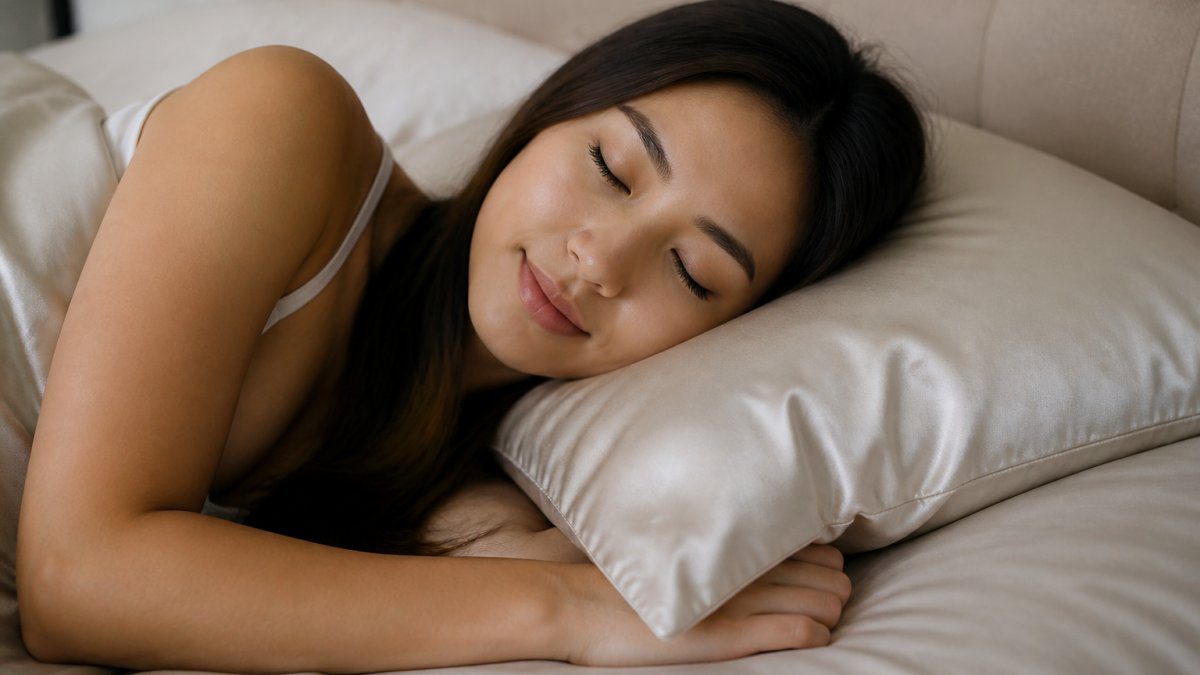
Pillow choice matters too. A contoured pillow with an eye-area cutout lets your face rest in a hollow, so your lashes never touch the surface.
| Sleep Setup | Friction Level | Best For |
|---|---|---|
| Cotton pillowcase | High | Not recommended for extensions |
| Silk or satin pillowcase | Low | Most clients, easy upgrade |
| Contoured pillow with eye-area cutout | Very low | Side sleepers, sensitive lashes |
| Lash sleep mask | Very low | Back sleepers who want full protection |
Choosing a Sleep Mask for Eyelash Extensions
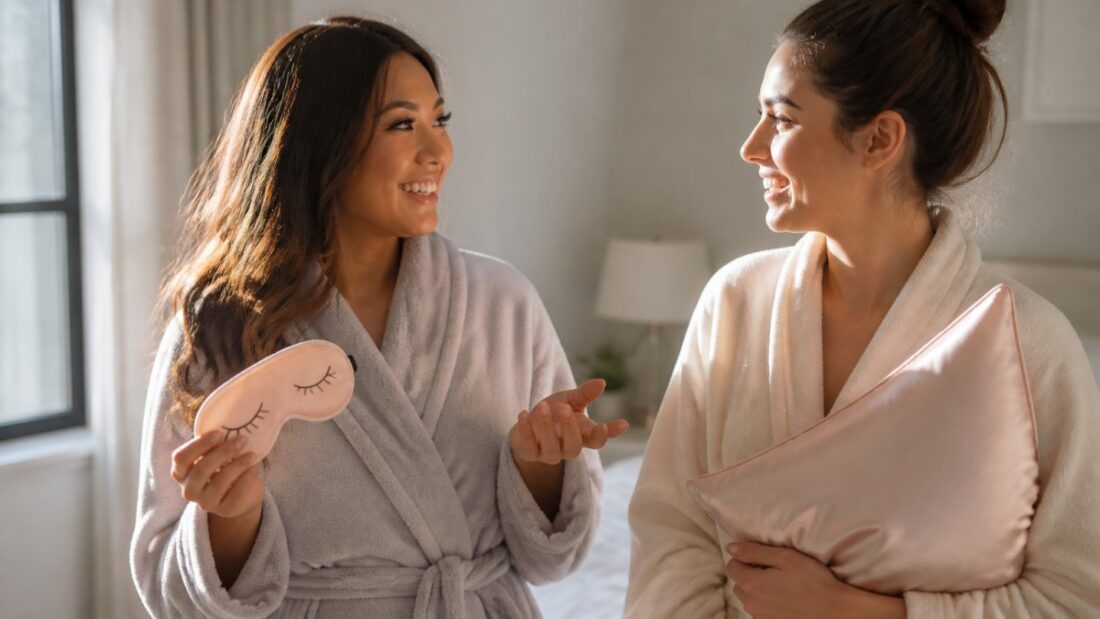
A sleep mask for eyelash extensions is not the same as a standard mask. Standard masks press directly on the lashes, which defeats the purpose. Look for a contoured or 3D mask with a hollow cup over each eye, so the fabric sits away from your lashes.
When choosing a mask, check five things:
- Depth: the eye cups should be deep enough that lashes do not touch the inside. Test by placing the mask on your face and blinking slowly, if you feel the fabric against your lashes, it is too shallow.
- Strap fit: snug but not tight, so the mask does not shift and rub. A mask that slides during the night creates the same friction you are trying to avoid. Look for an adjustable strap rather than a fixed elastic band.
- Fabric: soft, breathable material that will not catch on lashes. Silk and satin linings glide; cotton and terry cloth grab. Avoid masks with exposed seams or embroidery on the inside, which can snag individual extensions.
How to Clean and Store a Lash Sleep Mask
A sleep mask sits against your face for hours every night, so it collects oils, skincare residue, and shed lashes. Clean it at least once a week, more often if you use heavy night creams. Hand-wash in lukewarm water with a mild, fragrance-free soap, rinse thoroughly, and lay it flat to dry. Do not wring it out, because twisting can distort the eye cups.
What to Do If a Mask Still Presses on Your Lashes
Even a contoured mask can press if it is the wrong size or if the strap is too tight. If you wake up with bent lashes, try these steps in order:
- Loosen the strap by one notch and retest for a night.
- Check that the mask is centered, a mask that sits too high or too low will rest on the lash line instead of over it.
- Try a mask with deeper cups or a rigid frame rather than soft fabric.
- If none of these work, skip the mask and rely on back sleeping plus a silk pillowcase until your next appointment, when your technician can recommend a specific style.
Wear your sleep mask for a short nap before relying on it overnight. It is the easiest way to confirm the eye cups clear your lashes before you commit to a full night. If you feel any pressure on the lashes during the nap, return the mask rather than hoping it will soften with use.
A well-fitting mask should feel like it floats over your eyes, with no contact on the lash line. If you can blink freely without the fabric brushing your extensions, you have the right fit.
Sleeping With New Eyelash Extensions: The First 24 Hours
The first night matters most. Adhesive needs time to fully cure, and the first 24 hours are when a new set is most vulnerable. Sleeping with new eyelash extensions calls for extra care, but the advice changes across the first day and night. Here is a clear timeline so you know what to do and when.
Hour 0-6: Right After Your Appointment
Keep the lashes completely dry for the first 24 hours. That means no washing, no steam, no saunas, and no hot showers right after your appointment. Avoid swimming and heavy sweating. Do not use a sleep mask until the adhesive has cured, unless your technician clears it. If you must nap, sleep on your back with your head slightly elevated on a pillow.
Hour 6-24: The First Night
Sleep on your back if at all possible. A pillow under your knees can help you stay supine. If you normally side sleep, try starting the night on your back and accept that you may roll over, the goal is more back time, not perfection. Keep the room cool; overheating can make you restless and more likely to rub your eyes.
Day 2 and Beyond: Returning to Normal
After the first 24 hours, you can resume gentle cleansing with a lash-safe foam cleanser. Brush lashes with a clean spoolie once they are dry. If your technician approves, you can introduce a contoured sleep mask. Continue back sleeping or side sleeping with a silk or satin pillowcase.
Normal Shedding vs. Sleep Damage
Some lash shedding is normal. Natural lashes shed on a cycle of roughly 60 to 90 days, and extensions go with them. A few lost lashes per day is expected. What is not normal is waking up with multiple bent lashes, a flattened fan, or heavy one-sided fallout. If you see more than a few lost extensions in the first 48 hours, contact your lash technician, they can check the bond and adjust your aftercare.
Do not use a standard sleep mask or a cotton pillowcase during the first 24 hours. Both can press on uncured adhesive and shift the lash direction before the bond has fully set.
Your lash technician will give you specific aftercare guidance. Follow it closely, and the set will last far longer. If your technician’s timeline differs from this one, theirs takes priority, they know the adhesive and application used on your set.
A Transition Plan If You Can’t Sleep on Your Back
Plenty of people simply cannot fall asleep on their back. That does not mean your lashes are doomed. Here is a practical plan to protect your extensions while you adjust.
- Week one: Start the night on your back. If you roll over, that is fine. The goal is more back time, not perfection.
- Build the habit: Use a body pillow or a pillow under your knees to make back sleeping more comfortable.
- Protect the sides: If you must side sleep, switch sides often so one set of lashes does not take all the pressure.
Consistency beats willpower.
When Lashes Are Bent, Tangled, or Shedding on One Side
Bent, tangled, or one-sided lash shedding is almost always a sleep-position problem. If one side sheds more, you are likely sleeping on that side. If lashes are bent or crushed, pillow contact is the usual cause.
What to do:
- Do not pull or pick at bent or loose lashes
- Brush gently with a clean spoolie to separate tangles
- Note which side sheds more and try to sleep on the opposite side
Some lash shedding is normal. Natural lashes shed on a cycle, and extensions go with them. But heavy one-sided fallout points to friction, not a bad application.
If your extensions look great on one side and thin on the other, your pillow is the culprit. Fix your sleep position and your retention usually follows.
At Lashes by Shigeru, our Japanese AirLash® technique creates a virtually weightless bond. Our hypoallergenic application and in-house adhesives are built for comfort and lasting wear of up to five weeks.
Frequently Asked Questions
What is the best sleeping position for eyelash extensions?
Back sleeping is the best sleeping position for eyelash extensions. Lying on your back keeps your lashes off the pillow, so there is no pressure, friction, or rubbing to crush the extensions or pull them loose. If you cannot sleep flat on your back, train yourself gradually by propping a contoured pillow or a small cushion under your neck and keeping your face angled slightly upward. Pair back sleeping with a silk or satin pillowcase so any accidental contact is gentler on the lashes.
Can you wear a sleep mask with eyelash extensions?
Yes, but choose a sleep mask for eyelash extensions carefully. Look for a contoured or molded mask with a raised eye area, so the fabric sits away from your lashes instead of pressing on them. A flat, tight mask can crush extensions and shorten lash retention. Silk or satin linings reduce friction, and an adjustable strap keeps the mask in place without squeezing. Wash the mask regularly, and check the fit before bed so nothing rubs against the lash line overnight.
Can you sleep on your side with eyelash extensions?
You can, but side sleeping puts one set of lashes against the pillow for hours, which causes friction and pressure that lead to premature fallout and bent lashes. If side sleeping is your habit, use a contoured pillow with an eye-area cutout so your lashes rest in open space, and switch sides so one eye is not always compressed. A silk pillowcase helps, but it does not fully remove contact. Expect slightly faster shedding on the side you sleep on most.
What should you do if your eyelash extensions get wet before 24 hours?
Avoid getting new eyelash extensions wet for the first 24 hours while the adhesive fully cures. If they do get wet, gently blot the area with a clean, dry tissue or a lint-free cloth and let them air dry. Do not rub, scrub, or use heat to speed drying. After the first 24 hours, clean lashes daily with a lash-safe cleanser, rinse with water, and pat dry. Following this eyelash extension aftercare before bed keeps the bond strong and supports better lash retention.
Your lashes can only hold up overnight if your sleep setup supports them. If you are tired of losing extensions early, or you are nervous about aftercare, we can help. At Lashes by Shigeru, our master stylist brings over a decade of experience from Tokyo and New York, and every appointment includes personalized guidance on sleeping and daily care. Book an appointment and let us build a set that lasts.