

Why Lash Extensions Fall Out: 7 Real Causes
Table of Contents
- Why Lash Extensions Fall Out: Understanding the Root Causes
- The Natural Lash Growth Cycle and How It Affects Retention
- Application Errors That Cause Premature Fallout
- Aftercare Mistakes That Destroy Lash Retention
- How to Make Lash Extensions Last Longer: Prevention Strategies
- How Often to Get Lash Fills and Maintain Your Extensions
- When Fallout Is Normal vs. a Sign of a Problem
- Conclusion
- Frequently Asked Questions
Last Updated: September 3, 2026
Why Lash Extensions Fall Out: Understanding the Root Causes
Lash extensions offer fuller, more defined eyes without daily mascara, but premature fallout is frustrating. Why do lash extensions fall out comes down to controllable factors: natural shedding cycles, application errors, and aftercare mistakes. At Lashes by Shigeru, we’ve spent over a decade perfecting lash retention science. Most fallout stems from what happens before, during, and after application, not the extensions or adhesive themselves.
What separates clients whose extensions last five weeks from those who lose them in week one is understanding the mechanics of retention. Below, we’ll explain exactly why extensions fall out and how to keep yours intact. 💫
The Natural Lash Growth Cycle and How It Affects Retention
Your natural lashes have their own lifespan with three phases. The anagen phase is active growth, lasting 30-45 days, when your lash firmly supports an extension. The catagen phase is transition (2-3 weeks), when the follicle weakens and the extension becomes unstable. The telogen phase is resting before shedding, the lash is essentially dead and will fall out naturally, taking the extension with it.
You naturally shed 1-5 lashes per day. This is normal and unavoidable. When extensions fall out during the growth phase, application or aftercare problems are usually responsible. Natural shedding explains roughly 20-30% of fallout; the rest comes from salon or at-home mistakes.
Track your fallout pattern over the first week. Losing 3-5 extensions daily is normal. Losing 10+ per day or seeing clumps drop signals an application or aftercare problem.
Application Errors That Cause Premature Fallout
Not all lash artists are equally skilled. Application errors are the #1 reason extensions fall out prematurely.
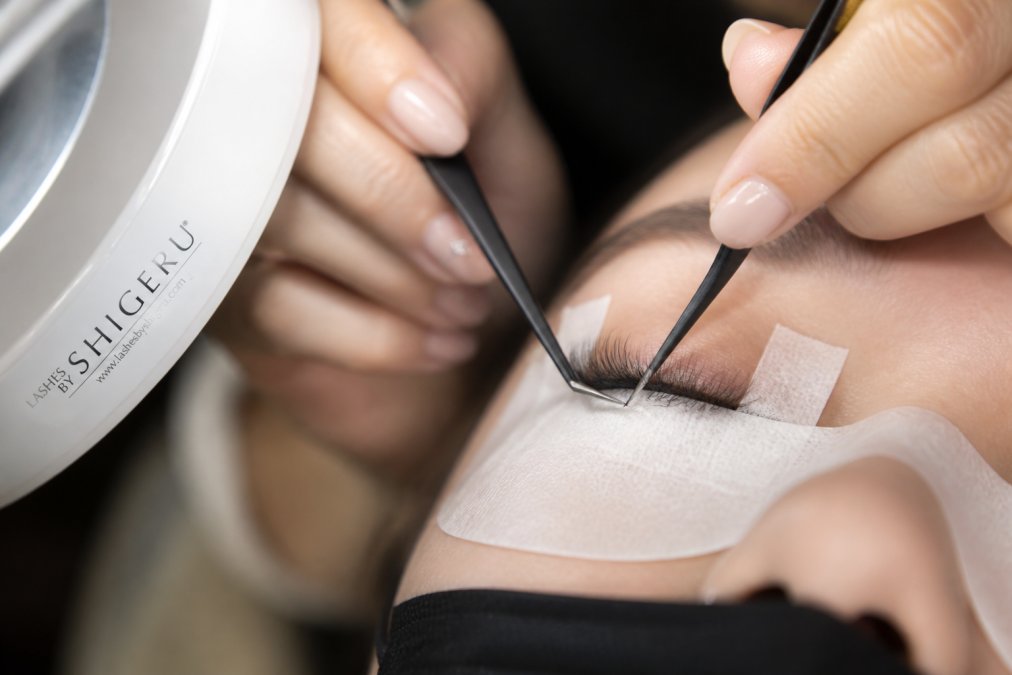
Poor Isolation and Bonding Surface Preparation
Isolation means separating one natural lash from its neighbors so the extension attaches only to that single lash. Poor isolation glues multiple lashes together; when one sheds, it pulls the others, causing chain-reaction fallout.
Poor isolation happens when artists rush, lack fine motor control, or use imprecise tools. A thick spoolie or dull tweezers can’t grab individual lashes cleanly.
The bonding surface, where the extension adheres, must be completely clean and dry. Makeup residue, dust, and sebum prevent proper adhesion. A professional pre-treatment uses oil-free cleanser to prepare your lashes. Without this step, extensions start falling out within days.
If extensions fell out within 2-3 days of application, isolation or bonding surface preparation failed. A reputable salon should offer free reapplication within the first week.
Incorrect Adhesive Application and Curing
Cyanoacrylate adhesive requires precise application: too much glue adds weight and pulls the extension off; too little creates no bond. The correct amount is a tiny bead at the base, applied to the isolated natural lash.
Polymerization, the hardening process, occurs through humidity and air exposure. Most adhesives cure fully in 24-48 hours. If your artist moves your head before polymerization completes, the bond weakens.
Extensions applied at the wrong angle create stress at the base. Every blink pulls at that stress point until the bond fails. Professional salons maintain 40-60% humidity to control polymerization properly. Humidity levels that are too high or too low both cause retention problems.
Aftercare Mistakes That Destroy Lash Retention
Perfect application can’t survive bad aftercare. What you do in the 48 hours after application and throughout the extension lifespan determines whether they last five weeks or two.
Oil-Based Products and Makeup Residue
Oil breaks down the cyanoacrylate bond. Oil-based cleansers, makeup removers, moisturizers, primers, foundations, and eyeshadows all weaken adhesion. Even “lash-safe” mascaras can contain silicones or oils that compromise the bond.
Use only oil-free products around your eyes. Read labels carefully, many “gentle” or “hydrating” products are actually oil-based.
A daily lash bath with oil-free cleanser keeps extensions clean and extends their lifespan. Use a spoolie brush to gently cleanse the lash line, removing makeup residue and dust. This 60-second routine makes a dramatic difference in retention.
Makeup residue also clogs the bond between your natural lash and extension. Mascara, eyeshadow, and eyeliner accumulate at the lash line, creating a barrier that weakens adhesion over time.
If you’re using oil-based skincare or makeup around your eyes, you’re shortening your extensions’ lifespan. Switch to oil-free alternatives immediately, this single change fixes retention problems for most clients.
Sleeping Position and Friction Damage
Sleeping face-down creates constant friction against your lashes for 6-8 hours, gradually loosening the bond. The best position is sleeping on your back. If that’s uncomfortable, side-sleeping is acceptable, just avoid pressing your face directly into the pillow. A silk pillowcase reduces friction compared to cotton. preventing beauty service lifting.
Friction also happens when you touch your eyes. Rubbing, pulling, or playing with extensions stresses the bond. The more you leave them alone, the longer they last.
Excessive Touching, Rubbing, and Pulling
Many people unconsciously touch their eyes throughout the day. Each moment weakens the adhesive bond. Picking at extensions or removing loose ones manually can damage your natural lash underneath.
For the first 48 hours after application, avoid all contact with your lashes. Don’t wash your face, sleep on them, or touch them. This allows the adhesive to fully polymerize. After 48 hours, resume normal activities, but minimize touching.
If you constantly touch your eyes, identify the trigger. Are your extensions uncomfortable? Is isolation poor? Are you stressed? Address the root cause rather than worsening the problem.
How to Make Lash Extensions Last Longer: Prevention Strategies
Making extensions last the full five-week cycle requires good application and disciplined aftercare.
First, choose your lash artist carefully. A master technician produces dramatically better retention than someone with basic training. Ask about isolation technique, adhesive choices, and humidity control. At Lashes by Shigeru, we use proprietary Japanese AirLash® techniques perfected over a decade of practice.
Second, commit to the 48-hour aftercare protocol: no water, makeup, or touching. After 48 hours, resume normal activities while respecting the rules: oil-free products only, minimal touching, back-sleeping when possible.
Third, maintain a daily lash cleansing routine. A 60-second lash bath every evening with oil-free cleanser and spoolie brush removes debris and keeps your bond strong. This habit extends retention by a week or more.
Fourth, avoid humidity extremes. Saunas, steam rooms, and chlorinated pools stress the adhesive bond. Hot showers are fine; just don’t aim water directly at your lashes.
Finally, schedule fills every 2-3 weeks to keep lashes looking full and prevent loose extensions from pulling at natural lashes.
| Prevention Strategy | Effort Level | Impact on Retention |
|---|---|---|
| Proper isolation and bonding surface prep | High (salon-dependent) | Critical, foundation for all retention |
| 48-hour aftercare protocol | Low | High, sets up adhesive polymerization |
| Daily lash cleansing | Low | High, maintains bond strength over time |
| Oil-free products only | Medium | High, prevents adhesive breakdown |
| Minimal touching and rubbing | Low | Medium, reduces friction damage |
| Back-sleeping position | Low | Medium, reduces friction at night |
| Regular fills every 2-3 weeks | Medium | High, keeps lashes healthy and full |
How Often to Get Lash Fills and Maintain Your Extensions
Fills add new extensions to replace naturally shed ones. Your natural lashes continue cycling through growth phases, and as they shed, attached extensions fall out.
Most clients need fills every 2-3 weeks to maintain fullness. Some with slower shedding cycles can stretch to 4 weeks; others need fills every 10-14 days. Your lash artist can assess your individual shedding rate.
Waiting too long between fills causes problems. Once you’re down to 50% of extensions, remaining ones bear extra stress and can pull at natural lashes, causing damage. Gaps also become harder to fill seamlessly.
At Lashes by Shigeru, we track your lash health throughout fills. If we notice damage or retention problems, we adjust technique or recommend aftercare adjustments. Maintenance protects your natural lashes underneath.
Schedule fills when you’re at 60-70% fullness, not 20%. This prevents natural lash damage and keeps application faster and easier.
When Fallout Is Normal vs. a Sign of a Problem
Normal fallout happens gradually throughout the day, 1-5 extensions in your sink or pillow. You won’t notice a visible gap because shedding is distributed across your lash line.
Problematic fallout happens in clusters or suddenly. Losing 10-15 extensions in one day or noticing a visible gap signals an application issue (poor isolation, weak bond) or serious aftercare violation (oil-based products, excessive rubbing, water exposure within 48 hours).
Another red flag: extensions falling out while your natural lash remains healthy and rooted. This indicates adhesive bond failure, pointing to application error or product incompatibility.
Contact your lash artist immediately if experiencing problematic fallout. A reputable salon will reapply extensions at no charge if retention is poor within 1-2 weeks.
Some clients experience allergic reactions to adhesive: redness, itching, swelling, or irritation. This is rare but serious. Remove extensions and consult an eye care professional. At Lashes by Shigeru, we use hypoallergenic formulas and can discuss alternatives for sensitive skin.
Conclusion
Lash extensions don’t fall out from bad luck or weak lashes. They fall out from preventable application or aftercare mistakes, or because your natural lash cycle is running its course. Understanding which is which gives you control.
The three-phase natural lash growth cycle is unchangeable, but you can work with it. Application errors in isolation, bonding surface preparation, and adhesive curing are entirely preventable by a skilled artist. Aftercare mistakes, oil-based products, excessive touching, poor sleeping habits, are entirely within your control.
If you’re tired of watching extensions disappear prematurely, start by choosing the right salon. At Lashes by Shigeru, we combine proprietary Japanese AirLash® techniques with hypoallergenic formulas and meticulous isolation and bonding. Our master lash stylist Shigeru Hanai brings a decade of experience from Tokyo and New York to every appointment. We educate clients on aftercare and track lash health throughout fills. The result: extensions that last the full five-week cycle, naturally defined lashes, and a comfortable, problem-free experience. Book an appointment with us and discover the difference that expert application and personalized care actually make. 💫
Frequently Asked Questions
How many lash extensions should fall out per day?
Losing 1-3 lash extensions per day is normal and reflects your natural lash shedding cycle. The anagen, catagen, and telogen phases mean your natural lashes shed continuously. If you’re losing significantly more, 5 or more daily, it signals an application error, poor adhesive bond, or aftercare problem. Track your fallout over a week; consistent excessive loss warrants a conversation with your lash artist.
Does oil-based makeup remover cause lash extensions to fall out?
Yes. Oil breaks down cyanoacrylate adhesive, which bonds extensions to your natural lashes. Even small amounts of oil-based makeup, cleansers, or serums weaken the adhesive bond over days. Use only oil-free cleansers and avoid oil-based skincare products around the eye area. Check ingredient lists for oils, silicones, and emollients. This single mistake is responsible for premature fallout in many clients.
How do I stop my eyelash extensions from falling out?
Prevention requires three steps: (1) Choose a skilled lash artist who masters isolation, bonding surface prep, and proper adhesive curing, humidity levels during application directly affect polymerization and retention. (2) Follow strict aftercare: avoid oil-based products, sleep on your back, use an oil-free lash bath daily with a spoolie brush, and never rub or pull your lashes. (3) Get fills every 3-4 weeks to maintain the adhesive bond before natural shedding removes extensions.
Will my natural lashes grow back if extensions fall out?
Yes, your natural lashes will regrow during their anagen phase if no permanent damage occurred. Properly applied extensions shed with your natural lashes without harming them. However, poor application technique, excessive weight, rough removal, or improper isolation, can break or damage lash follicles, delaying regrowth. Healthy lash application and gentle aftercare ensure your natural lashes remain strong and continue their growth cycle uninterrupted.
This article was written using GrandRanker