
Hypoallergenic Eyelash Extensions for Sensitive Eyes
Table of Contents
- Understanding Eye Sensitivity and Lash Extensions
- Common Causes of Allergic Reactions to Lash Glue
- Lash Extension Adhesive Allergy Symptoms to Watch For
- Patch Testing for Lash Extensions: Why It Matters
- LED Lash Extension Safety and Hypoallergenic Application
- Do Lash Extensions Damage Natural Lashes?
- Choosing Hypoallergenic Eyelash Extensions for Your Sensitive Eyes
- Aftercare for Sensitive Eyes: Protecting Your Investment
Last Updated: August 19, 2026
Understanding Eye Sensitivity and Lash Extensions
Eye sensitivity isn’t one-size-fits-all. Some people experience mild redness after product exposure, while others develop allergic reactions requiring medical attention. When considering hypoallergenic eyelash extensions for sensitive eyes, understanding what triggers these responses determines whether you’ll have a beautiful result or weeks of discomfort.
At Lashes by Shigeru, we’ve worked with hundreds of clients whose eyes react poorly to standard lash adhesives. The issue rarely stems from the lashes themselves, it’s almost always the glue. Your natural lashes are delicate structures surrounded by sensitive skin and mucous membranes. When adhesive chemicals contact these areas, inflammation develops quickly.
The key distinction: sensitivity and allergy aren’t identical. Sensitivity is an irritation response to physical irritants or chemicals. An allergic reaction involves your immune system fighting a foreign substance. Both feel uncomfortable, but they require different solutions. Understanding which you’re experiencing determines whether you need a different adhesive formula, improved aftercare, or a completely different approach.
Common Causes of Allergic Reactions to Lash Glue
Lash adhesive is primarily composed of cyanoacrylate, the same compound used in super glue. When cyanoacrylate polymerizes, it releases fumes and generates heat.
The most common culprit is formaldehyde. Many traditional lash adhesives release formaldehyde as a byproduct during curing, causing redness, swelling, and itching. Carbon black, a pigment added to make adhesive visible during application, is another frequent offender. Latex sensitivity also plays a role, if you have a latex allergy, confirm your adhesive is latex-free before application.
The polymerization process itself generates heat and releases fumes. Even with the best adhesive, the first 24-48 hours involve ongoing chemical reactions. Proper ventilation during application matters significantly; a poorly ventilated salon means higher fume concentrations around your face.
Application technique influences reactions too. If a technician applies adhesive too close to the lash line or allows it to contact your eyelid skin, you’re exposing sensitive areas to chemicals they shouldn’t touch. Proper isolation prevents this contact, making professional expertise essential.
Lash Extension Adhesive Allergy Symptoms to Watch For 🔍
Knowing what to watch for helps you catch problems early. Immediate reactions during the appointment include itching, burning sensations, or pressure around the eyes. Your eyes might water more than usual.
Post-appointment symptoms typically emerge within 24-48 hours. Redness around the lash line is most common. You might notice swollen eyelids, tight or tender skin around your eyes, or persistent itching.
More serious reactions include significant swelling that makes opening your eye difficult, intense itching that doesn’t subside, discharge or weeping from the eye, or vision changes. Contact your technician or eye care provider immediately if you experience these.
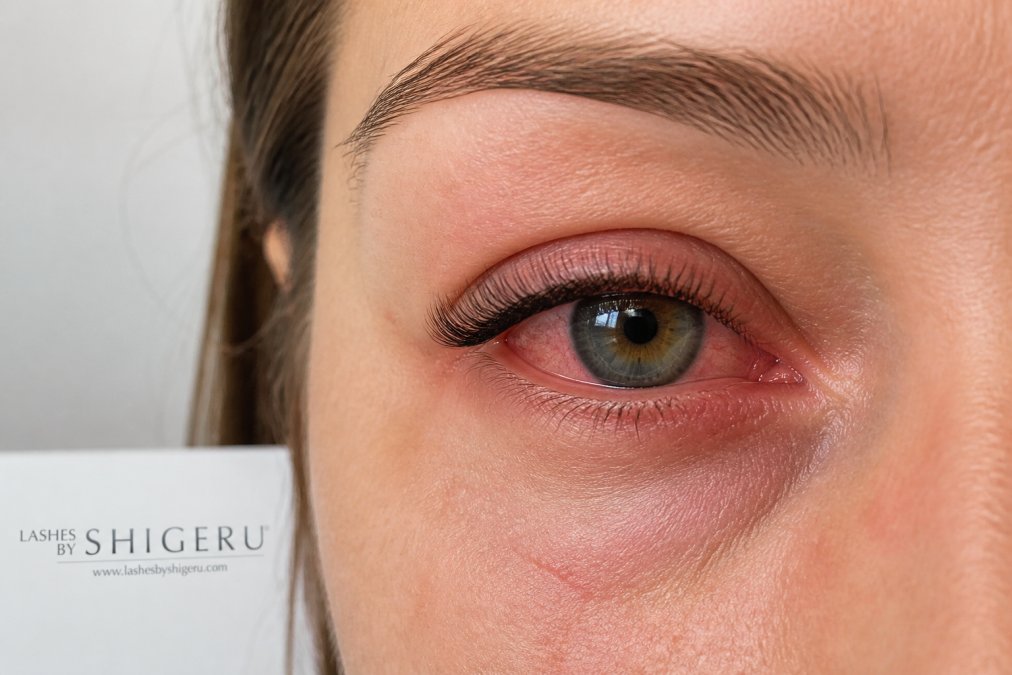
Blepharitis, inflammation of the eyelid margins, can develop or worsen with lash extensions, especially if you’re sensitive to adhesive chemicals. This condition causes redness, crusting, and discomfort along the lash line. If you have a history of blepharitis, you need a technician experienced with sensitive eyes and potentially a different adhesive formula.
Contact dermatitis around the eye area is another possibility. This allergic skin reaction manifests as redness, itching, and sometimes small bumps on the eyelid skin. Unlike general eye irritation, contact dermatitis typically worsens with continued exposure to the triggering substance.
Patch Testing for Lash Extensions: Why It Matters
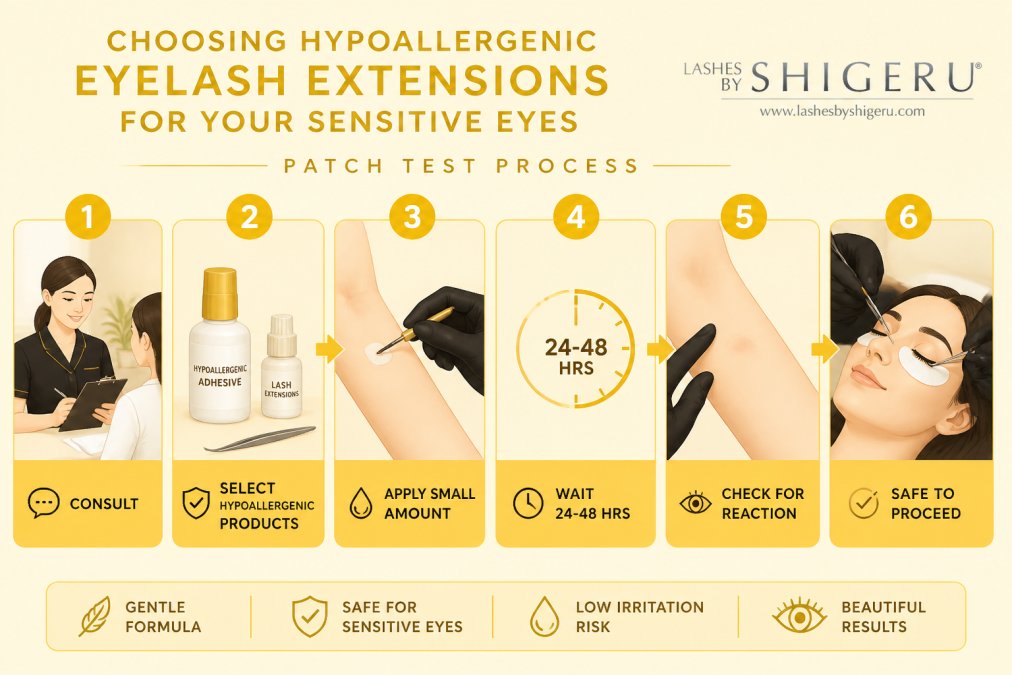
A patch test applies a small amount of adhesive to your skin, usually on your inner arm or behind your ear, to check for allergic reactions before your actual lash appointment. This should happen at least 24-48 hours before your appointment.
Patch testing identifies allergic reactions before they affect your eyes. If you develop redness, swelling, or itching at the patch test site, you know this adhesive isn’t right for you. Your technician can then switch to a different formula.
Not all salons offer patch testing. Professional salons, especially those serving sensitive-eye clients, always conduct patch tests. It’s a hallmark of responsible practice.
During the patch test, a technician applies a small amount of adhesive to clean skin and covers it with a bandage or leaves it exposed. You wait 24-48 hours and observe the site. No reaction means you’re likely safe for full application. Any reaction, even mild redness, means you need a different adhesive or should reconsider extensions.
At Lashes by Shigeru, every client with sensitive eyes receives a patch test before their first appointment, ensuring we match you with an adhesive formula your eyes can tolerate.
LED Lash Extension Safety and Hypoallergenic Application
LED technology in lash application has evolved significantly. Some salons use LED lamps to accelerate adhesive curing, reducing application time. Understanding how LED factors into hypoallergenic application helps you evaluate whether this approach suits your sensitive eyes.
Traditional lash adhesives cure through chemical polymerization, releasing heat and fumes as the process progresses. LED lamps can accelerate this curing, theoretically reducing fume exposure time. However, faster curing also generates more heat and potentially more volatile compounds released simultaneously.
The proprietary Japanese AirLash® technique used at Lashes by Shigeru incorporates LED technology specifically designed for sensitive eyes. This method emphasizes precision application with minimal adhesive contact to sensitive skin areas, combined with controlled curing that reduces overall fume exposure.
Humidity control during application significantly impacts adhesive behavior. Professional salons maintain optimal humidity levels, typically 40-60%, ensuring steady, controlled polymerization that reduces fume intensity.
Ventilation during application is non-negotiable for sensitive eyes. A salon with proper air filtration removes adhesive fumes as they’re released, preventing accumulation around your face.
Application technique determines how much adhesive contacts your skin versus your lashes. A skilled technician uses precise isolation, creating a barrier between your lower lash line and the adhesive. This minimizes skin contact and reduces irritation significantly.
Do Lash Extensions Damage Natural Lashes?
Lash extensions don’t inherently damage healthy natural lashes when applied and maintained properly. However, improper application, poor aftercare, or using extensions on already-compromised lashes can cause damage. skincare for sensitive skin.
Your natural lashes have a growth cycle of 4-6 weeks, then shed and regrow. Lash extensions are attached to individual natural lashes using adhesive. As your natural lash completes its cycle and sheds, the extension falls out with it. This is normal and expected.
Damage occurs when technicians apply extensions to lashes that aren’t healthy enough to support them. Thin, weak, or damaged natural lashes can break under extension weight. Poor removal technique, yanking extensions off instead of carefully dissolving adhesive, tears natural lashes.
The weight of extensions matters significantly. Heavier extensions require stronger natural lashes. Clients with fine, delicate natural lashes should choose lighter extension options. A consultation with an experienced technician assesses your natural lash strength and recommends appropriate extension weight and style.
Aftercare directly impacts whether extensions damage your lashes. Pulling on extensions, rubbing your eyes aggressively, or using oil-based products near the lash line weakens both extensions and natural lashes. Following proper aftercare preserves both your extensions and natural lash health.
Choose a technician who prioritizes lash health over aggressive styling. A professional assesses your natural lash condition, recommends appropriate extension types, applies them with proper technique, and encourages breaks between applications.
Choosing Hypoallergenic Eyelash Extensions for Your Sensitive Eyes
Selecting hypoallergenic eyelash extensions requires evaluating multiple factors beyond just the adhesive formula. Your complete experience, from consultation to aftercare, determines whether extensions work for your sensitive eyes.
Start with a consultation focused on your sensitivity history. Share any previous reactions to lash extensions, skin sensitivities, or adhesive allergies. A technician who listens carefully and asks detailed questions demonstrates the attentiveness your sensitive eyes need.
Formaldehyde-free adhesives are essential for sensitive eyes. However, "formaldehyde-free" alone doesn’t guarantee hypoallergenic properties. The adhesive should also be latex-free and use minimal carbon black pigmentation. Ask your technician for the specific adhesive formula and its ingredients.
Medical-grade adhesives represent the highest standard for sensitive eyes. These formulas meet rigorous safety and purity standards, typically containing fewer volatile organic compounds and releasing fewer fumes during curing. For sensitive eyes, they’re often worth the investment.
Application technique is where expertise becomes visible. Watch how the technician works during your appointment. Are they taking time with isolation? Are they applying adhesive precisely to the lash base without spreading onto skin? Are they working in a well-ventilated space? These details reflect their commitment to protecting sensitive eyes.
At Lashes by Shigeru, we specialize in serving clients with sensitive eyes. Our in-house manufactured adhesives are formulated specifically for comfort and hypoallergenic properties. We conduct patch tests for all sensitive clients, use precision isolation techniques, and maintain optimal salon conditions for safe application. Our master technician Shigeru Hanai brings over a decade of experience from Tokyo and New York, where he perfected techniques for clients with the most demanding eye sensitivities.
Aftercare for Sensitive Eyes: Protecting Your Investment ✨
Aftercare determines whether your lash extensions remain beautiful and comfortable. For sensitive eyes, aftercare becomes even more critical.
The first 24-48 hours are crucial. During this period, adhesive is still fully curing. Moisture interferes with this process, potentially weakening the bond and causing extensions to fall out prematurely. Keep your lashes completely dry; avoid showers, swimming, saunas, and steam rooms.
Avoid touching your lashes during the first 24-48 hours. This is when adhesive is most vulnerable and your eyes are most sensitive to disturbance.
Use only lash-safe products on and around your extensions. Oil-based makeup removers, moisturizers, and serums break down adhesive bonds. Choose water-based or specifically formulated lash-extension-safe products. Your technician should provide product recommendations.
Gentle cleansing keeps your lashes healthy. Use a soft brush or lash comb to gently separate extensions and remove debris. Wash your lashes with lash-extension-safe cleanser 2-3 times weekly to prevent buildup of makeup, oils, and dust that can irritate your eyes or weaken adhesive bonds.
Sleeping on your back or with your lashes away from your pillow prevents accidental damage. Silk pillowcases reduce friction if you can’t sleep on your back.
Avoid lash curlers, waterproof mascara, and heavy eye makeup while wearing extensions. If you want additional definition, use lash-safe mascara applied only to extension tips.
Schedule touch-up appointments every 3-4 weeks. Extensions naturally shed as your natural lashes cycle. Regular touch-ups maintain fullness and allow your technician to assess how your eyes are responding.
For sensitive eyes specifically, avoid rubbing or pulling on your lashes. If itching develops, apply a cool compress or use lash-safe eye drops designed for sensitive eyes. If itching persists, contact your technician or eye care provider.
Taking breaks from extensions periodically allows your natural lashes to fully cycle through their growth phase without extension weight. Many clients with sensitive eyes find that taking a 2-4 week break every 4-6 months of continuous wear keeps their natural lashes healthier long-term.
Choosing hypoallergenic eyelash extensions for sensitive eyes requires finding a technician who understands your specific needs and has the expertise to deliver comfort alongside beauty. The difference between a frustrating experience and a wonderful one often comes down to adhesive selection, application precision, and personalized aftercare guidance. At Lashes by Shigeru, we’ve built our practice around serving clients with sensitive eyes, using hypoallergenic formulas, proven techniques, and the kind of attention that transforms extensions from a risky experiment into a reliable beauty solution. Book an appointment to discuss your sensitivity history and discover whether our approach to hypoallergenic eyelash extensions is right for your eyes.
| Consideration | What to Look For | Why It Matters |
|---|---|---|
| Adhesive Formula | Formaldehyde-free, latex-free, medical-grade | Eliminates common irritants and reduces fume release |
| Patch Testing | Conducted 24-48 hours before appointment | Identifies allergic reactions before they affect your eyes |
| Application Technique | Precise isolation, minimal skin contact | Prevents adhesive from irritating sensitive eyelid skin |
| Salon Environment | Proper ventilation and humidity control | Reduces fume concentration and ensures optimal curing |
| Technician Experience | Specializes in sensitive eyes, takes time during consultation | Demonstrates commitment to individualized care and safety |
| Aftercare Support | Clear instructions, lash-safe product recommendations | Protects extensions and prevents irritation during wear |
If you’ve had reactions to lash extensions before, don’t assume all extensions will cause problems. Different adhesive formulas and application techniques can make a dramatic difference. A patch test with a new adhesive formula often reveals that you can tolerate extensions when the right formula is used.
Ignoring early signs of irritation, mild redness, slight itching, or discomfort, can allow a minor reaction to develop into a significant problem. Address symptoms immediately with your technician rather than hoping they’ll resolve on their own.
Frequently Asked Questions
What lash extension adhesive allergy symptoms should I watch for?
Allergic reactions to lash adhesive typically appear as redness, swelling, itching, or burning around the lash line within 24-48 hours of application. Some people experience tearing, sensitivity to light, or a gritty sensation. These symptoms differ from normal irritation, which usually subsides within a few hours. If symptoms persist beyond 48 hours or worsen, remove the extensions and consult an eye care professional. Formaldehyde-free and medical-grade adhesives reduce reaction risk significantly.
Can I get hypoallergenic eyelash extensions if I have sensitive eyes?
Yes, you can wear hypoallergenic eyelash extensions with sensitive eyes. The key is choosing a salon that uses formaldehyde-free, low-fume adhesives and offers a patch test before application. A patch test involves applying a small amount of adhesive to your skin 24-48 hours before your appointment to check for allergic reactions. Salons using medical-grade adhesives, synthetic PBT fibers, and proper humidity control during curing significantly reduce irritation. Discuss your sensitivities with your lash technician beforehand.
Do lash extensions damage natural lashes?
Lash extensions do not damage natural lashes when applied correctly by a trained technician. The extensions are bonded to individual lashes using a small amount of adhesive, not glued to your skin. Damage occurs only when extensions are too heavy, applied to multiple lashes at once, or removed improperly. Proper application respects the lash growth cycle and uses lightweight materials. Quality aftercare, including gentle cleansing and avoiding pulling, protects your natural lashes. Choose experienced technicians who prioritize lash health.
What makes LED lash extension safety important for sensitive eyes?
LED technology used during lash application offers safety benefits for sensitive eyes by controlling humidity and temperature during the curing process. LED curing requires lower heat than traditional methods, reducing fume exposure and polymerization stress on delicate eye tissue. This controlled environment minimizes irritation and allergic reactions, especially when paired with formaldehyde-free adhesives. LED systems also speed up curing time, reducing overall exposure to adhesive fumes. Always confirm your salon uses LED technology if you have sensitive eyes or a history of adhesive reactions.
This article was written using GrandRanker