

Natural Looking Lash Extensions 2026: Top Styles
Table of Contents
- What Defines the Natural Lash Extensions Aesthetic in 2026
- Top Natural Lash Extension Styles: Classic, Hybrid, and Wispy Looks
- Best Lash Styles for Your Eye Shape
- Fiber Materials, Color Trends, and Lash Diameter in 2026
- How Long Do Lash Extensions Last: Retention and the Lash Shedding Cycle
- Lash Extension Aftercare Tips for Maximum Retention
- DIY vs. Professional Natural Lash Extensions: A Practical Comparison
- Conclusion
Last Updated: August 15, 2026
The beauty world has shifted decisively toward subtlety, and nowhere is that more visible than in the lash extension space. Natural looking lash extensions 2026 are defined by softer textures, warmer color palettes, and techniques that make extensions genuinely indistinguishable from real lashes. At Lashes by Shigeru, we work with these evolving preferences every day, and this guide breaks down exactly what’s changed, what styles are worth your attention, and how to choose the right approach for your eye shape, lash health, and lifestyle.
What Defines the Natural Lash Extensions Aesthetic in 2026
The natural lash aesthetic in 2026 is defined by dimensional softness: lashes that add definition without looking applied, with tapered tips, varied lengths, and warm-toned fibers that mimic the way real lashes grow.
Three elements separate this year’s approach from earlier trends. First, fiber tapering has become non-negotiable, blunt, uniform ends read as artificial, while tapered tips create seamless blends. Second, lash density is being dialed back deliberately; overfilled, heavy sets are out in favor of fluffy texture that feels light on follicles. Third, color is finally getting attention, with mocha tones, espresso lashes, and soft brown shades replacing jet-black standards.
The natural aesthetic also intersects with lash health in a way that wasn’t front-of-mind five years ago. Clients are asking better questions about lash diameter, adhesive safety, and whether their natural lashes are being protected. That scrutiny has pushed the professional industry toward lighter, more precise application methods.
The defining shift in 2026 is technical. Natural-looking results require better materials, more precise mapping, and genuine understanding of the lash shedding cycle. Aesthetics and lash health are now the same conversation.
Top Natural Lash Extension Styles: Classic, Hybrid, and Wispy Looks
Choosing between classic, hybrid, and wet-look styles comes down to your natural lash density, eye shape, and maintenance commitment. Each delivers a different version of the natural aesthetic.
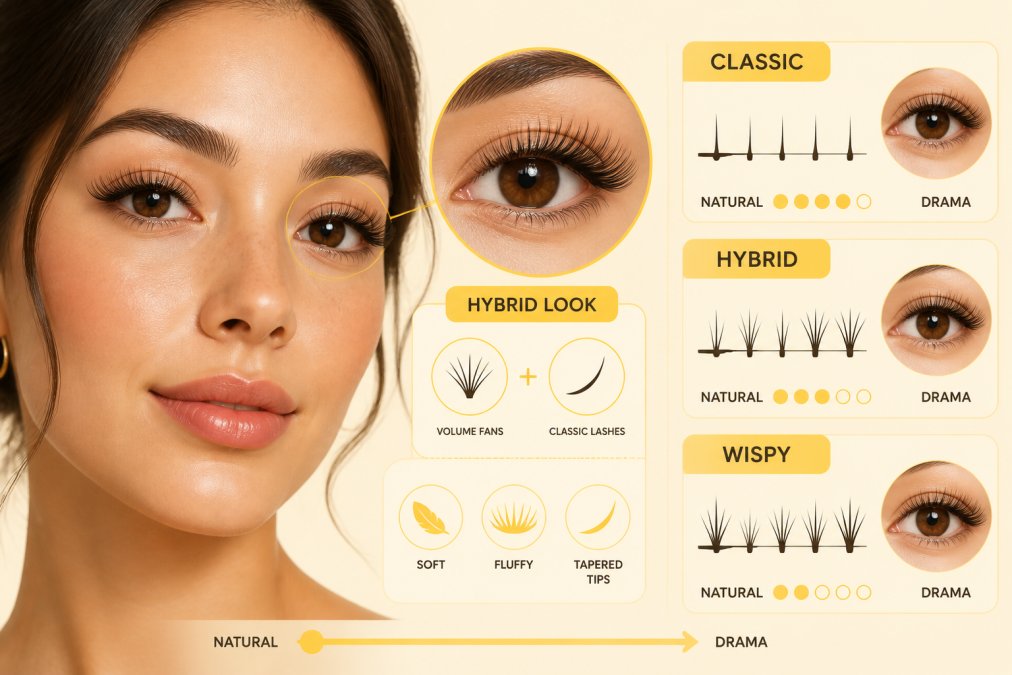
Classic Sets: Seamless Blend and Soft Volume
Classic sets remain the gold standard for natural looking lash extension results. One extension is applied per natural lash, creating a seamless blend that enhances what’s already there. For 2026, classic sets use C-curl and D-curl combinations that open the eye without drama. Lash diameter matters: thinner extensions in the 0.10-0.15mm range preserve lash health and produce softer, more realistic results. Precise lash mapping with varied lengths across the lash line creates a graduated, natural look rather than uniform application.
Hybrid Sets: Fluffy Texture with a Spiky Finish
Hybrid sets combine classic individual extensions with volume fans, creating fluffy texture with a slightly spiky, dimensional finish. This is the most requested style in 2026 for clients who want something natural but with more presence than pure classic. Small, separated fans interspersed with single extensions replicate how natural lashes cluster and separate. Hybrid sets work particularly well for clients with moderate natural lash density who want fuller lashes without the maintenance overhead of full volume.
Wet-Look and Wispy Styles: The 2026 Standouts
Wet-look lashes are the breakout style of 2026. Clustering extensions into small, defined spikes creates the appearance of lashes just touched by water, effortlessly natural because it mimics something real lashes actually do. Wispy styles remain a consistent favorite for their feathered, light appearance, with longer, tapered extensions placed at irregular intervals across the lash line for soft, dimensional results that photograph beautifully.
Best Lash Styles for Your Eye Shape
The best lash style balances your natural proportions rather than fighting them. Lash mapping, customizing extension placement and length across different eye zones, separates truly natural results from generic ones.
Cat Eye, Doll Eye, and Open-Eye Mapping Techniques
Cat eye mapping places longest extensions toward outer corners, drawing the eye outward and upward. This suits almond and round eye shapes and creates an elongated, lifted effect.
Doll eye mapping concentrates length and volume at the center of the lash line, creating the illusion of wider, rounder eyes. This works best for almond and narrow eye shapes, though skilled technicians modify the center peak for already-round eyes to keep it subtle.
Open-eye mapping lifts the inner and center zones while keeping outer corners moderate. It’s particularly effective for hooded or downturned eyes because it creates upward visual pull without relying on outer-corner length that can be obscured by the lid.
According to the American Academy of Ophthalmology, any cosmetic application near the eye should be evaluated for both aesthetic and safety considerations, which is why choosing a technician with proper training in lash mapping is essential.
Ask your lash technician to photograph your eyes in natural light before the appointment. The shape of your eye when relaxed determines which mapping approach will produce the most natural result.
Fiber Materials, Color Trends, and Lash Diameter in 2026
The fiber a lash extension is made from directly affects how natural it looks, how it behaves through the lash shedding cycle, and how well it suits clients with sensitivities. The industry has moved toward materials designed for human hair mimicry: fibers with tapered tips, matte or semi-matte finishes, and diameter calibrated to the client’s natural lash.
Synthetic fibers remain most common in professional settings because they offer consistent quality, predictable curl retention, and are produced without animal-derived materials. The best synthetic fibers in 2026 are engineered for lash diameter consistency and tapered tips that create seamless blends.
Mocha, Espresso, and Soft Tones Replacing Jet Black
Jet black, long the default, creates hard contrast against most skin tones that reads as artificial in daylight. Mocha tones and espresso lashes, sitting in the warm brown-black spectrum, integrate far more convincingly with a wider range of natural lash colors. Soft brown tones are also gaining ground for clients with lighter coloring, creating results that genuinely look like excellent mascara.
As noted by Allure’s 2026 beauty trend report, warm-toned lash colors are among the most significant shifts in professional lash application this year, driven by client demand for results that look real in all lighting conditions.
Allergy-Conscious and Age-Specific Styling Considerations
Adhesive safety deserves attention. Many clients who’ve had reactions to lash adhesives were exposed to formaldehyde-releasing compounds in lower-quality adhesives. Hypoallergenic adhesive formulations are now widely available in professional settings, and for clients with sensitivity history, requesting a patch test at least 24 hours before full application is standard care.
Mature clients often have finer, sparser natural lashes and more delicate follicles. For this group, lighter lash diameter, shorter lengths, and classic or light hybrid sets are most appropriate. Heavy volume sets on fine natural lashes accelerate shedding and cause traction stress over time. The goal is enhancement that supports lash health.
How Long Do Lash Extensions Last: Retention and the Lash Shedding Cycle
Lash extensions last between three and five weeks before a fill appointment is needed, though individual retention varies based on the natural lash shedding cycle, aftercare habits, and adhesive quality.
The lash shedding cycle is the primary driver of extension retention. Natural lashes shed and regrow on a cycle of approximately six to eight weeks, and extensions shed with them. Clients typically lose the most extensions in the second and third week, which is why fill appointments are generally scheduled at three to four weeks.
Retention is directly affected by adhesive quality and application technique. Extensions applied with insufficient adhesive or bonded at the wrong angle will release earlier. This is why technician quality and materials matter more than any aftercare product.
According to industry guidance on lash and brow care, proper application technique and appropriate lash-to-extension diameter matching are two significant factors in long-term lash health and retention.
| Factor | Impact on Retention | What to Do |
|---|---|---|
| Natural lash shedding cycle | High – extensions shed with natural lashes | Schedule fills at 3-4 weeks |
| Adhesive quality | High – poor adhesive releases early | Choose a salon using professional-grade adhesives |
| Oil-based products near eyes | High – breaks down adhesive bond | Avoid oil-based makeup removers and eye creams |
| Aftercare routine | Moderate – cleansing preserves bond | Cleanse lashes daily with lash-safe cleanser |
| Lash diameter match | Moderate – mismatched weight stresses follicles | Ensure extensions match your natural lash weight |
| Humidity and heat exposure | Low-moderate – extreme conditions weaken bond | Avoid steam rooms and saunas in the first 48 hours |
Lash Extension Aftercare Tips for Maximum Retention
Good lash extension aftercare is consistent and simple. Clients who get the best retention make two or three habits non-negotiable.
The essential aftercare routine:
- Avoid water, steam, and humidity for the first 24-48 hours. The adhesive needs time to fully cure.
- Cleanse your lashes daily. Oil, makeup residue, and skin secretions accumulate at the lash base and break down adhesive over time. Use a foam or gel cleanser formulated for lash extensions and a soft cleansing brush.
- Avoid oil-based products near the eye area. Oil is the primary enemy of lash adhesive. Check makeup removers, eye creams, and serums applied near the lash line.
- Brush your lashes morning and evening. A clean spoolie keeps extensions aligned and prevents tangling as natural lashes shed.
- Sleep on your back or use a silk pillowcase. Side sleeping creates friction that loosens extensions and distorts their curl.
- Don’t pick, pull, or rub. Rubbing tired eyes is reflexive but the fastest way to lose extensions and pull out natural lashes.
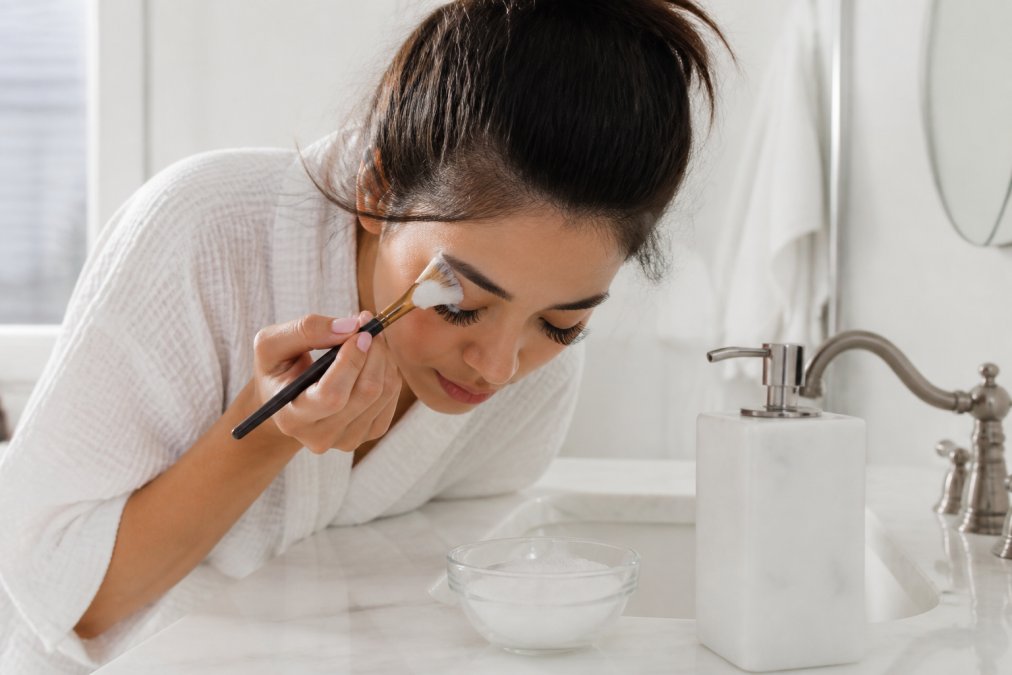
Skipping daily lash cleansing shortens retention and creates conditions for bacterial buildup at lash follicles, which can lead to blepharitis. The two-minute cleansing routine is not optional for long-term extension wear.
DIY vs. Professional Natural Lash Extensions: A Practical Comparison
The DIY lash extension market has grown considerably, and products have genuinely improved. Cluster-based systems now offer multi-day wear and more natural results than traditional strip lashes. For event-specific wear, a quality DIY kit is reasonable.
Where DIY makes sense:
- Event-specific wear with no long-term commitment
- Clients experimenting with lash styles before professional commitment
- Budget-conscious clients prioritizing convenience
Where professional wins decisively:
- Long-term wear and genuine retention (up to five weeks with proper aftercare)
- Customized lash mapping for your specific eye shape
- Hypoallergenic adhesive options for sensitive eyes
- Lash health monitoring by trained technicians
- Professional-grade fibers with proper diameter calibration and tapered tips
A cluster kit lasting five to seven days requires weekly or bi-weekly reapplication. A professional set maintained with fills every three to four weeks distributes cost differently and delivers results no at-home kit currently matches in seamless blend and customization.
For clients with sensitive eyes or adhesive reaction history, the professional route is safer. Professional technicians have access to formulations and application methods unavailable in retail kits. The FDA’s guidance on cosmetic safety and eye area products notes that products applied in the eye area carry specific safety considerations consumers should evaluate carefully.
| Criteria | DIY Kits | Professional Extensions |
|---|---|---|
| Typical wear time | 5-10 days | 3-5 weeks |
| Customization | Limited | Full lash mapping |
| Hypoallergenic options | Variable | Available from trained technicians |
| Lash health monitoring | None | Included with service |
| Natural look quality | Good for event wear | Superior seamless blend |
| Application skill required | Moderate to high | Handled by technician |
| Best for | Occasional, event-based use | Regular, long-term wear |
Professional lash extensions are the right choice for anyone who wants natural looking lash extensions that last, are customized to their eye shape, and don’t require weekly DIY reapplication.
The decision between styles, materials, and application methods comes down to your specific lashes, lifestyle, and how much you value a result that genuinely looks natural.
Lashes by Shigeru applies the proprietary Japanese AirLash® technique to deliver virtually weightless extensions customized to your eye shape, lash density, and color profile. With hypoallergenic adhesives, in-house manufactured products, and results that last up to five weeks, the experience is designed to be problem-free from the first appointment. Book an appointment with Lashes by Shigeru and see what natural looking lash extensions are actually capable of.
Frequently Asked Questions
Are lash extensions still in style in 2026?
Lash extensions remain one of the most requested beauty services in 2026, but the aesthetic has shifted decisively toward soft, natural results. Jet-black, heavy volume sets have given way to wispy hybrid styles, mocha and espresso tones, and lightweight classic sets that mimic natural lash texture. The natural aesthetic is not a passing trend, it reflects a broader beauty movement toward effortless, skin-first looks that still deliver definition and polish without obvious artificiality.
Which lash extensions look the most natural?
Classic sets applied with fine-diameter extensions in a C or D curl create the most natural lash extensions result. Cashmere flat fibers and tapered tips that mimic human hair mimicry are especially effective. Color also matters: mocha tones and espresso lashes blend more realistically with most eye colors than solid black. Lash mapping tailored to your eye shape, rather than a one-size template, is the single biggest factor in achieving a seamless, believable finish.
What is the difference between classic and wispy natural lashes?
Classic sets place one extension on each natural lash follicle, producing a clean, defined look with consistent lash density. Wispy styles, often achieved through hybrid sets, mix individual extensions with lightweight fans to create a spiky, fluffy texture with varied lengths. Classic sets offer the most understated natural aesthetic, while wispy lashes add dimension and a soft volume effect. Both can look natural when lash mapping and fiber selection are done correctly for your specific eye shape.
How do I ask my lash technician for a natural look?
Tell your technician you want a seamless blend that enhances your natural lash line without obvious added length or density. Request a lash length no more than 2-3 mm longer than your natural lashes, a C or D curl, and a fine lash diameter. Ask about mocha or espresso tones if your natural lashes are not jet black. Mentioning specific styles, such as a soft cat eye or open-eye mapping, helps your technician understand the result you are after before application begins.
Are natural-looking lash extensions better for lash health?
Generally, yes. Natural lash extensions prioritize lighter fiber materials, lower lash density, and appropriate lash diameter relative to your natural lash strength, all of which reduce stress on lash follicles. Heavier volume sets applied without regard for natural lash health can accelerate lash shedding and weaken the follicle over time. Choosing a technician who assesses your natural lash condition before application, uses hypoallergenic adhesive, and recommends the right lash weight for your lashes is the most important factor in long-term lash health.
This article was written using GrandRanker