
Signs of Lash Extension Buildup and How to Fix It
Last Updated: October 30, 2026
Quick Summary
Lash extension buildup shows up as crusty white, yellow, or gray debris at the lash base, clumping, and a dull, heavy look. Fix it by cleansing daily with an oil-free foaming lash cleanser, working the foam in with gentle downward strokes, then rinsing and brushing with a clean spoolie.
- Buildup comes from oil, makeup residue, dead skin cells, and skincare or sweat.
- Cleaning lash extensions takes about two minutes and follows six steps.
- Wash lash extensions daily, twice daily if you have oily skin or wear makeup.
- Book a professional if debris persists after a week of daily cleansing.
- See a doctor for redness, swelling, pain, or itching that persists after rinsing.
Table of Contents
- How to Tell If Your Lash Extensions Are Dirty
- What Causes Lash Extension Buildup
- How to Clean Lash Extensions Step by Step
- Choosing a Lash Extension Shampoo or Cleanser
- How Often to Wash Lash Extensions
- Lash Extensions Itchy After Cleaning: What It Means
- When Buildup Won’t Clear: Booking a Professional Lash Cleansing
- Frequently Asked Questions
How to Tell If Your Lash Extensions Are Dirty
Lash extension buildup is the accumulation of oil, makeup, dead skin cells, and dust along the lash line and between bonded fans. It shows up as crusty white or yellow debris at the base of the lashes, clumping, and a dull, heavy look. Catching it early is the difference between a quick clean and a full removal.
Here’s the uncomfortable part most guides skip: not every crusty lash line is a hygiene problem. Sometimes it’s a reaction that needs a doctor, not a cleanser.
Below, we’ll walk through the signs, the causes, and exactly how to fix each one.
Buildup, Poor Application, or an Eye Condition?
Three different problems look alike on the surface. Use this checklist to sort them out before you touch a cleanser.
- Buildup: Crusty white, yellow, or gray debris at the lash base. Lashes feel stiff or tacky. Debris lifts with gentle cleansing.
- Poor application: Fans twist or point sideways. Extensions sit too far from the lash line or look uneven. No debris, but retention fails anyway.
- Eye condition: Redness, swelling, pain, or itching that doesn’t fade. Symptoms get worse after cleaning, not better.
That third category matters most. The American Academy of Ophthalmology’s guidance on eyelash extension safety notes that allergic reactions can cause pain, itching, redness, and swelling, and that rubbing or tugging can fracture natural lashes. If you’re in that group, stop cleaning aggressively and get it checked.
What Causes Lash Extension Buildup
Buildup comes from four sources, and most people are dealing with more than one at a time.
- Oil: Your eyelids have oil glands. Natural sebum collects at the lash base every day.
- Makeup residue: Mascara, eyeliner, and foundation settle into the bond points.
- Dead skin cells: Normal shedding traps against the adhesive line.
- Skincare and sweat: Oil-based creams, serums, and workout sweat migrate upward.
A 2024 review in PubMed Central on ocular side effects of eyelash extensions documents reactions including chemical conjunctivitis, allergic reactions, dermatitis, and irritation among extension wearers. Cleanliness and product choice both play a role in how often those issues appear.
How Buildup Breaks Down Adhesive and Costs You Retention
Lash adhesive cures to a flexible bond. Oil softens it. Once the bond weakens, the extension lifts, twists, or slides off early.
That’s premature shedding, and it looks dramatic. Clients assume the lashes are failing. Usually the adhesive was fine until oil sat on it for two weeks.
Clumping follows the same path. Debris sticks adjacent lashes together, and they shed as a unit, taking natural lashes with them. Good lash retention starts with a clean lash line, not a stronger glue.
How to Clean Lash Extensions Step by Step
Cleaning lash extensions takes about two minutes and follows six steps. Do this with a lash-safe foaming cleanser and clean hands.
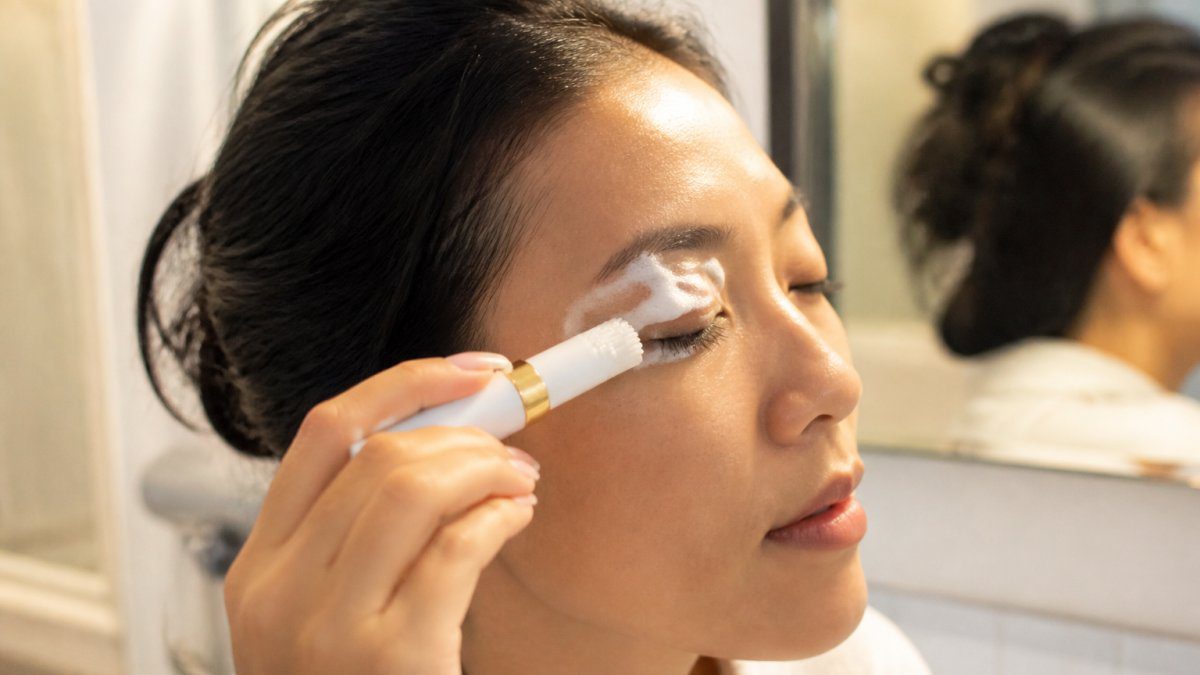
Maintaining this thorough hygiene routine prevents debris from settling into the lash line, a principle that mirrors the broader benefits of double cleansing for maintaining a clear and healthy complexion.
- Wash your hands. Oil and bacteria transfer straight to the lashes.
- Wet the lash line with lukewarm water. Hot water softens adhesive.
- Apply foaming cleanser to a soft cleansing brush. One pump is enough.
- Work the foam in with downward, gentle strokes. No rubbing, no tugging.
- Rinse thoroughly with water, eyes closed, tilting your head back.
- Dry and brush. Pat with a lint-free cloth, then comb through with a clean spoolie.
Watch out: picking or pulling at crusted debris can fracture natural lashes and damage the bond. If a clump won’t lift after two cleans, leave it for your lash artist.
For a deeper walkthrough, our guide on how to clean lash extensions without damaging them covers the full routine in detail.
Cleaning lash extensions takes about two minutes and follows six steps.
| Step | What to do |
|---|---|
| 1 | Wash your hands |
| 2 | Wet the lash line with lukewarm water |
| 3 | Apply foaming cleanser to a soft cleansing brush |
| 4 | Work the foam in with downward, gentle strokes |
| 5 | Rinse thoroughly with water, eyes closed |
| 6 | Pat with a lint-free cloth, then comb with a clean spoolie |
Choosing a Lash Extension Shampoo or Cleanser
The right lash extension shampoo is oil-free, pH-balanced, and formulated for extensions. Anything with oils, heavy creams, or exfoliating acids will weaken adhesive over time.
Foam formulas win here. They reach the lash base without soaking the bond, and they rinse clean. Our breakdown of foaming lash cleanser benefits for longer-lasting lashes explains why retention improves with the right formula.
A few things to check before you buy:
- Oil-free and extension-safe on the label
- No glycols or heavy silicones near the lash line
- A soft brush included or sold separately
- Rinses without residue
If you’d rather start from a shortlist, our roundup of oil-free cleansers for lash extensions compares options worth considering.
How Often to Wash Lash Extensions
Wash lash extensions daily, once in the morning and once at night if you wear makeup or work out. Daily cleansing keeps oil and debris from settling into the bond.
Skipping days is where problems start. Oil sits, adhesive softens, and shedding follows within a week or two. A consistent two-minute routine protects both the extensions and your natural lashes.
Adjust for lifestyle:
- Oily skin: cleanse twice daily
- Heavy makeup wearers: double cleanse at night
- Active or sweaty days: rinse after workouts
- Sensitive eyes: use lukewarm water and a gentle formula
Lash Extensions Itchy After Cleaning: What It Means
Mild itchiness right after washing usually means residue wasn’t fully rinsed, or the cleanser is too harsh for your eyes.
Rinse longer with lukewarm water and check the formula. If itching fades within an hour, it’s likely a rinse issue.
Itching that persists, plus redness or swelling, is different. Per the American Academy of Ophthalmology’s eyelash extension safety guidance, those symptoms can signal an allergic reaction and may need professional evaluation. Stop scrubbing, don’t rub, and call your lash artist or a doctor.
When Buildup Won’t Clear: Booking a Professional Lash Cleansing
Some buildup needs a professional. Use this decision guide to know when to stop home care and book a qualified lash professional or seek medical advice.
When to Stop Home Care and Book a Lash Professional
Book a professional lash cleansing or removal if any of the following apply:
- Debris persists after a week of daily cleansing. If crust or residue remains at the lash base after seven days of consistent, gentle cleaning, the buildup may be bonded to the adhesive or trapped in a way home cleansing cannot reach.
- Lashes are clumped into blocks. When multiple extensions and natural lashes are stuck together in a solid unit, trying to separate them at home risks fracturing natural lashes.
- You feel tenderness along the lash line. Tenderness suggests inflammation, which can worsen with aggressive cleaning.
- You see thick, hard crust that does not soften with water. This may be cured adhesive residue or a buildup that requires professional removal tools and technique.
- Retention has dropped sharply without a change in routine. A sudden loss of retention alongside visible buildup may mean the adhesive bond is compromised and needs a professional assessment.
When to See a Doctor Instead
Stop home care and seek medical evaluation if you notice:
- Redness, swelling, or warmth around the eyelid
- Pain or burning that does not fade
- Itching that persists after rinsing and worsens over time
- Discharge or crusting that looks different from typical lash debris
- Vision changes or sensitivity to light
These signs can indicate an allergic reaction, infection, or other eye condition that a lash professional is not qualified to treat. The American Academy of Ophthalmology’s eyelash extension safety guidance notes that allergic reactions can cause pain, itching, redness, and swelling, and that rubbing or tugging can fracture natural lashes.
What a Professional Cleansing Involves
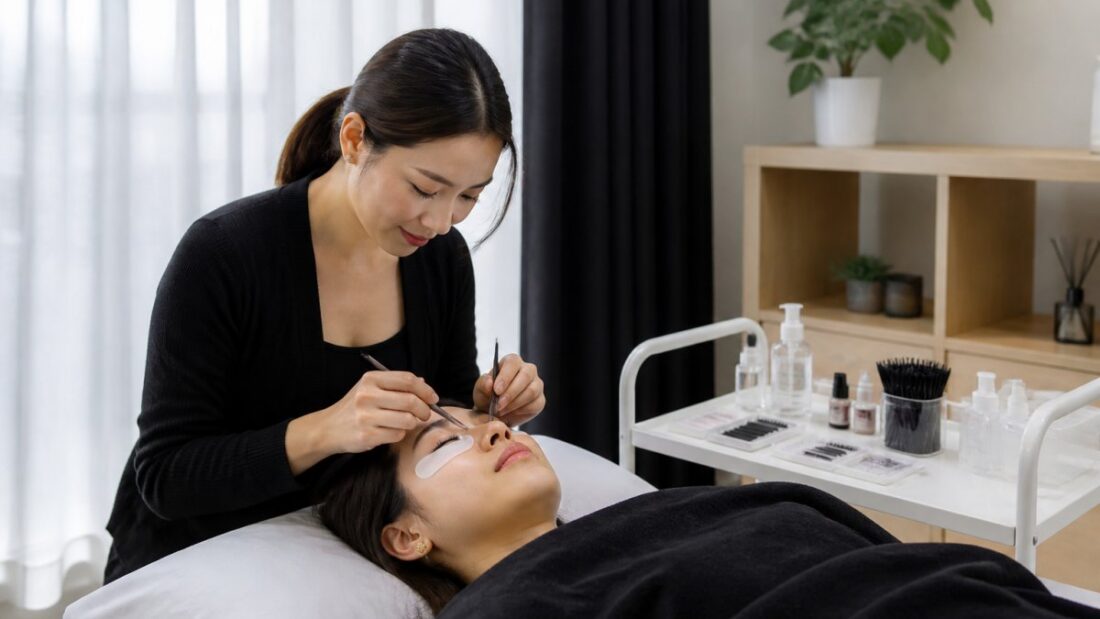
Trying to pry apart bonded lashes at home risks breaking natural lashes and irritating the eyelid.
If you are ready to reset, you can book a professional lash service and let a trained artist assess the lash line properly.
If buildup does not clear with a week of gentle daily cleansing, or if you notice pain, swelling, or persistent itching, stop home care. Book a lash professional for assessment or see a doctor if eye symptoms are present.
Frequently Asked Questions
What does buildup on lash extensions look like?
Buildup shows up as a white or gray film along the lash line, crusty patches at the base of the extensions, or lashes that look dull and clumped instead of separate. Oil, makeup residue, and dead skin cells collect where the extension meets the natural lash, and over time that layer traps debris. If you notice a filmy edge on your lash adhesive or extensions sticking together in groups, that is lash extension buildup rather than normal wear.
How often should you wash lash extensions?
Cleanse your extensions once a day with a lash-safe foam or lash extension shampoo, and rinse thoroughly with water. If you wear eye makeup or exercise heavily, a second gentle cleanse helps. Daily washing keeps oil and makeup residue from sitting on the adhesive, which supports lash retention between appointments. Skipping days lets oil buildup spread along the lash line and weakens the bond faster.
Can you use regular face wash on lash extensions?
No. Most face washes contain oils, moisturizers, or surfactants that break down lash adhesive and leave residue behind. Use a lash extension shampoo or cleanser formulated for extensions instead, and keep oil-based products away from the eye area. The American Academy of Ophthalmology also warns against rubbing or tugging lashes, so apply cleanser gently with a soft brush and rinse with plain water.
When should you see a lash technician about buildup?
Book a professional cleansing if crusting, clumping, or a dull film stays after several days of proper at-home cleaning. See a lash artist sooner if you notice redness, swelling, or pain, since the American Academy of Ophthalmology notes these can signal an allergic reaction rather than ordinary residue. A technician can assess whether the buildup is affecting adhesive and retention or whether your extensions need removal and a fresh set.
Buildup is fixable, but it needs the right diagnosis first. If your lashes feel heavy, look clumpy, or shed early despite careful aftercare, the problem may sit in the adhesive or application, not your routine. Lashes by Shigeru offers hypoallergenic Japanese AirLash® extensions, in-house formulated adhesives, and results that last up to five weeks. Get started with Lashes by Shigeru and give your lashes a clean, comfortable reset.

No Comments