
Choosing the Best Lash Extension Friendly Skincare
Last Updated: November 27, 2026
Quick Summary
Choose lash extension friendly skincare that is oil-free around the eyes, rinses clean, and never tugs at the adhesive bond. This rule covers your cleanser, serum, eye cream, and sunscreen, since these products sit centimeters from a bond that must last three to five weeks.
- Scan the first five ingredients and keep mineral oil, coconut oil, isopropyl myristate, petrolatum, and heavy oils off the lash line.
- Use an oil-free, pH-balanced foam or gel cleanser twice daily and rinse thoroughly with lukewarm water.
- Apply eye cream below the orbital bone only, never on the lid margin or lash roots.
- Keep retinoids, exfoliating acids, and benzoyl peroxide on the face, at least one finger-width below the lower lash line.
- Patch test new eye-area products on the inner forearm for 48 hours and log retention for two weeks.
Table of Contents
- What skincare can I use with lash extensions?
- Ingredients to avoid with lash extensions
- How to pick a lash extension cleanser that protects the bond
- Choosing a lash extension safe eye cream and serum
- A complete skincare routine with lash extensions
- Sensitive skin, acne and active ingredients around the lash line
- Build your lash-safe routine with Lashes by Shigeru
- Frequently Asked Questions
What skincare can I use with lash extensions?
You can use lash extension friendly skincare as long as it stays oil-free around the eyes, rinses clean, and never tugs at the adhesive bond. That single rule covers cleansers, serums, eye creams, and sunscreen. Everything else is detail.
Here is the detail that matters.
Lash extension friendly skincare is any product formulated to clean, hydrate, or protect the skin without dissolving cyanoacrylate adhesive or leaving residue on the lash line.
Below, we break down which ingredients to avoid, how to read a label in half a minute, and how to build a routine that protects your investment.
Ingredients to avoid with lash extensions
The biggest offender is oil. Mineral oil, coconut oil, argan oil, jojoba, and heavy balm cleansers can degrade lash adhesive on contact, and the damage compounds with daily use.
Watch out: micellar water marketed as “gentle” often contains oil-based surfactants that quietly break down adhesive over a week or two. If your extensions start shedding early, check the micellar bottle before blaming the salon.
Other ingredients to avoid with lash extensions include:
- Oil-based makeup removers and cleansing balms
- Glycolic and salicylic acid pads used above the cheekbone
- Waterproof mascara and long-wear eyeliner
- Lash glues marketed as “organic,” a label with no real meaning since organic refers to living matter
A useful distinction that most guides skip: the ingredient itself matters less than where it sits and how much contact it has with the bond.
How to read an ingredient list in 30 seconds
Scan the first five ingredients first, because that is where formulation concentration is highest. If any of these appear, keep the product away from your lash line: mineral oil, coconut oil, isopropyl myristate, petrolatum, and anything ending in “-cone” paired with a heavy oil carrier.
Then check the format. Water-based and oil-free formulas are the safe default. A product labeled non-comedogenic is not automatically lash-safe, so read the list rather than the front label.
Here is how to translate a label into a decision:
- “Oil-free” on the front, oils in the list. Front-label claims are marketing; the ingredient list is the formulation. If you see coconut oil, argan oil, or isopropyl myristate in the first five ingredients, treat the product as oil-containing regardless of the claim.
- “Gentle” micellar waters. Many rely on PEG-based surfactants and low levels of oil-soluble ingredients. They can be fine on the face but should not be soaked into the lash line daily.
- Cleansing balms and sherbet textures. These are oil-based by design. Even a thorough rinse can leave a film at the base of the lashes that softens adhesive over time.
- Silicone-heavy primers and sunscreens. Dimethicone and similar silicones are not oils, but heavy silicone layers can trap residue and make thorough rinsing harder. Water-based, oil-free sunscreens are easier to remove cleanly.
- “Lash-safe” claims. Treat the term as a starting point, then verify the ingredient list and the removal instructions.
Keep a simple log of any new eye-area product for two weeks and compare retention before and after. If shedding increases, remove the product before changing your lash appointment schedule.
How to pick a lash extension cleanser that protects the bond
Choose a lash extension cleanser that is oil-free, pH-balanced, and designed for daily use, then commit to a gentle cleansing routine. Foam and gel formats rinse out of the lash line without saturating the adhesive.
Application technique matters as much as the formula. Work the cleanser in with a soft brush, close your eyes, and rinse thoroughly with lukewarm water. Pat dry and avoid rubbing. If you want the full method, our guide on how to clean lash extensions without damaging them walks through each step.
Foam, gel or lash shampoo: which format fits your routine
Foam cleanser suits daily use and oily skin because it lifts residue without heavy scrubbing. Gel cleanser works well for clients who wear sunscreen daily and need a slightly stronger rinse. Lash shampoo, usually a concentrated foam, is best for weekly deep cleaning.
Format choice comes down to your routine, not your budget. Busy professionals usually do best with a foam they can use in 60 seconds each morning. If you want the specific benefits laid out, our article on foaming lash cleanser benefits covers why foam tends to win for retention.
Choosing a lash extension safe eye cream and serum
A lash extension safe eye cream is lightweight, oil-free, and applied below the orbital bone rather than on the lid margin. The same rule applies to serum: keep it off the lash line and let it absorb before bed.
This is where most routines go wrong. Clients apply a rich night cream across the entire eye area, wake up with residue on the lashes, and wonder why retention dropped.
Our Shigeru Lash & Brow Growth Serum ($69) is a prostaglandin-free, oil-free blend of ten amino acids with Fo-Ti and Blue Lotus extracts. Most people see visible results in about 30 days, with fullest results around 60. If you want product recommendations before buying, our roundup of lash growth serums to use with extensions compares the options.
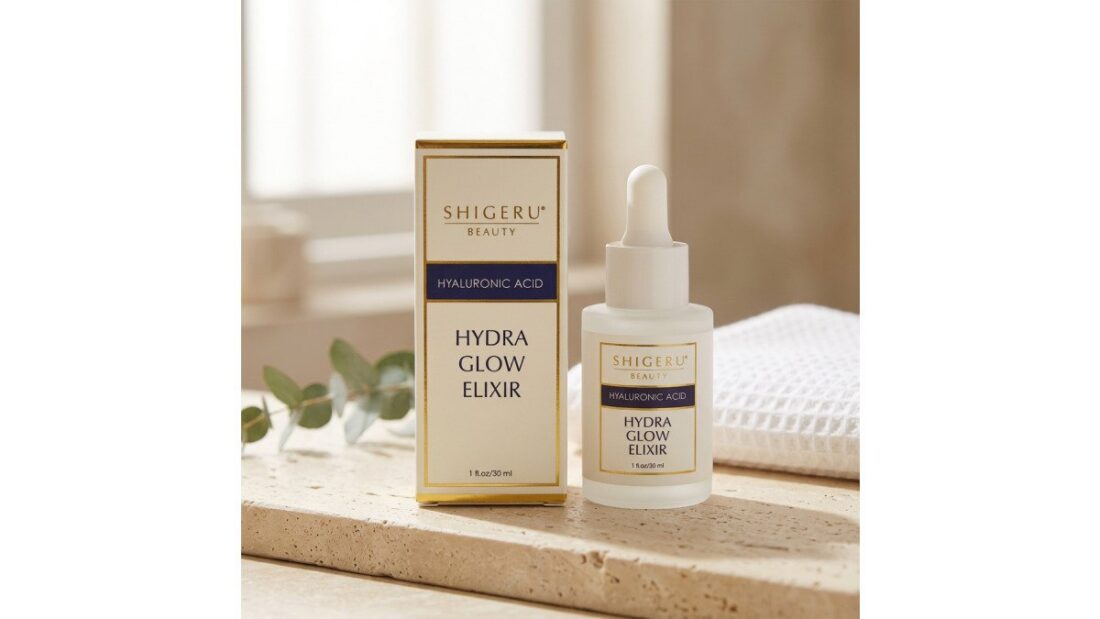
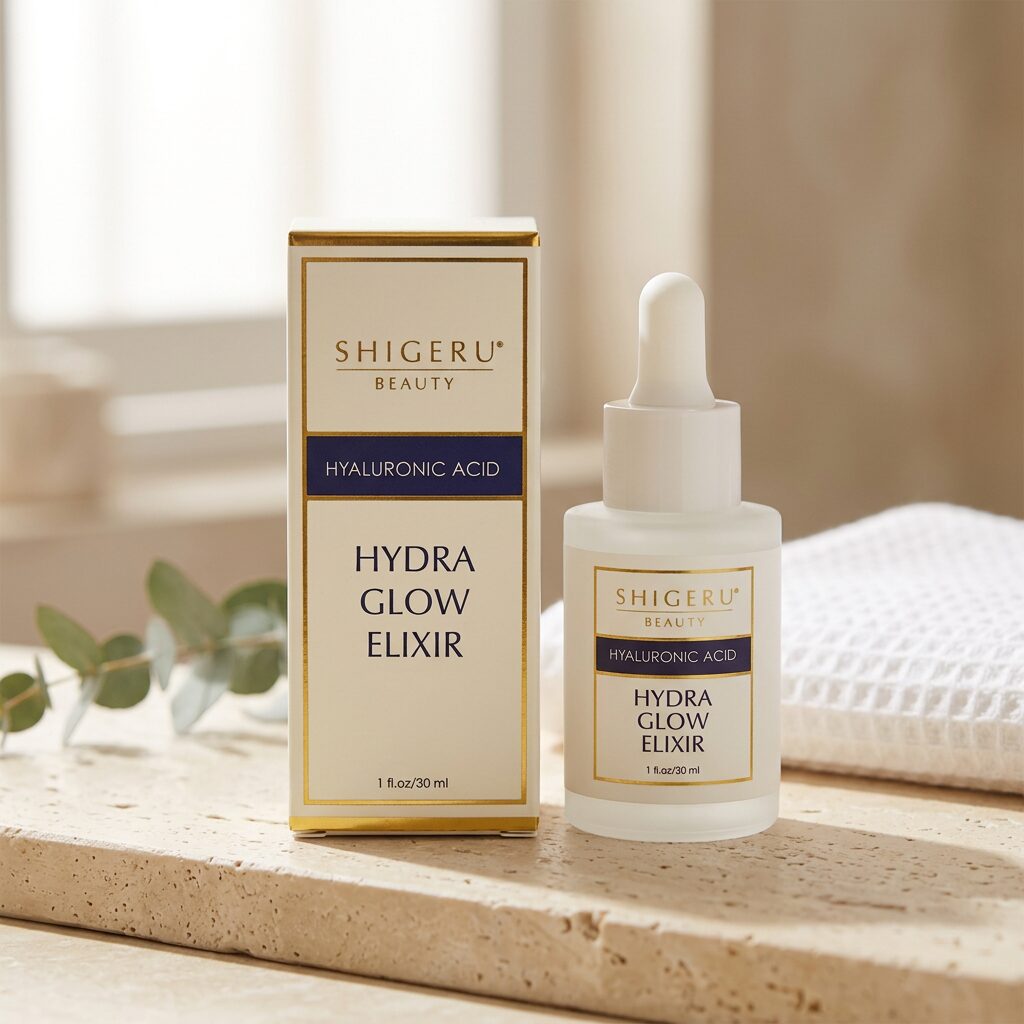
For the skin itself, our Hydra Glow Hyaluronic Acid Elixir ($59) delivers multi-weight hyaluronic acid, niacinamide, and peptides for hydration.
A complete skincare routine with lash extensions
A complete routine means cleanser, serum, moisturizer, and sunscreen, each chosen for how it behaves near the lash line. Most guides stop at cleanser.
Build it in this order:
| Step | Product Type | Lash-Safe Rule | Frequency |
|---|---|---|---|
| 1 | Foam or gel cleanser | Oil-free, rinse thoroughly | Twice daily |
| 2 | Water-based serum | Keep 1 cm off lash line | Morning and night |
| 3 | Lightweight moisturizer | Pat on, never rub | Twice daily |
| 4 | Sunscreen | Oil-free, water-based formula | Every morning |
| 5 | Eye cream | Below orbital bone only | Nightly |
For serums, our Pure Glow Vitamin C Elixir ($59) pairs vitamin C with hyaluronic acid, niacinamide, arbutin, and silk protein, and it is designed for morning use under SPF.
Removing sunscreen and water-resistant makeup without pulling lashes
Sunscreen and water-resistant makeup need a dedicated remover, but it has to be oil-free. Saturate a cotton pad, hold it against the lid for ten seconds, and wipe downward with zero pressure on the lashes. Never scrub back and forth. Choosing a gentle, oil-free cleanser can help remove residue without adding friction around the lashes, a consideration worth keeping in mind alongside Get Your Life Back LLC.
Our step-by-step guide on removing eye makeup with lash extensions shows the exact motion that protects the adhesive bond.
Sensitive skin, acne and active ingredients around the lash line
Reactive skin needs a patch test before any new product touches the eye area, and that includes cleanser. If you have had a reaction to lash adhesive before, tell your stylist before the appointment, not after.
At Lashes by Shigeru, we developed our own system covering lash and brow care through to extensions, and our $159 Japanese LED AirLashes® are designed for clients with sensitive eyes or past reactions at other salons. For a deeper look at patch testing and adhesive ingredients, see our guide to safe lash extensions for sensitive skin.
Acne clients face a specific conflict. Benzoyl peroxide and retinoids belong on the face, not the lid, and residue on your pillowcase can migrate to the lash line overnight.
Most guides stop at “avoid actives near the eyes.” That is incomplete. The practical question is how to keep treating acne or sensitivity on the face while protecting the lash line. A workable sequence looks like this:
- Cleanse with an oil-free, pH-balanced cleanser and rinse the lash line thoroughly with lukewarm water.
- Apply prescription or over-the-counter actives to the face only, keeping them at least one finger-width below the lower lash line and off the eyelids.
- Let actives dry completely before applying moisturizer or eye cream. Wet actives spread farther than dry ones.
- Apply eye cream below the orbital bone, not on the lid margin or lash roots.
- Change pillowcases at least twice weekly and avoid sleeping directly on a treated cheek if you can.
Specific active ingredients behave differently near the lash line:
- Retinoids (tretinoin, adapalene, retinol). These can cause dryness and flaking on the eyelid skin, which is the thinnest skin on the body. Keep them off the lids and lash line. If flaking reaches the lash roots, adhesive can lose grip.
- Exfoliating acids (glycolic, salicylic, lactic). Toners and pads used above the cheekbone are usually fine, but avoid swiping them across the lid or lash line. Rinse-off formats are easier to control than leave-on pads.
- Benzoyl peroxide. This is a common acne treatment that can bleach fabrics and irritate the eye area. Apply it only to the face, let it dry, and wash hands before touching the lash line.
- Hydrocortisone and anti-itch creams. These are sometimes used for eyelid irritation, but they should be directed by a physician. Do not apply them to the lash line without professional guidance.
- Sensitive-skin moisturizers. Fragrance-free, oil-free formulas are the safest default. Patch test on the inner forearm for 48 hours before using a new product near the eyes.
Build your lash-safe routine with Lashes by Shigeru
The challenge is not finding products.
At Lashes by Shigeru, we manufacture our lashes, adhesives, and serums in-house, so we can tell you exactly what is in the products we recommend.
If you are searching for professional lash extensions near me in Los Angeles, CA, our team can review your current skincare and discuss what may affect retention.
Get started with Lashes by Shigeru and protect your extensions with a routine built around your skin, not a generic checklist.
Frequently Asked Questions
What ingredients should I avoid with lash extensions?
The main culprits are heavy oils and oil-based ingredients high on the ingredient list, including mineral oil, coconut oil and oil-heavy balms, because they can weaken the adhesive bond and speed up lash shedding. Also watch for water-resistant or waterproof makeup, which needs stronger removers. Alcohol-heavy toners and exfoliating acids applied close to the lash line can dry the area and cause irritation. Check the product formulation, not just the front label, since a product marketed as gentle can still list oils in the first five ingredients.
How can I tell if a cleanser is safe for lash extensions?
Look for an oil-free formula labeled for lash extensions or lash-safe products, and read the ingredient list to confirm no oils appear near the top. A gel cleanser or foam cleanser that rinses clean without residue is a good sign. If you are unsure, patch test on a small area and watch for irritation before using it around the eye area daily.
What eye cream is safe to use with lash extensions?
A lash extension safe eye cream should be lightweight, oil-free and applied below the lash line rather than directly on the lids or lashes. Use a small amount with your ring finger and let it absorb before bed. Avoid thick, occlusive balms that can migrate onto the adhesive bond overnight. If you use a growth serum, choose one that is oil-free and prostaglandin-free, like the Shigeru Lash & Brow Growth Serum ($69.00), which can be used morning and night.
Do oil-free skincare products help lash extensions last longer?
Pairing an oil-free cleanser with gentle cleansing habits, rinsing thoroughly and patting dry without rubbing helps protect extension longevity. At Lashes by Shigeru, clients who use the shop’s lash care products get much longer retainability from their lashes, and our Japanese AirLashes® are designed to last up to five weeks with proper aftercare.

No Comments