
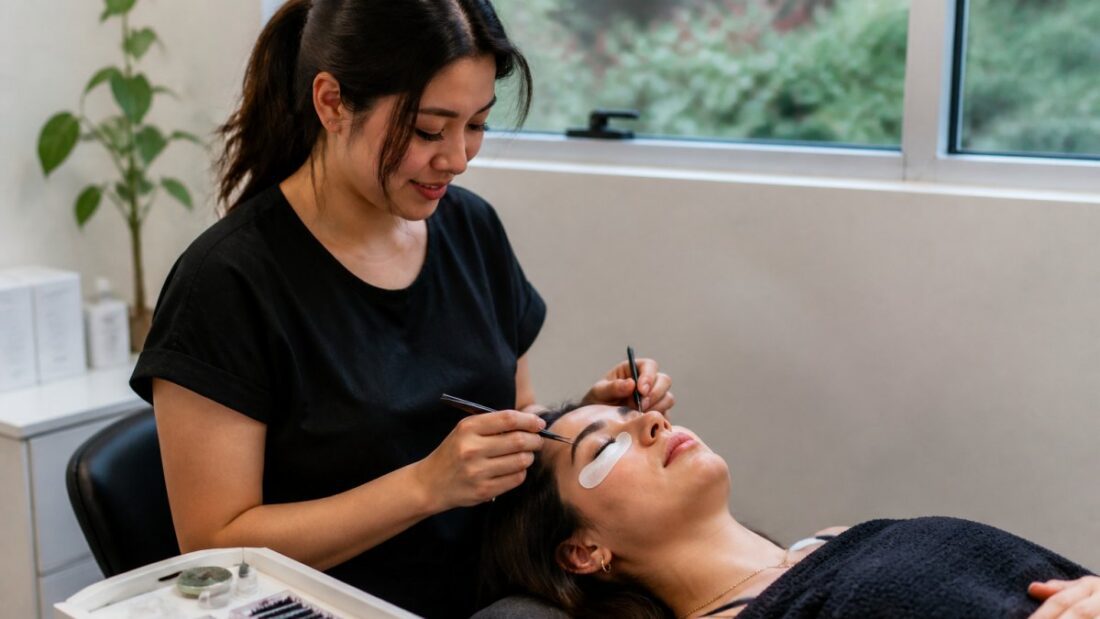
Do Weightless Lash Extensions Cause Natural Lash Breakage
Table of Contents
- The Short Answer: Weightless Extensions and Natural Lash Breakage
- How Do Eyelash Extensions Damage Natural Lashes
- Signs of Lash Extension Damage and When It’s Just Normal Shedding
- What Weightless Lash Extensions Actually Mean
- How Professional Application Reduces Damage Risk
- Lash Extension Aftercare to Prevent Breakage
- When to Take a Break From Lash Extensions
- Frequently Asked Questions
Last Updated: October 19, 2026
The Short Answer: Weightless Extensions and Natural Lash Breakage
Do weightless lash extensions cause natural lash breakage? The short answer is no, not when applied correctly by a skilled professional.
Weightless lash extensions are designed to minimize stress on your natural lashes.
That said, damage can happen, and it’s usually preventable. Knowing what causes breakage and how to tell it apart from normal shedding helps you protect your lashes.
How Do Eyelash Extensions Damage Natural Lashes
Extension weight is the primary culprit. Heavy extensions pull on delicate natural lashes, causing strain over time. Your lashes aren’t designed to support significant weight for weeks, so when extensions are too long, too thick, or both, the stress accumulates.
Extension Weight and Natural Lash Strength
Your natural lashes have limits. Each can support only so much weight before fatigue sets in, like hanging a weight from a thread: at some point, the thread breaks.
How weight affects your lashes:
- Lightweight extensions (0.05-0.10mm diameter) feel almost imperceptible
- Medium extensions (0.10-0.15mm) add noticeable volume but stay within safe limits for most people
- Heavy extensions (0.15mm+) create risk, especially on thin or short natural lashes
The problem isn’t the extension itself, it’s the ratio between extension weight and natural lash strength. A 0.15mm extension on a naturally thick, strong lash is fine. The same extension on a thin, delicate lash can cause breakage within days.
Poor Application and Attachment Issues
How the extension is attached matters as much as what’s attached. A poorly applied extension creates a weak point in your natural lash. 🔍
Common application mistakes:
- Attaching multiple extensions to a single natural lash (overloading)
- Gluing extensions at the wrong angle, creating uneven stress
- Applying adhesive too close to the lash root, causing irritation and premature shedding
- Failing to isolate lashes, so extensions stick to neighboring lashes
- Using too much adhesive, which hardens and becomes rigid
Each mistake shifts the load unevenly: instead of distributing along the lash shaft, the weight concentrates at one point. That’s where breakage happens.
The Natural Lash Growth Cycle
Your natural lashes follow a three-phase growth cycle: growth, transition, and shedding. Understanding it helps you recognize what’s normal and what’s damage.
The three phases:
- Growth phase (anagen): Lasts 4-10 weeks. Your lash grows from the follicle.
- Transition phase (catagen): Lasts 2-3 weeks. Growth stops, the follicle shrinks.
- Shedding phase (telogen): Lasts 4-9 weeks. The old lash falls out, making room for a new one.
At any given time, you’re shedding 1-5 lashes per eye daily. That’s normal. Extensions attached to lashes in the shedding phase will fall out with them, that’s not breakage. Real breakage happens when the lash snaps before it’s ready to shed naturally.
Signs of Lash Extension Damage and When It’s Just Normal Shedding
The difference between normal shedding and breakage matters: one is healthy, the other means something went wrong. A practical checklist and a clear next step are more useful than theory.
Breakage Versus Normal Shedding: A Visual Checklist
Pick up the lash you found and look closely. The shape tells you what happened.
Signs of normal shedding:
- The full natural lash is still attached to the extension
- The lash has a small, rounded root end
- The length matches your natural lash length
- It appears gradually, roughly 1-5 lashes per eye per day
- No tenderness or irritation at the lash line
Signs of actual breakage:
- The natural lash is shorter than your usual length
- The end is blunt, jagged, or uneven rather than rounded
- You see short, stubby lashes regrowing in patches
- Noticeably fewer lashes after just 1-2 weeks
- Gaps where lashes used to be
A simple rule: a shed lash has its root; a broken lash does not. A whole natural lash attached to the extension means shedding; a short piece with a jagged edge means damage.
Do not pull or pick at extensions to test them. Pulling can convert a healthy shed into a break and can irritate the follicle. If an extension is loose, let a professional remove it.
What to Do After Suspected Breakage
If the checklist points to breakage, act early to stop the stress and let the natural lash cycle reset.
- Stop adding new extensions. Do not wait for the next fill. Pause the service.
- Get a professional removal. Do not remove extensions yourself with oil, tools, or picking. A technician can remove them without adding mechanical stress.
- Rest for 2-4 weeks. Let the natural lashes complete a growth cycle without extension weight.
- Avoid heat, rubbing, and curlers. Skip heated tools, eyelash curlers, and rough mascara during recovery.
- Keep the lash line clean. Wash gently with a mild cleanser to reduce irritation at the follicle.
- Seek professional or medical advice for persistent problems. If you have ongoing loss, redness, swelling, or irritation that does not improve, see a dermatologist or eye care professional. Irritation and allergic reactions are separate from mechanical breakage and need their own evaluation.
After 2-4 weeks of rest, short lashes fill in as broken pieces regrow. Once they reach full length, extensions can be reapplied, ideally by a technician who assesses natural lash strength and matches diameter, length, and fan size to it.
Normal shedding brings the whole lash out with its root. Breakage leaves a short, blunt stub. If you suspect breakage, pause extensions, get a professional removal, rest the lashes, and seek medical advice for persistent irritation.
What Weightless Lash Extensions Actually Mean
The term “weightless” is marketing, not a standard; no extension is truly weightless. The label usually signals the extension is light enough that most clients barely feel it.
What the label typically implies:
- Ultra-thin materials, often 0.05-0.10mm in diameter
- Faster-curing adhesives that add minimal weight at the bond
- Application at an angle that distributes load along the lash shaft
- A general intent to reduce stress on the natural lash
Those are good signs, not a guarantee. A poorly applied 0.05mm extension can still cause breakage if glued to neighboring lashes or attached at the wrong angle, while a well-applied 0.12mm extension on a strong, thick lash may be perfectly safe.
A Practical Way to Assess Extension Weight Against Your Natural Lash
Instead of trusting the word “weightless,” ask your technician concrete questions before the first extension goes on. A skilled professional will welcome them.
Questions to ask about the extension:
- What diameter are you using on my lashes, and why that number for my lash thickness?
- What length are you planning, and how does that compare to my natural lash length?
- Are you applying one extension per natural lash, or building fans? If fans, how many hairs per fan?
- How much adhesive are you using at the bond, and how far from the skin will it sit?
Questions to ask about your natural lashes:
- How would you describe my natural lash thickness and strength?
- Are there any lashes you plan to skip because they are too short or weak right now?
- What signs should I watch for in the first week that would tell us the weight is too much?
Experienced technicians often start conservative: shorter length and thinner diameter on a first set, then adjust at the first fill based on how the natural lashes hold up. If a technician can’t explain diameter, length, and fan size in plain terms, slow down.
Ask for a patch test and a short consultation before a full set. A technician who assesses your natural lashes individually is more likely to match extension weight to lash strength than one who applies the same set to every client.
The real question isn’t whether extensions are weightless, but whether their diameter, length, and attachment match what your natural lash can support through a full growth cycle. That’s a conversation, not a label.
How Professional Application Reduces Damage Risk
Professional application is the single biggest factor in preventing lash damage. ✨
Lash Isolation and Proper Attachment
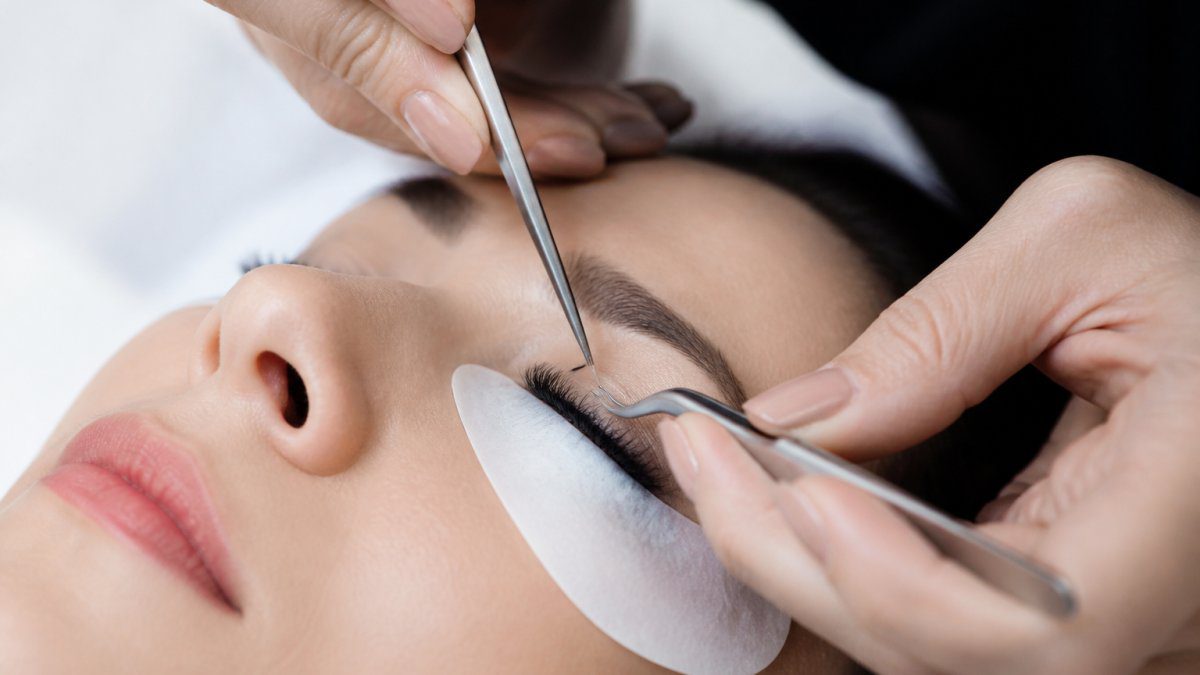
Lash isolation means separating each natural lash so only one extension attaches to it. Without it, extensions stick to multiple lashes, overloading them.
A skilled technician:
- Uses tweezers or lash tape to isolate each lash individually
- Applies one extension per natural lash, never more
- Positions the extension parallel to the natural lash
- Attaches it 0.5-1mm from the skin, not at the root
- Uses minimal adhesive, just enough to bond, not coat
At Lashes by Shigeru, our proprietary Japanese AirLash® technique includes precision isolation and attachment. Each lash is treated individually. The result is extensions that feel weightless and last up to five weeks.
Matching Extension Length and Weight to Natural Lashes
Not every client gets the same extension. A skilled technician assesses your natural lashes first.
What a professional evaluates:
- Natural lash thickness (thin, medium, or thick)
- Natural lash length (short, medium, or long)
- Natural lash strength and health
- Eye shape and desired look
- Any history of lash damage
Based on this assessment, the technician chooses extensions your lashes can safely support: a client with short, thin lashes might get 10-12mm at 0.08mm diameter, while thick, strong lashes might handle 14mm at 0.12mm.
This matching prevents overload, keeping natural lashes healthy because they’re never asked to support more than they can handle.
Lash Extension Aftercare to Prevent Breakage
How you treat your extensions after application matters enormously. Poor aftercare causes more damage than poor application.
Essential aftercare rules:
- Avoid water for 24-48 hours after application (adhesive needs time to cure fully)
- Don’t rub or pull your lashes (rubbing breaks the adhesive bond and stresses natural lashes)
- Use oil-free makeup remover (oil dissolves lash adhesive)
- Sleep on your back when possible (side-sleeping crushes extensions)
- Brush lashes gently with a clean spoolie daily (prevents tangling and matting)
The most common mistake? Rubbing tired eyes. That single habit causes more breakage than anything else: your lashes are already stressed by extension weight, and rubbing adds mechanical stress until the lash snaps.
When to Take a Break From Lash Extensions
Sometimes the best thing you can do is step back.
Signs you need a break:
- Noticeable lash loss after 1-2 weeks of extensions
- Irritation or tenderness that doesn’t improve with care
- Redness around the lash line
- Difficulty opening your eyes comfortably
- Visible breakage (short, stubby lashes)
Some clients take seasonal breaks. They wear extensions for 8-10 weeks, then go bare for 4 weeks. This rhythm keeps natural lashes strong long-term.
The truth is straightforward: weightless lash extensions don’t inherently damage natural lashes.
At Lashes by Shigeru, we’ve perfected the application process with our proprietary Japanese AirLash® technique.
Frequently Asked Questions
Can lash extensions cause natural lashes to break?
Lash extensions can cause breakage if they are too heavy, too long, or applied poorly. However, weightless lash extensions applied by a trained professional rarely damage healthy natural lashes. The key is matching extension weight and length to your natural lash strength and ensuring proper isolation and attachment. Normal shedding of 3-5 lashes per day is not breakage; actual breakage shows shorter, fractured lashes with visible damage at the base.
Are weightless lash extensions safer for natural lashes?
Yes, weightless lash extensions significantly reduce strain on natural lashes. The term ‘weightless’ refers to extensions designed with minimal diameter and density, distributing load evenly across the lash. A professional lash technician can assess your natural lash thickness and recommend extension specifications that won’t stress them. Proper application technique, including correct lash isolation and adhesive application, further protects your natural lashes during the full lash cycle.
How can you tell if lash extensions are damaging your natural lashes?
Signs of lash extension damage include shortened natural lashes, visible breakage at the base, thinning across your lash line, and premature shedding beyond the normal 3-5 lashes daily. Breakage typically appears as fractured lash ends, while normal shedding shows complete lashes falling out. If you notice these signs, stop wearing extensions temporarily, focus on lash maintenance and aftercare, and consult your lash technician about adjusting extension weight or length for your next appointment.
What’s the real difference between Japanese AirLash® weightless extensions and standard lash extensions?
Japanese AirLash® weightless extensions are engineered with a smaller diameter and optimized weight distribution to minimize strain on natural lashes. The proprietary technique combines precise lash isolation, hypoallergenic adhesive, and extensions matched to individual natural lash strength. This approach reduces the risk of premature shedding and stunted growth, making them suitable even for clients with shorter or thinner natural lashes who might not tolerate standard extensions.