

How to Find a Lash Tech for Sensitive Eyes
Table of Contents
- Start With a Consultation, Not a Booking
- What to Look for in a Lash Technician for Sensitive Eyes
- The Lash Extension Patch Test Procedure, Step by Step
- Reading the Adhesive Label: Cyanoacrylate, Carbon Black, and Curing Time
- Questions to Ask a Lash Technician Before You Book
- Signs of Allergic Reaction to Lash Adhesive (and What to Do)
- Medical vs. Cosmetic Sensitivity: When to See a Doctor First
- Conclusion: Your Next Step Toward Comfortable Lashes
- Frequently Asked Questions
Last Updated: October 2, 2026
Start With a Consultation, Not a Booking
If you have sensitive eyes, the search for a lash technician should begin with a conversation, not a calendar slot. A consultation lets a lash artist assess your natural lash health, review your reaction history, and explain which adhesives and techniques suit you before any adhesive touches your skin. At Lashes by Shigeru, every sensitive-eye client starts here, because knowing how to find a lash technician for sensitive eyes comes down to one skill: asking the right questions early.
Here is what a good consultation covers:
- Your history of reactions, redness, or itchiness after past appointments
- The adhesive brands and ingredients the salon uses
- Whether a patch test is offered before a full set
- How the artist handles lash isolation and curing time
Most people book straight into a full set and hope for the best. That is the mistake that leads to swollen lids and wasted money.
What to Look for in a Lash Technician for Sensitive Eyes
The best lash technician for sensitive eyes combines three things: proper certification, strict sanitation, and a portfolio you can actually audit. Skill matters, but so does the artist’s willingness to slow down for your comfort, and the only way to judge that before you book is to read their work closely.
Certifications and Sanitation Standards
Ask about professional certification and continuing education. A serious lash artist trains beyond a weekend course and keeps up with new adhesive formulas. Sanitation standards matter just as much: fresh tweezers, clean lash bath supplies, and a tidy workspace lower your risk of eye irritation and conditions like blepharitis.
Specific things to confirm:
- The artist holds a current state-issued cosmetology or esthetician license, and can tell you the license number.
- Tweezers and tools are disinfected between clients, and single-use items like microbrushes and under-eye pads are discarded, not reused.
- The artist washes or sanitizes hands before starting and works with clean, lint-free supplies.
- The workspace has no visible dust, loose lash trays, or open adhesive bottles left uncapped.
Portfolio Red Flags: How to Audit Photos Like a Pro
Photos tell you more than a price list ever will, but only if you know what to look for.
Look for true close-ups, not wide shots. A wide-angle photo taken from arm’s length hides isolation errors.
Judge weight and length. Extensions that look dramatically longer or thicker than the natural lashes underneath are a warning sign.
Look for before-and-after pairs. An artist who shows the natural lashes before application is usually one who respects lash health and is not hiding damage.
You do not need to be a lash artist to audit a portfolio. Zoom in on the base of the lashes. If you can see individual attachment points and clean separation, the isolation is likely sound. If the bases look fused or clumpy, keep looking, no certification or price point makes up for poor isolation on sensitive eyes.
A technician who shows honest, close-up work is usually one who respects natural lash health. When you find one, ask for a consultation and a patch test before you commit to a full set.
The Lash Extension Patch Test Procedure, Step by Step
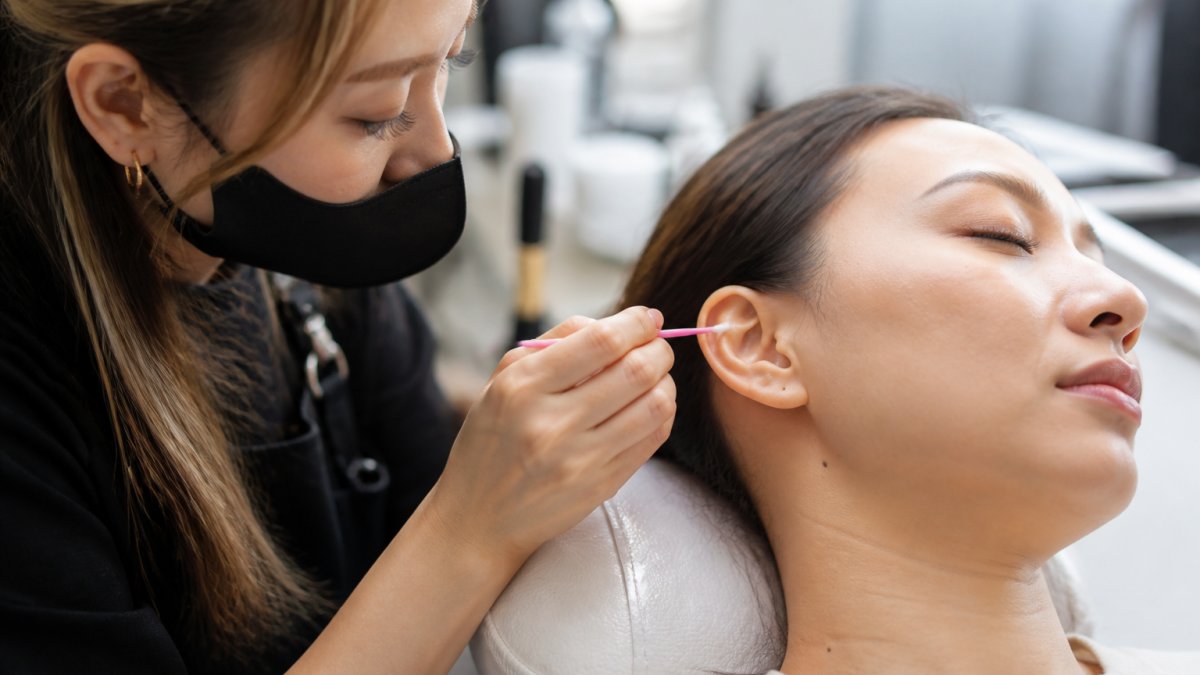
A patch test is a short, simple safety step that places a small amount of lash adhesive on your skin to check for a reaction before a full appointment. It takes minutes and can save you days of discomfort. But not every patch test is performed the same way, and the difference between a real test and a token gesture matters when your eyes are sensitive.
What a Professional Patch Test Should Actually Look Like
A meaningful patch test uses the exact adhesive the artist plans to use on your full set, not a different brand, not an older bottle, not a “sensitive” formula they keep on hand for testing only. If the adhesive changes between the test and the appointment, the test tells you nothing.
A common professional protocol looks like this:
- Cleanse the test site. The artist wipes a small area behind your ear or on your inner forearm with a mild cleanser and lets it dry completely. Oily or damp skin can distort results.
- Apply a realistic dose. Rather than a single dot of glue, many experienced artists place two or three tiny drops of the exact adhesive, roughly the size of a pinhead each, spaced apart. This mirrors the amount and surface contact your lash line will actually experience.
- Optionally place a test lash. Some technicians attach one or two isolated extensions to the outer corner of one eye, where a reaction is easiest to spot and least cosmetically disruptive. This tests the adhesive against the lash line itself, not just the skin.
- Leave the area untouched for 24 to 48 hours. Do not wash, scrub, or apply makeup over the test site. Sweat and friction can create redness that mimics a reaction.
- Document what you see. Note any redness, swelling, itching, or small bumps, and photograph the site at the 24-hour and 48-hour marks so you have a record.
- Report back before booking the full set. The artist should ask about your results and, if there is any reaction, decline to proceed or switch formulas.
Why Placement and Timing Matter
Behind the ear and the inner forearm are the two standard sites because the skin there is thin and reactive, similar to the eyelid.
Timing matters just as much. A reaction can appear within hours, but contact dermatitis from cyanoacrylate often develops over 24 to 72 hours. A patch test you check after two hours is not a complete test.
Ask your artist to write the adhesive brand, batch or lot number, and the date of the test on your intake form. If you react, that record tells a doctor exactly what you were exposed to, and lets the artist switch to a different formula for a future test.
What Counts as a Positive Result
A positive patch test is not just obvious swelling. Watch for:
- Redness that spreads beyond the test site
- Itching or a warm, tight feeling on the skin
- Small fluid-filled bumps or a rash
- Any swelling of the eyelid, even mild
A negative result does not guarantee you will never react. Sensitization to cyanoacrylate can build over repeated exposures, which is why some clients react after months of problem-free appointments. Treat every patch test as one data point, not a permanent clearance.
Many salons skip this step entirely. Ask for it anyway, and treat a refusal, or a rushed, single-dot version, as a red flag.
Reading the Adhesive Label: Cyanoacrylate, Carbon Black, and Curing Time
Most lash adhesives are built on cyanoacrylate, the same family of fast-bonding compounds used in medical skin glue. That strength is exactly why sensitive eyes react. Knowing the label helps you ask better questions.
Two ingredients deserve attention. Carbon black is a pigment that gives adhesive its dark color, and some people react to it. Formaldehyde-free formulas avoid a preservative that irritates many clients.
Ask your artist what humidity the salon keeps for its adhesive. Cyanoacrylate cures using moisture in the air, so a room that is too dry or too humid changes how the glue sets and how much it fumes.
A hypoallergenic adhesive is not automatically reaction-proof, but it removes the most common triggers. That is a meaningful difference for sensitive eyes.
Questions to Ask a Lash Technician Before You Book
Direct questions get direct answers, and a good artist welcomes them. Use this list before you commit:
- Which adhesive do you use, and is it formaldehyde-free?
- Do you offer a patch test before a full set?
- How do you isolate lashes to protect natural lash health?
- What is your policy if I have a reaction?
- How long does a full set take, and how often do I need refills?
- Can you show recent close-up photos of your work?
If an artist dodges these, keep looking. Confidence is easy to fake; specifics are not.
Signs of Allergic Reaction to Lash Adhesive (and What to Do)
An allergic reaction to lash adhesive usually shows up as redness, swelling, or itchiness around the eyelids, often within the first day or two. Contact dermatitis is the most common form, and it can build over repeated exposures rather than appearing the first time.
If you notice symptoms:
- Do not rub your eyes.
- Remove the extensions if a professional advises it.
- Apply a cool compress to calm swelling.
- See a doctor if symptoms spread or worsen.
Never let a technician apply more adhesive over lashes that are already reacting. Repeated exposure to cyanoacrylate can make a mild sensitivity permanent, turning a small reaction into a lasting one.
Medical vs. Cosmetic Sensitivity: When to See a Doctor First
Not all sensitivity is cosmetic. Some people have an underlying eye condition, such as blepharitis or dry eye, that lash extensions can aggravate. If your eyes sting, water, or feel gritty even without extensions, see a doctor before booking.
A doctor can tell you whether your symptoms are a medical issue or a simple product sensitivity. That distinction changes everything about how, or whether, you proceed.
Cosmetic sensitivity is a reaction to a product. Medical sensitivity is a condition that needs treatment first. If you are unsure which one you have, get a medical opinion before your next appointment.
For clients who want a gentler path, Lashes by Shigeru manufactures its own high-quality products, adhesives, and growth serums and skin elixirs in-house, which means the formulas are controlled from start to finish. For sensitive eyes, that control matters.
Conclusion: Your Next Step Toward Comfortable Lashes
Finding a lash technician who respects sensitive eyes takes more than a quick search. It takes a consultation, a patch test, and honest questions about adhesive ingredients and isolation technique. That extra effort is what separates a comfortable full set from a painful one.
At Lashes by Shigeru, our master stylist brings over a decade of experience from Tokyo and New York, using the proprietary Japanese AirLash® technique and virtually weightless extensions that last up to five weeks. Every sensitive-eye client starts with a consultation and a patch test, and our in-house adhesives are made for exactly this concern.
Book an appointment with Lashes by Shigeru and start your lashes the safe way.
Frequently Asked Questions
Can I get eyelash extensions if I have sensitive eyes?
Yes, many people with sensitive eyes wear extensions comfortably. The key is choosing a lash technician who uses hypoallergenic adhesive, performs a patch test at least 24 to 48 hours before your full set, and adjusts curing time and humidity control to reduce fume sensitivity. Avoid adhesives with carbon black or high cyanoacrylate concentrations, and tell your technician about any history of contact dermatitis or blepharitis before booking.
What should I look for in a lash technician for sensitive eyes?
Look for professional certification, a clean and well-lit workspace, and a portfolio showing proper lash isolation with no clumping or excessive weight. Ask whether they offer a patch test and carry formaldehyde-free or hypoallergenic adhesive options. A technician who takes time for a consultation, discusses your natural lash health, and explains their sanitation standards is a strong sign you are in good hands.
How do I know if I am having an allergic reaction to lash glue?
Signs of an allergic reaction to lash adhesive include redness, swelling, itchiness, or a burning sensation along the lash line, usually appearing within 24 to 72 hours after application. Contact dermatitis may also cause flaking or crusting on the eyelids. If you notice these symptoms, remove the extensions or have them removed professionally and see a doctor if symptoms persist or worsen.
Should I get a patch test before my first lash appointment?
Yes. A lash extension patch test procedure involves placing a small amount of adhesive behind your ear or on a few isolated lashes, then waiting 24 to 48 hours to check for a reaction. It is the safest way to screen for sensitivity before committing to a full set. Even if you have worn extensions before, a patch test with a new adhesive is recommended because formulations vary between brands.