

How to Tell If Lash Extensions Were Applied Correctly
Table of Contents
- What Proper Lash Extension Application Looks and Feels Like
- Signs of Poor Lash Extension Application You Should Never Ignore
- Adhesive Allergy vs. Poor Application: How to Tell the Difference
- How Long Should Lash Extensions Last? Gauging Retention and Lash Shed
- Lash Extension Aftercare Best Practices for Healthy Retention
- Long-Term Damage Indicators and When to See a Professional
- Your Post-Appointment Checklist for Evaluating Your Lashes
- Conclusion: Trust Your Lashes, Trust Your Technician
- Frequently Asked Questions
Last Updated: September 29, 2026
What Proper Lash Extension Application Looks and Feels Like
Knowing how to tell if your lash extensions were applied correctly starts with one fact: proper application should feel like nothing at all. A correctly applied set feels weightless, looks even, and causes zero discomfort. At Lashes by Shigeru, our master stylists follow strict isolation and mapping standards. If your lashes feel heavy, itchy, or look clumped, something went wrong.
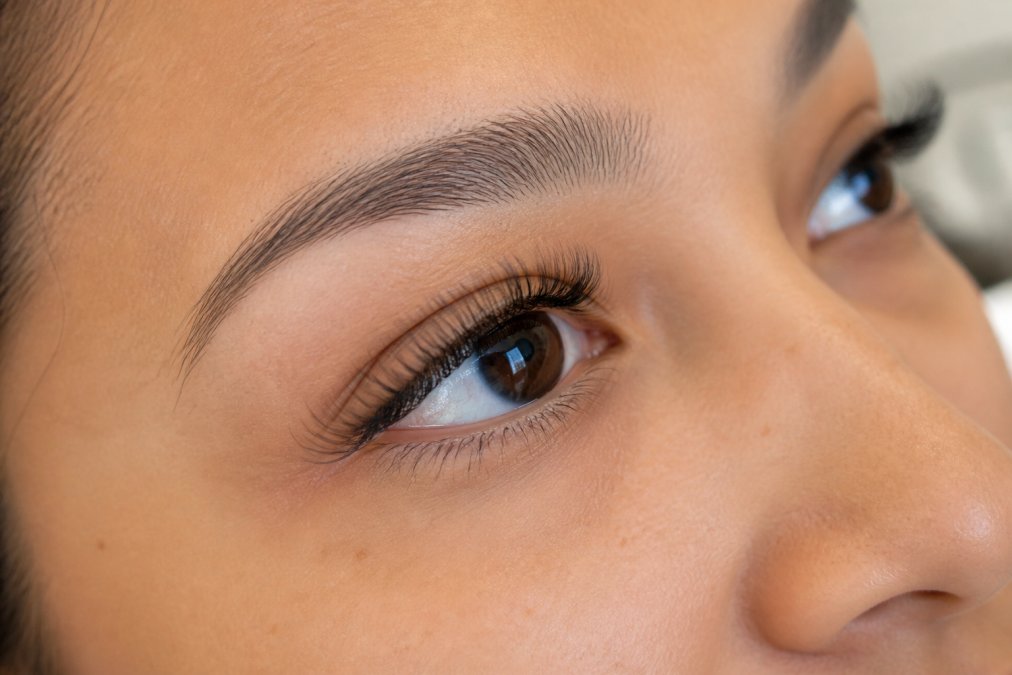
The Isolation Standard: One Extension Per Natural Lash
Lash isolation means separating each natural lash before attaching a single extension to it, the most important mark of correct application. When a technician skips isolation, two or more natural lashes get glued together, causing tugging, clumping, and uneven growth.
- Each extension sits on its own lash
- No extensions touch each other at the base of the lash
- Lashes move freely and independently
Weight, Direction, and Lash Uniformity
Correctly applied extensions feel virtually weightless, and lash direction should follow your natural pattern, pointing outward and slightly upward. Lash uniformity matters too: lashes should look even across the entire lash line, with no gaps or sudden length changes. A good lash mapping plan ensures both eyes match.
Run a clean spoolie brush through your lashes gently. If extensions snag or pull, isolation was likely skipped during application.
Signs of Poor Lash Extension Application You Should Never Ignore
The most common signs of poor lash extension application show up within the first 48 hours. Watch for both visual problems and physical symptoms. If you notice either, contact your technician right away.
Visual Red Flags: Clumping, Glue Blobs, and Uneven Fanning
Look closely at your lash line in natural light. These visual cues signal a problem:
- Glue blobs stuck to the skin or between lashes
- Lashes stuck together in clusters (clumping)
- Uneven fanning where some fans are wide and others are tight
- Extensions pointing in different directions
- Visible adhesive residue on the eyelid
Physical Symptoms: Redness, Swelling, Itching, and Discomfort
Your body will tell you when something is wrong. Eyelid irritation, redness, swelling, persistent itching, or burning are warning signs. Discomfort during the appointment is never normal, tugging or stinging points to poor application technique or a reaction to fumes from the adhesive.
Never try to pull apart clumped lashes yourself. You risk ripping out your natural lashes and causing traction alopecia, a form of hair loss from constant pulling.
Adhesive Allergy vs. Poor Application: How to Tell the Difference
This is the most misunderstood question in lash extensions. An allergic reaction and a bad application can look nearly identical in the first 24 hours, but they have different causes, timelines, and fixes. Getting this wrong means either suffering through a reaction you should have treated, or removing a perfectly good set over irritation a simple fix would have solved.
What Actually Causes Each Reaction
Lash adhesives are almost always cyanoacrylate-based. When cyanoacrylate cures, it releases trace fumes (formaldehyde and cyanoacrylate vapor). Two very different problems come from this chemistry:
- Irritant contact dermatitis, a non-allergic reaction caused by fumes, glue touching the skin, or adhesive residue left on the eyelid. This is a technique problem.
- Allergic contact dermatitis, a true immune response to cyanoacrylate. This is a body problem, and it does not go away with better technique.
The Timeline Test: When Symptoms Appear
Timing is your best diagnostic tool.
- During or within 1-2 hours: Almost always irritation from fumes or glue on the skin. The reaction is immediate because the irritant is present right now.
- 12-24 hours: Could be either. Watch the pattern.
- 24-72 hours, and getting worse each day: Strongly points to a true allergic sensitization. Allergic reactions build as the immune system responds.
- Improves after a removal, then returns within hours of a new set: Confirms allergy to the adhesive itself, not the technique.
The Location and Pattern Test
Where the reaction shows up tells you a lot:
- Irritation tends to sit right at the lash line, exactly where the glue was placed. It may be patchy and asymmetric if the technician was inconsistent.
- Allergy tends to spread across the entire upper eyelid, sometimes reaching the brow or under-eye area. It is usually symmetric because both eyes were exposed to the same adhesive.
The Symptom Test
| Signal | Adhesive Allergy | Poor Application |
|---|---|---|
| Timing | Worsens over 1-3 days | Immediate or within hours |
| Location | Whole eyelid, often symmetric | Lash line only, often patchy |
| Look | Diffuse redness, swelling, sometimes tiny bumps or weeping | Clumps, glue on skin, localized redness |
| Feel | Itching, burning, sometimes a rash that spreads | Tugging, tenderness, sharp irritation |
| Response to removal | Symptoms fade, then return with a new set | Symptoms resolve and stay resolved |
| Fix | See a healthcare provider; avoid cyanoacrylate | Fix isolation, mapping, and adhesive placement |
What to Do in Each Case
If you suspect a true allergy, see a healthcare provider. A professional removal is the safest next step, and tell any future lash technician you have reacted to cyanoacrylate so they can patch-test a different formula or recommend an alternative service. If it looks like irritation from poor application, the fix is technical: better isolation, no glue on the skin, and a properly cured bond.
Do not try to “wait out” a reaction that is getting worse each day. A true allergy does not improve on its own while the adhesive is still on your lashes, and continued exposure can make the reaction more severe.
Ask your technician what type of adhesive they use and whether they offer a patch test. A 24-hour patch test behind the ear or on the inner wrist is a simple way to screen for a cyanoacrylate allergy before a full set.
The Unique Angle: A Self-Assessment Framework
Use this three-question framework at home:
- When did it start? Immediate = irritant. Delayed and worsening = allergy.
- Where is it? Lash line only = irritant. Whole eyelid = allergy.
- Does it improve after removal? If yes, then returns with a new set, it is the adhesive, not the technique.
If two or more answers point to allergy, treat it as one until a healthcare provider says otherwise.
How Long Should Lash Extensions Last? Gauging Retention and Lash Shed
The answer to how long should lash extensions last is about four to six weeks, with touch-ups every two to three weeks. Your natural lash growth cycle means you shed a few lashes daily, and those extensions come off with them.
- Correct isolation and bonding at the base of the lash
- The right adhesive for your lash type
- Proper aftercare at home
Lash Extension Aftercare Best Practices for Healthy Retention
Following lash extension aftercare best practices protects your extensions and your natural lashes. The first 24 hours matter most, since the adhesive needs time to cure.
- Keep lashes dry for the first 24 hours
- Avoid steam, saunas, and hot yoga for two days
- Clean lashes daily with a lash-safe foaming cleanser
- Brush gently with a clean spoolie each morning
- Skip oil-based makeup and skincare near the eyes
- Never pick, pull, or rub your extensions
Long-Term Damage Indicators and When to See a Professional
Some damage from bad lash extensions builds slowly over months of repeated poor application, and by the time you notice it, your natural lashes may already be compromised. This is the section most guides skip, and the one that matters most for your long-term lash health.
What Traction Alopecia Actually Looks Like on the Lash Line
Traction alopecia is hair loss caused by constant pulling or tension on the hair follicle (pubmed.ncbi.nlm.nih.gov). On the lash line, it happens when extensions are too heavy, glued together in clumps, or applied in a way that pulls the natural lash away from its growth direction. The follicle is repeatedly stressed, inflammation builds, and over time it stops producing a healthy lash.
- Thinning along the entire lash line, not just the outer corners
- Short, stubby lashes that never seem to reach their old length
- Bald patches or gaps where lashes simply stop growing
- Lashes that grow in bent, twisted, or in the wrong direction because the follicle has been damaged
- A sore or tender lash line even between appointments, when no extensions are freshly applied
The Difference Between Shedding and Damage
Every client sheds lashes. The natural lash growth cycle means you lose roughly 1 to 5 lashes per eye per day, and each lash takes about 6 to 10 weeks to fully regrow. That is normal.
Damage looks different:
- Normal shedding: one lash at a time, with a tiny natural lash attached to the extension. Even distribution. Regrowth is steady.
- Damage: clusters of lashes gone at once, gaps that do not fill in, and new lashes that come in thinner or shorter than before.
Other Long-Term Warning Signs
Beyond traction alopecia, watch for:
- Chronic eyelid irritation that never fully resolves between appointments
- Lash follicle infections (small bumps or styes along the lash line that keep returning)
- Premature aging of the lash line, lashes that look sparse and fine compared to a year ago
- Dependence on extensions to hide damage, if you cannot imagine going without them because your natural lashes look too thin, that is a red flag
When to See a Professional
See a healthcare provider if you have:
- Persistent redness, swelling, or pain around the eye that does not improve within a few days of removal
- A stye or bump on the eyelid that does not resolve
- Vision changes, discharge, or crusting along the lash line
- Bald patches that have not regrown after several weeks without extensions
According to guidance from the American Academy of Dermatology on eyelid irritation, persistent redness or swelling around the eye deserves a medical evaluation rather than a wait-and-see approach.
The Recovery Question
How much of this is reversible depends on how long the damage went on. Early traction alopecia, caught within a few months, often improves once the tension is removed, because the follicle has not been permanently scarred. Long-standing traction alopecia can leave permanent thinning. If you notice thinning, gaps, or a sore lash line, take a break from extensions before the damage becomes permanent.
Traction alopecia is the one lash extension risk that does not show up in the first 48 hours. If your lash line is thinning, gapping, or sore between appointments, stop the extensions and let your natural lashes recover before the damage becomes permanent.
Your Post-Appointment Checklist for Evaluating Your Lashes
Use this checklist in the first two days after your appointment to judge the work objectively.
- Each extension sits on one natural lash only
- No glue blobs on the skin or lash line
- Lashes are even in length and direction
- No clumping or stuck-together lashes
- Zero pain, itching, or redness
- Lashes feel light, not heavy lashes
- The set matches the agreed lash mapping
- You received clear aftercare instructions
A correctly applied set passes all eight checklist items within 48 hours. Anything less points to an application problem, not just “sensitive eyes.”
Conclusion: Trust Your Lashes, Trust Your Technician
Judging lash work shouldn’t require a magnifying glass. Proper isolation, even mapping, and zero discomfort mark a job done right. If your set fails the checklist, don’t wait it out.
Frequently Asked Questions
How do you know if eyelash extensions are applied wrong?
Look for clumping, where multiple natural lashes are glued together, or glue blobs at the base of the lash. Your extensions should feel weightless and point in the same direction as your natural lashes. Redness, itching, or a pulling sensation within the first 24 hours are signs of poor application, not normal adjustment. A properly applied set from a trained lash technician will feel comfortable and look uniform.
What are the most common signs of poor lash extension application?
The clearest signs include lash clumping, visible adhesive residue, uneven lash direction, and premature shedding within the first week. Discomfort, redness, or swelling around the eyelid also point to application errors or an allergic reaction. If extensions detach in clusters rather than individually, the technician likely failed to isolate each natural lash before bonding, which risks traction alopecia over time.
Will my lashes go back to normal after lash extensions?
Yes, in most cases. Natural lashes follow a growth cycle and shed every 60 to 90 days, so any temporary thinning from improper application typically reverses once extensions are removed and the cycle completes. If you notice permanent gaps or sparse regrowth after several months, see a dermatologist. Professional removal and a break between sets help your natural lashes recover fully.
Should lash extensions cause redness or itching?
Mild sensitivity right after application can happen, but persistent redness, itching, or swelling is not normal. These symptoms may indicate an allergic reaction to the adhesive or irritation from improper placement too close to the eyelid. If symptoms last more than 48 hours, have the extensions professionally removed and consult a doctor. Patch testing before a full set can help identify adhesive sensitivities early.